
Julian Gewirtz
@JulianGewirtz
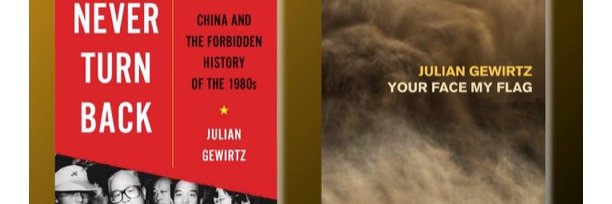
Former NSC Senior Director for China & State Dep China Coordinator | Now at Columbia SIPA | Wrote Never Turn Back: China & the Forbidden History of the 1980s &c
975 Following 12.3K Followers
New from me:
Is Trump really giving Xi a state visit 40 days before the midterms?
Presidents ordinarily have strong incentives to avoid honoring a deeply unpopular foreign rival on the eve of a close national election. Trump appears entirely untroubled by that risk. Is he signaling that he believes he has mastered the politics of U.S.-China relations? Or does he simply not care?
Here's a guided tour of the strange theater of U.S.-China presidential diplomacy—from oversized Chinese flags on the White House grounds to the toasts, pop-star performances, and protocol slip-ups that have defined past visits.
Read it here:
Show more

Some thoughts on Zhu Rongji (1928-2026):
Zhu is an often-misunderstood figure. He reflected the paradoxes of reform-era China:
– the pursuit of rapid economic growth paired with enduring political control,
– the desire to gain the benefits of markets and trade while limiting chaos and vulnerability,
– engaging with the international system but always on China's terms.
Zhu was a technocrat whom Deng Xiaoping elevated to the center of China's economic policymaking in the 1990s. “Don’t think that a planned economy is definitely socialism and a market economy is definitely capitalism,” Deng wrote in a 1991 commentary that Zhu helped coordinate along with Deng's daughter. “Both are means [to an end], and the market can also serve socialism.” (I discuss this further in Never Turn Back
Deng reportedly said, “The current leadership do not know economics. Zhu Rongji is the only one who understands economics.”
Yet that's only part of the story. Zhu confronted challenges at home and abroad—from handling China's large rural workforce to navigating American political opposition to China's WTO accession—to which Deng had offered no clear roadmap. And his way of handling them was very different than the economic policies of the 1980s, as @YashengHuang has shown.
It's equally important to reckon with the fact that American portrayals of Zhu as a liberal reformer were often too broad, emphasizing his enthusiasm for markets while overlooking his commitment to a strong state and Communist Party rule. Zhu himself bristled at Western efforts to fit him into familiar liberalizing archetypes.
Zhu once exclaimed, “I’m not China’s Gorbachev. I’m China’s Zhu Rongji.” Even on the economy, he firmly ruled out the widespread privatization of SOEs in ways that some Americans did not grasp: In one awkward exchange with former President George H. W. Bush, Zhu noted that China was not privatizing state firms but simply turning them into modern corporations, but Bush winked and replied confidently, “We know what’s going on.”
Zhu Rongji's legacy for both China and the United States is more complicated than it appears. Internationally, his greatest achievement was steering China into the WTO with American support.
At the time, he skillfully framed the WTO question as about the future of the United States rather than the benefits to China. “President Clinton said that if we don’t approve [the China trade deal] now, [Americans] will probably regret it 20 years later,” Zhu said in March 2000. “I can add that it’s not just 20 years later. I’m afraid that thousands of years later, when the American people look back on this history, they will also regret why they made this mistake at the time and sigh.”
The irony today is that many American leaders "look back on this history [and] sigh" precisely because their predecessors did approve the deal. More on that in a new book I’m writing.
Yet his legacy remains malleable even inside China—standing, for some, as a symbol of a more reformist and outward-looking era in China's past, very different from the country today.
Show more