
Musa al-Gharbi
@Musa_alGharbi
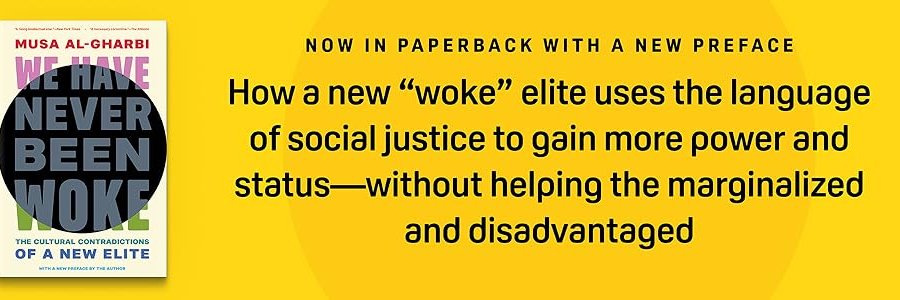
Asst. Professor @SBUjournalism. Author, "We Have Never Been Woke: The Cultural Contradictions of a New Elite" (now available in stores, from @PrincetonUPress)
2K Following 23.5K Followers
My latest for @chronicle is a longform essay on the #JasonArday# scandal. But it's mostly about the inhumanity of the culture wars and the debasement of institutions, told from the perspective of someone who has been cancelled, and whose story nearly ended the same way as his. 🧵
Show more

Arday's apparent suicide is tragic. He is far from the only casualty. Many others found themselves targets of witch hunts and vilification campaigns when they had not systematically perpetrated fraud, etc. Professor Mike Adams committed suicide after being targeted for his speech. Others, like Sarah below, considered the same.
@jonronson has a great book on the afterlives of those who've been chewed up and spit out by the culture wars -- folks who were obscure until they became the "main character," and who were then cast aside to sift through the wreckage of their lives while everyone else forgets they ever existed to begin with:
Show more

This, by @danwilliamsphil, straight into my veins.
Intellectual courage is important (and surprisingly rare). But before you can speak "truth to power" you have to find out what is actually true.
Too much "truth to power" stuff is focused on arcane, paranoid, or non-reflexive obsessions on power, and is sometimes dismissive of the "truth" part of the equation (reducing truth to simply another manifestation of power -- the power is all that matters).
If you want to help actually-existing people deal with practical problems in the real-world, the details and the facts actually matter a great deal.
If you want to help your preferred party win, make the other party lose, and so on, likewise, it helps to have an accurate (non-prejudicial) understanding of why so many people vote for the other party or fail to show up at all. Telling stories appealing to their deficits and pathologies may be satisfying, but are unlikely to be particularly effective at helping to win elections.
And so on. The first step to speaking truth to power is to be serious about identifying the truth and conveying it persuasively (persuasion, as a reminder, involves talking to people *who do not already agree with you* in a manner that *they* will find compelling and in the venues where *they* tend to be).
Show more


I'm perhaps biased, but in my humble opinion @JonHaidt > Hilary Duff for a commencement address












