

Steven Bartlett
@StevenBartlett
Founder home to FlightStory & FlightCast. Investor in Groq, SpaceX, Wispr Flow, Lovable, Replit, MrBeast, Whoop +100. Host Of Diary Of A CEO.
2.7K Following 423.5K Followers
@elonmusk thanks for sharing this clip from our podcast (again), keen to speak to you about AI / Robotics (and the roadster) on the show! is there a way we can make this happen? 😁
214 million people saw this AI warning. So we called an emergency debate.
The warning came from someone who had worked at both Anthropic and OpenAI.
Then a current Anthropic employee backed it publicly.
It had spread so far beyond the tech world that a friend of mine who cuts hair and has never really cared about AI messaged me asking, “What the hell is going on?”
I then realised a lot of people were probably asking the same question.
The problem is, when you speak to people who have spent years studying AI, you get completely opposing answers.
So I brought four of them around the same table.
Roman Yampolskiy is a computer scientist who coined the term “AI safety” and has spent years studying whether increasingly intelligent systems can remain under human control.
Nate Soares leads the Machine Intelligence Research Institute and has spent more than a decade working on AI alignment. He believes we are moving too quickly towards systems we don’t yet know how to reliably control.
Ed Zitron thinks much of the AI conversation has become detached from what the technology can actually do today. He believes the industry is overhyping it while distracting us from financial, environmental and social consequences already happening.
Andrew McAfee is an MIT researcher and economist who takes a very different view. He thinks we spend so much time talking about what could go wrong that we barely talk about what AI could make better.
And that disagreement is what made this conversation so interesting to me.
We discussed things like:
- How do you control something that eventually becomes smarter than you?
- Are the biggest warnings about AI based on evidence or assumptions?
- What happens to work and human purpose if AI becomes better at more cognitive tasks?
- Are we ignoring problems AI is already creating because we’re obsessed with hypothetical future ones?
- Why have Sam Altman, Elon Musk and Geoffrey Hinton all warned us about AI?
The question I kept coming back to was simple:
What is actually true?
Depending on who you listen to, AI is either one of the greatest opportunities humanity has ever created or something we’re racing towards without understanding the consequences.
Both claims deserve to be challenged.
There were moments in this debate where I genuinely found myself moving between the arguments. That’s the value of putting people who fundamentally disagree in the same room.
I didn’t want four people telling me the same thing. I wanted each of them to explain where the other side was wrong.
If you’ve watched the last few months of AI news wondering what you’re actually supposed to believe, this conversation is for you.
Our emergency AI debate with Ed, Roman, Nate and Andrew is out now ❤️👊🏾
Show more

The first 30 minutes after waking up could shape your entire day.
By the time you’re exhausted at night, your brain may be operating very differently.
Andrew Huberman put it simply: “Don’t say things tired.”
When we’re exhausted, our impulse control gets worse. The message you want to send, the argument you want to have or the decision that suddenly feels urgent can look completely different after some sleep.
That was one of many moments in this conversation that made me realise how much is happening inside our brains and bodies without us really understanding it.
Andrew is a neuroscientist and professor at Stanford, and what I value about speaking to him is that he goes beyond the simple health headlines and explains what is actually happening underneath them.
Cortisol isn’t simply “bad”. Ozempic isn’t only about weight loss. And some of the smallest things we do every day can have a surprisingly large effect on how we sleep, think and feel.
We covered things like:
- The 10 protocols to become the healthiest version of yourself
- When cortisol is actually good for you
- The eye movement trick that could help you fall asleep
- A neuroscientist’s perspective on God and religion
- The simple trick that can lower blood sugar spikes
One thing that really stayed with me was just how adaptable our brains are.
Andrew explained that repeatedly doing things you don’t want to do can physically change an area of the brain associated with tenacity. It made me look differently at the workout I want to skip, the difficult conversation I’m avoiding and those moments where choosing discomfort might actually prepare me for whatever comes next.
That’s why I enjoy conversations with Andrew. You leave with practical things you can use immediately but also ideas that change how you think about your own behaviour.
This conversation definitely did that for me.
I think it might for you too.
Full conversation out now ❤️👊🏾
Show more

AI whistleblower @edzitron calls out the 'psychopaths' on X:
"The people that are most excited about this, psychopaths on Twitter in many cases... if you dare to criticise Anthropic, if you don't say that Sam Altman is the new Messiah, they will come for you. They'll rip you to shreds every day online."
Show more

Did humans invent heaven?
Professor @bgreene says there may be no deeper explanation for why the universe is the way it is…


The American dream is on the ropes because the American political system has broken down. I talked with @StevenBartlett of The Diary of a CEO about what needs to change in America today.
Show more

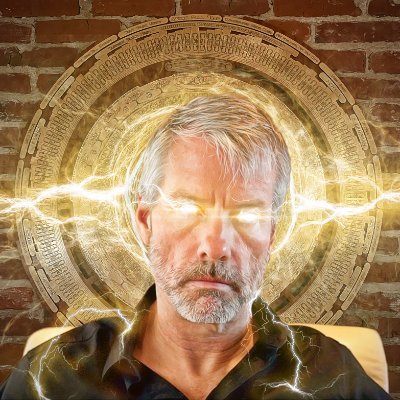
Bitcoin is digital capital. AI is digital intelligence. I joined @StevenBartlett to discuss how they are reshaping money, business, markets, work, and the future.

@saylor used ChatGPT to make $15 Billion last year? 🤯
He says he used ChatGPT alongside lawyers, bankers and investors to help solve complex problems and design new financial products, resulting in $15 billion of credit being sold.
#bitcoin#
Show more

Would you bet EVERYTHING on one idea?
Michael Saylor did.
Michael is a technology entrepreneur and the founder of the company now called Strategy. Long before Bitcoin, he built businesses in business intelligence, speech recognition and smart-home technology. Today, he is probably best known for turning his company into the world’s largest corporate holder of Bitcoin.
In 2020, his company was worth around $600 million when he made what I described to him as an “early, very contrarian bet on Bitcoin”. At its peak, the company reached roughly $125 billion.
I wanted to understand what Michael saw that almost everyone else didn’t, where that level of conviction comes from, and why his thinking goes far beyond Bitcoin.
We discussed things like:
- How he says AI helped him create $15 billion last year.
- Why he believes buying a house might not be the best way to build wealth.
- What he would study if he was 18 today.
- Which careers AI could completely transform.
- What is happening to the value of the money sitting in your bank.
- Why he still has such enormous conviction in Bitcoin.
Michael’s whole point is that technology, money and careers are not separate conversations.
He sees them as connected parts of where the world is heading, and believes the decisions we make now could matter far more than most people realise.
Even if you see the world differently to Michael, there is a lot to take from the way he thinks. His experience building technology companies, making enormous financial bets and thinking deeply about AI gives him a perspective on money, work and the future that is worth listening to.
Out now on all platforms. Let me know what you think of this one in the comments ❤️👊🏾
Show more


“When I joined Barcelona, I arrived injured and had just gone through a divorce. I couldn’t see my daughter, yet people still expected me to perform
I was hurting inside. I needed help, but I couldn’t ask because society doesn’t like seeing men show weakness.” 🥹
—Thierry Henry
Show more













