
Trade Whisperer
@TradexWhisperer
Published $MU Bargain Thesis at $62. $PLTR $21. $RKLB $10. $SNDK $214.
Memory Engineer. Data Scientist. Founder of Blue Pink Candles. Masters 🎓 @UofIllinois
152 Following 144K Followers
$MU $SKHY
TSV capacity grew 700% in just 4 years.
TSV is what made HBM possible. HBM is what made AI possible. And TSV eats more wafer real estate, pulling supply away from everything else.
The most important capacity in the world is TSV.
Show more

❄️ $MU If you want to understand why HBM will solve the AI inference bottleneck, read this thread.
"The working memory of the AI is stored in the HBM. If you have a long conversation with an AI, overtime, that memory, that context memory is going to grow TREMENDOUSLY" -Jensen at CES 2026.
Endless Inference = Endless Memory
Inference is becoming a memory-bound challenge, not just a compute one. The explosive growth of AI inference will drive a structural shift in the memory industry, particularly for leaders like Micron.
High Bandwidth Memory (HBM) sits in the critical path for overcoming inference bottlenecks for billions of users worldwide. It will also flatten the DRAM market's historically volatile supply-and-demand cycles, ushering in a prolonged and durable fundamentals with sustained high pricing and profitability.
Let me start with a quote from 1996. Yes, three decades ago.
“It’s the Memory, Stupid!” — Richard Sites
In 1996, computer architecture pioneer and lead designer of the DEC Alpha, Richard Sites, famously declared, “It’s the Memory, Stupid!” in a seminal paper. He emphasized that memory hierarchies, not just raw processing power, were the true bottlenecks in computing performance. Three decades later, his words resonate more strongly than ever in the age of AI.
As AI models grow larger and more complex, the focus has shifted from training these massive systems to deploying them efficiently through inference: the process of generating predictions, recommendations, or responses in the real world. Every ChatGPT query? That's an inference call.
During inference, models must rapidly access enormous amounts of data from memory to produce outputs. Traditional memory solutions often cannot deliver the required bandwidth, causing processors to idle while waiting for data. This is the classic “memory wall” problem Sites warned about.
In essence, training thrives on brute-force GPU compute due to its high arithmetic intensity, while inference relies heavily on high-bandwidth memory (HBM) to keep data flowing fast enough to fully utilize that compute.
HBM breaks through the memory wall by offering ultra-low latency and massive throughput, often in the terabytes-per-second range. This specialized DRAM is stacked directly onto processors like $NVDA / $AMD GPUs or Google's TPUs with a 3D architecture with through-silicon vias (TSVs). These act like high-speed elevators in a vertical “apartment building” of memory dies, minimizing latency, maximizing bandwidth, and reducing power consumption: perfect for AI workloads.
A decade from now, AI inference will explode as younger generations integrate AI deeply into daily life. Projections estimate the AI inference market reaching $250–520 billion by 2030–2034, with inference compute demand growing at over 35% CAGR in the coming years, outpacing training.
By 2030, inference is expected to account for over half of AI data center workloads, dominating even more in the 2030s as billions of people and devices rely on AI daily.
HBM production is DRAM-intensive and diverts significant resources from consumer markets, contributing to the dramatic DRAM price surges we have seen recently.
Producing 1GB of HBM consumes roughly 3 times more wafer capacity (the raw silicon starting material) than 1GB of standard DDR5 DRAM.
Yields are lower due to the complexity of stacking and interconnects, requiring even more wafers for usable output.
Result: Even though HBM represents only a fraction of total DRAM bits shipped, it consumes a disproportionate share of production resources.
It is a zero-sum game. Every wafer used for HBM is one not used for regular DDR5 or LPDDR5X.
Total DRAM supply growth remains limited (around 10–16% YoY in 2026), while demand surges 30–35%+, creating a severe imbalance. New fabs and capacity expansions are underway, but meaningful relief likely will not arrive until 2027–2028.
Micron has sold out its entire 2026 HBM capacity (including industry-leading HBM4), confirming this sustained AI-driven demand in the foreseeable future.
Long-term forecasts remain uncertain as AI is still in its early stages. Physical AI has yet to see a significant breakthrough, and the market is only beginning to understand the long-term dynamics of AI and HBM.
What's for sure is that the AI Inference Winter Is Coming. Billions of people will ask questions to ChatGPT and Grok and we need $MU HBM for AI to proliferate.
HODL the Shares.
Show more

❄️ $MU If you want to understand why HBM will solve the AI inference bottleneck, read this thread.
"The working memory of the AI is stored in the HBM. If you have a long conversation with an AI, overtime, that memory, that context memory is going to grow TREMENDOUSLY" -Jensen at CES 2026.
Endless Inference = Endless Memory
Inference is becoming a memory-bound challenge, not just a compute one. The explosive growth of AI inference will drive a structural shift in the memory industry, particularly for leaders like Micron.
High Bandwidth Memory (HBM) sits in the critical path for overcoming inference bottlenecks for billions of users worldwide. It will also flatten the DRAM market's historically volatile supply-and-demand cycles, ushering in a prolonged and durable fundamentals with sustained high pricing and profitability.
Let me start with a quote from 1996. Yes, three decades ago.
“It’s the Memory, Stupid!” — Richard Sites
In 1996, computer architecture pioneer and lead designer of the DEC Alpha, Richard Sites, famously declared, “It’s the Memory, Stupid!” in a seminal paper. He emphasized that memory hierarchies, not just raw processing power, were the true bottlenecks in computing performance. Three decades later, his words resonate more strongly than ever in the age of AI.
As AI models grow larger and more complex, the focus has shifted from training these massive systems to deploying them efficiently through inference: the process of generating predictions, recommendations, or responses in the real world. Every ChatGPT query? That's an inference call.
During inference, models must rapidly access enormous amounts of data from memory to produce outputs. Traditional memory solutions often cannot deliver the required bandwidth, causing processors to idle while waiting for data. This is the classic “memory wall” problem Sites warned about.
In essence, training thrives on brute-force GPU compute due to its high arithmetic intensity, while inference relies heavily on high-bandwidth memory (HBM) to keep data flowing fast enough to fully utilize that compute.
HBM breaks through the memory wall by offering ultra-low latency and massive throughput, often in the terabytes-per-second range. This specialized DRAM is stacked directly onto processors like $NVDA / $AMD GPUs or Google's TPUs with a 3D architecture with through-silicon vias (TSVs). These act like high-speed elevators in a vertical “apartment building” of memory dies, minimizing latency, maximizing bandwidth, and reducing power consumption: perfect for AI workloads.
A decade from now, AI inference will explode as younger generations integrate AI deeply into daily life. Projections estimate the AI inference market reaching $250–520 billion by 2030–2034, with inference compute demand growing at over 35% CAGR in the coming years, outpacing training.
By 2030, inference is expected to account for over half of AI data center workloads, dominating even more in the 2030s as billions of people and devices rely on AI daily.
HBM production is DRAM-intensive and diverts significant resources from consumer markets, contributing to the dramatic DRAM price surges we have seen recently.
Producing 1GB of HBM consumes roughly 3 times more wafer capacity (the raw silicon starting material) than 1GB of standard DDR5 DRAM.
Yields are lower due to the complexity of stacking and interconnects, requiring even more wafers for usable output.
Result: Even though HBM represents only a fraction of total DRAM bits shipped, it consumes a disproportionate share of production resources.
It is a zero-sum game. Every wafer used for HBM is one not used for regular DDR5 or LPDDR5X.
Total DRAM supply growth remains limited (around 10–16% YoY in 2026), while demand surges 30–35%+, creating a severe imbalance. New fabs and capacity expansions are underway, but meaningful relief likely will not arrive until 2027–2028.
Micron has sold out its entire 2026 HBM capacity (including industry-leading HBM4), confirming this sustained AI-driven demand in the foreseeable future.
Long-term forecasts remain uncertain as AI is still in its early stages. Physical AI has yet to see a significant breakthrough, and the market is only beginning to understand the long-term dynamics of AI and HBM.
What's for sure is that the AI Inference Winter Is Coming. Billions of people will ask questions to ChatGPT and Grok and we need $MU HBM for AI to proliferate.
HODL the Shares.
Show more
$INTC EMIB substrate yields reportedly jumped from ~30% in 2Q26 to ~45% now.
Next targets: 50% by 4Q26, 60% by 1Q27.
Google expected to adopt EMIB-T in 2027. AWS testing.
Intel CEO Lip-Bu Tan on substrates: Intel "has to prepay" suppliers to secure capacity.
Advanced packaging is the next chokepoint after HBM $TSM $ASX $AMKR
Show more
$TSM $ASX $AMKR
CoWoS capacity doubles again by 2028e.
18k wpm in 2023.
370k wpm by 2028e.
That's ~20x in five years.
And TSMC can't carry it alone. The non TSMC slice (Amkor, ASE, UMC) grows to roughly 110k wpm by 2028e, nearly a third of the market.
Show more

$TSM $ASX $AMKR
CoWoS capacity doubles again by 2028e.
18k wpm in 2023.
370k wpm by 2028e.
That's ~20x in five years.
And TSMC can't carry it alone. The non TSMC slice (Amkor, ASE, UMC) grows to roughly 110k wpm by 2028e, nearly a third of the market.
Show more
By the way, I pay over $50,000 a year for private research firm data.
My job is to filter it, add 21 years of industry context, and hand you what matters at less than 1% of that cost.
Don't take my work for granted. 12 hours left.
Show more
Opening FREE TRIAL to everyone for only 24 hours.
Get 300+ charts daily, weekly & monthly including $SNDK $DRAM $MU $SPCX
Institutional memory & semi research, broken down & industry whispers. AI Discord + new indicator soon.
Show more
HBM supply vs demand gab in Gigabits. What you must understand:
-That -7% bit shortfall is really a -21% to -28% wafer shortfall for HBM4E. It eats 3x to 4x more wafers per bit due to TSV and very low stack yields.
-The gap went from -1% to -7%. It's widening even as all 3 giants pour resources and wafer starts into HBM. That's a breakout.
-2027 new supply is already sold out. The memory trio is ramping with discipline, and SK Hynix's chairman doesn't see balance returning even by 2030.
Show more

Opening FREE TRIAL to everyone for only 24 hours.
Get 300+ charts daily, weekly & monthly including $SNDK $DRAM $MU $SPCX
Institutional memory & semi research, broken down & industry whispers. AI Discord + new indicator soon.
Show more
$MU $SKHY $DRAM Holy Shit.
According to Daishin Securities, some customers are asking for 10-year LTAs to Samsung.
Also, Samsung's LTAs terms are extended by another year, every year so it always has 5 years of demand on the books.
This is Huge!
Source: Chosun (Major Outlet)
Show more
The bear take: Samsung gains HBM share, $MU $SKHY lose.
Reaility: Samsung moves wafers to HBM while HBM bit demand grows 65%+ into 2027. This is substantially less wafers available for conventional $DRAM.
DRAM is THJE money maker right now, not HBM.
Show more

$META Elevator up. Elevator down. About 24 hours. Chasing without a plan is how you ride it both ways.
Elite gets the candles live. 2 spots left this week:
Show more

Bottleneck Data from Trendforce
$MU $SKHY $DRAM Very Tight
$SNDK NAND Tight
Very tight means severe shortage.
Weren't the bears calling for a top by mid-2026?

$DELL It doesn't TOP until PINK candle.
Consolidated all summer, broke out, and it's riding the upper band. Momentum doesn't end on a feeling. It ends on a signal.
300+ charts daily. Try it free:
Show more

$MU $SKHY Raspberry Pi CEO: even in a tight DRAM market, customers keep shifting to higher density SKUs.
Edge AI is just getting started. Customers don't care how expensive they are, they just need more memory.
Oh, yeah. That's AI.
Show more

$TSM $ASX $AMKR
CoWoS capacity doubles again by 2028e.
18k wpm in 2023.
370k wpm by 2028e.
That's ~20x in five years.
And TSMC can't carry it alone. The non TSMC slice (Amkor, ASE, UMC) grows to roughly 110k wpm by 2028e, nearly a third of the market.
Show more
$SKHY $MU $DRAM
If you think the memory trio is sitting back, chilling, and relaxing with the huge cash they are about to make, you are dead wrong.
SK hynix is about to go through a big transformation at the top.
Chairman Chey Tae-won is personally interviewing ~250 executives, one on one. The first round this large in 14 years, since SK acquired hynix in 2012.
Last time he did this, it set the strategic tasks that built today's HBM leader. Now the goal is to find the next leap.
And it doesn't stop there:
-3 of SK Group's 4 manager vice chairmen are moving to SK hynix. Industry calls it "highly unusual," a symbol of where the group's focus now sits.
-Their mandate: U.S. vs China chip supremacy, Washington's investment demands, and big tech partnerships.
-New Global Growth TF: not just securing HBM supply, but expanding from memory into the entire AI infrastructure stack.
Memory Industry Transformation in Full Throttle.
Show more
$MU $SKHY I genuinely feel bad for the buyers who turned down LTAs.
The shortage will get WORSE in 2027. $DRAM + HBM gap grows from roughly 85bn Gb in 2026 to roughly 100bn Gb in 2027.
Anyone who skipped LTAs will likely be buying left overs at a premium next year.
Show more

+$6,680 on one $SNDK trade on Friday. His account grew from $13k to $220k.
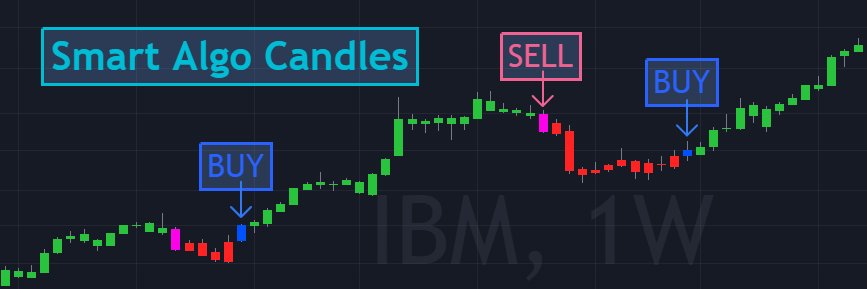
The edge isn't hunches. It's the BLUE candle, a statistical signal built and validated by data scientists on market data.
8 Elite seats this week:
Show more

CoWoS capacity is projected to surge 70.9% YoY in 2027
GPU and AI ASIC shipments +44.9%
Combined Intel/AMD/NVIDIA CPU shipments +36%
Bullish
$NVDA $TSM $MU $SKHY
$AMD Checklist
→ BLUE candle fired
→ BB Basis Bounce
→ Upper BB Breakout
→ Agentic AI Momentum
300+ charts daily. Try it free:

$MU Checklist
Fib 0 test (rejected) → PINK candle → BB Basis support → BLUE candle next?
If BLUE prints, $1130+ test is back on the table.
Elite gets the candles live. 2 spots left this week:
Show more












