
Dhara Blessed Mhlanga
@bbmhlanga
We the willing led by the unknowing have done so much with so little, now we are able to do anything with nothing
2.7K Following 175.6K Followers
I endorse this message from Kudzi, even brainless bootlickers will remain the same. Nothing will change.

@ThomasNDHL111 @bbmhlanga We will all die one day… but if you are a loser you will remain one…
I believe, not just yesterday, but today and tomorrow. I can’t let go of hope. Zimbabwe will win one day.


Zano pf is always there to kill destroy and steal we need new leaders


This was a powerful and inspiring event. The Zimbabwean diaspora has an important role to play in speaking out against the injustices experienced by those who oppose the regime and in championing the rights and freedoms of all Zimbabweans.
Show more
I spoke to @molokele during his visit in London at a @ChangeRadioZW public dialogue which I was guest moderator - my interview below BREAKING: Molokele Warns Zimbabweans NOT to Return Home | Chamisa, Mnang... via @YouTube
Show more
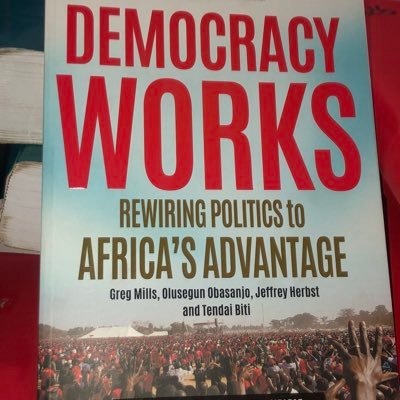
The regime in Tanzania two years ago jailed our friend @TunduALissu , the leader of Chadema , Tanzania s biggest political party , for treason . The regime has acquitted Tundu for treason but found him guilty on dubious charges of incitement .
But to refuse to participate in a fraudulent predetermined election surely can not be treason nor incitement .
Tanzania , and Chama Chamapinduzi the liberation movement that has run Tanzania since independence has gone rogue .
Liberation movements have gone stale and are withering away .
The ANC can tell you that .
ZANU is decomposing internally now simply held together by the rich lucre it is milking from Zimbabwe s gold and metals .
We demand justice and Tundu s freedom !!
#NoTo2030#
#FreeTunduLissuNow#
Show more

Over the years, I have always spoken directly to leaders in Zimbabwe, asked questions at press conferences and in studio, but when it became a threat to my life, I chose safety. I will not die because old people who are about to die want power at all costs. Time will come.
Show more

@bbmhlanga Dzoka utaure uri paground kwete zvekuvanda ku UK

A Trailblazer's Final Deadline: Big Ropa's Legacy in Zim Journalism
Tributes are pouring in for veteran Zimbabwean journalist Ropafadzo Mapimhidze who died yesterday in Lusaka, Zambia, where she had gone to seek affordable medical treatment as local facilities are dilapidated and expensive due to a failure of the healthcare system.
Mapimhidze (66) was battling with several chronic health conditions throughout her later life, which eventually culminated in her death, particularly diabetes, cancer and hypertension complications.
Affectionately known within newsrooms as "Big Ropa" due to both her imposing stature and her immense heart, she breathed her last in Lusaka after travelling from Harare on her way to Ndola to seek affordable medical care.
Colleagues from various walks of life described her a gentle gaint; a woman who dedicated her career to telling human interest stories, mentoring, encouraging and protecting young journalists, and advocating for equality in media.
From government ministries to Zimpapers and private media organisation like AMH, her record was the same: Hardworking and dedicated professional.
Mapimhidze's career began at the dawn of independent Zimbabwe, where she worked as an information officer for the Ministry of Information.
In 1985, she transferred to Zimpaper as part of a foundational team tasked with launching Kwayedza, the group's pioneering Shona-language publication.
Showing an unparalleled work ethic, she shattered glass ceilings to become the first female Assistant Editor of Zimbabwe's leading daily, The Herald.
Later in her career, she brought stable leadership to the private media space, joining AMH ahead of the official launch of NewsDay in 2009.
There, she excelled as chief sub-editor, features and supplements editor, and a prolific columnist.
Even after retiring from full-time employment, she continued stringing for local and international platforms like the Voice of America, focusing heavily on health reporting and human-interest storytelling.
Mapimhidze’s legacy highlights her profound contribution to the evolution of the Zimbabwean press corps across three major dimensions.
She was a passionate activist for gender equality in media leadership.
Emerging into newsrooms during an era heavily dominated by male practitioners, Mapimhidze proved that women could occupy critical leadership positions.
By rising to Assistant Editor at The Herald, she set a powerful precedent, proving that gender was no barrier to driving the editorial direction of a national flagship publication.
Unlike mainstream political reporting, Mapimhidze dedicated much of her career to giving a voice to children, women, and vulnerable populations.
She covered groundbreaking national stories on child sexual abuse, closely collaborated with the Girl Child Network, and co-founded the Health Communicators Forum.
Her storytelling humanised complex policies and brought urgent social injustices into the public spotlight.
A sobering reality underscored by her death is the condition of health infrastructure in the region. Her journey to Zambia to seek affordable treatment highlights a systemic challenge faced by many Zimbabweans, including the very journalists who spend their lives reporting on public health deficits.
Zimbabwe's healthcare system faces serious strain due to chronic strains, including underfunding, severe staff shortages, and declining international support.
The system has been a casualty of the country's extended periods of mismanagement, corruption and incompetence.
Mapimhidze’s passing marks the closing of a significant chapter in Zimbabwe's media landscape.
As mourning colleagues and friends have noted, she was a repository of history and a steady anchor in high-pressure newsrooms.
Her legacy lives on not only through her archive of incisive columns, but also through the generation of younger journalists whom she mentored, encouraged, and protected
She ran her race with fortitude and distinction.
Show more

The most shocking headline ever - I am shocked.


We believed In a better prosperous Zimbabwe, the good Doctor of Law - @KikaMusa

Clarity

The end of an era at another Zimbabwean national treasure, Cottco.

The end of an era at another Zimbabwean national treasure, Cottco.
Are you a contractor looking for more work? 🛠️
Plumber, electrician, welder, tiler, carpenter — Mugwazo connects you to the households and businesses that need you.
✅ Get verified ✅ Get found ✅ Get paid
Sign up free today 👉
Show more


ACTSA LAUNCHES ESWATINI REPORT AT THE UK PARLIAMENT
Thanks to Kim Johnson MP for hosting us, & to all who joined in person and online for their participation & support.
The time for international solidarity is now.
Read the report:
#HumanRightsEswatini#
Show more


A country where minister are richer than the country, yet they work for the country. Iwe wosvora.

This morning, on his way to Wedza, Hon. Minister Tino Machakaire encountered 27 schoolchildren who had been sent home for failing to pay school fees and provide building materials. He immediately stepped in and cleared all their outstanding school fees.IWE WOSVORA?
Show more

The apology by the lawyers was a master stroke from the lawyers. Yes?

Collins Mnangagwa’s in-laws plead guilty in drug cases, fined
Several drug-related cases involving Collins Mnangagwa’s in-laws have ended in guilty pleas, with the accused being ordered to pay fines.
Amina Arab was fined US$200, or 20 days in prison if she fails to pay. Noreen Jessub was fined US$250, or 25 days in prison, while Dyonne was ordered to pay US$300, or serve 30 days behind bars if she fails to pay.
In a separate case, Kelsea Tafirenyika pleaded guilty to possessing prescription medicines without proper authorisation. She was found with pethidine and morphine sulphate at a house in Greystone Park on 4 August 2026, in violation of the Medicines and Allied Substances Control Act.
Magistrate Ignatio Kudakwashe Mhene fined her US$300 for this offence. She also pleaded guilty to possessing five prepared rolls of cannabis weighing 0.004kg and was fined an additional US$100.
However, the money laundering charge against Tafirenyika was dropped after prosecutors said there was not enough evidence to secure a conviction.
Source: ZimLive
Show more

Wonderful read on @Nyaradzo_Group founder Mataranyika, on his newly launched blog "Some nations have immortalized their heroes through museums, galleries & literature – this is what they have done to pass from generation to generation their heroes,"
Show more

After all the fights it ends up to this. The best interest of the children. She was taken to prison, just to punish her. Well it’s good that ends well. Ku Muku anzi chii?
Sonja Madzikanda appointed co-executrix of late Wicknell Chivayo’s estate

Free education for all has arrived

ZIMSEC EXAM FEE SUBSIDY – WHAT'S CHANGING
BACKGROUND:
• Government helps pay exam fees for students taking ZIMSEC national exams.
• Since 2020, costs were shared: Government paid 53% (later 55%), parents paid the rest.
THE PROBLEM:
• The current subsidy is universal — it helps everyone, including families who can afford to pay.
• It doesn't target genuinely vulnerable students.
• It's becoming unaffordable for Government given fiscal constraints.
THE DECISION:
Cabinet approved a review to make the subsidy more targeted and sustainable.
PHASED ROLLOUT:
• 2027: Subsidy continues for:
• Primary and secondary pupils in rural areas (P3 and S3)
• Satellite schools
• BEAM beneficiaries
• 2028: Only BEAM beneficiaries will continue to receive support.
BOTTOM LINE: The subsidy will be narrowed over time to focus only on the most vulnerable students, ensuring the national exam system stays financially sustainable.
Show more













