

Julian Issa
@juliankissa
Host @ The Beyond Tomorrow Podcast | Longevity & AI | On a mission to create a world where anyone can flourish
Vote for our next guest:
837 Following 2.1K Followers
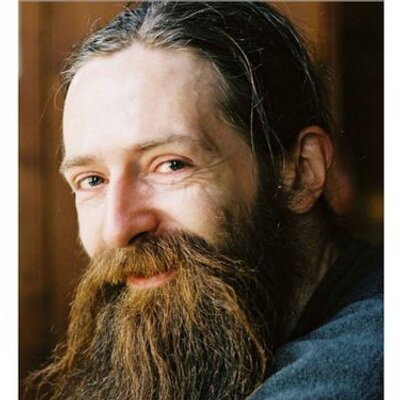
This was great fun!

Podcast debate on longevity hosted by @juliankissa . See comments for link to episode.

oh damn this is gonna be really good!
the best conversation you will ever see on aging and age reversal

This was recorded during Boston Longevity Week and just dropped -- a roundtable with @AubreydeGrey, Alex Zhavoronkov, George Church, and Michael Ringel
dam. Truth 🇬🇧



Watch the episode with the OGs of longevity with @geochurch @M_S_Ringel @aubreydegrey hosted by @juliankissa
Mike Israetel is out now and it's the most unfiltered conversation I've ever had on the show.
We spoke GLP-1s, his full stack (steroids included), the biggest scam in longevity, and age reversal by the late 2030s.
He also told me why his P(doom) is basically zero, a week after @romanyam told me his was 99.9%.
Which got me thinking: I need these two in a room together.
@misraetel
Show more

So true 😂

dating a founder is the modern equivalent of waiting for your husband to come back from war
introducing the xprize for curing aging!! its all becoming very real

Honored to be named one of TIME's 2026 Longevity Leaders! Leading @XPRIZE Healthspan means chasing big questions: How do we measure aging? Slow it? Separate real science from hype? The work is just beginning. Thanks @TIME & @AlicePark 👇
#XPRIZEHealthspan#
Show more
I assume ASI will be operating a bit faster than evolution 😂

For the medical philosophers out there.
How will medical AI account for evolution ?
Our @xprize Special comes out tomorrow (Thursday)! Featuring @j_n_justice , @PeterDiamandis and 8 finalist teams.
Out on The Beyond Tomorrow Podcast!
From our episode with Dr William Li:


BREAKING: Moderna & Merck’s personalized mRNA cancer vaccine treatment succeeds in a Phase 3 melanoma trial.
10 years before they happened, people would've called you crazy for believing:
1893: humans would fly
1917: a plane would cross the Atlantic
1935: we'd build a nuclear bomb
1937: we'd break the sound barrier
1959: we'd walk on the Moon
1968: a baby would be conceived in a lab dish
1987: a computer would beat the chess world champion
1993: we'd sequence the entire human genome
2005: rockets would land themselves upright and fly again
2026: we would cure all diseases...
2030: ????
Show more

I would like to publicly commend @sama and @OpenAI for this taking it at face value.
It is very clear that strange and perhaps dangerous things are happening and our systems are not ready for this.
Models below frontier are competent enough to change lives so lets optimse
Show more
Who are the smartest investors thinking about the Intelligence Age transition?
When I see posts like this, I am reminded of the New York Times article a few weeks before the Wright Brothers first flight that said we wouldn’t fly for a million years. No human-induced revolution has ever been rational based on the data in front of us.
What will happen in the coming decade will be completely irrational.
Show more

Enough of the cure talk. Where are the cures for these diseases?
x Alzheimer's
x Parkinson's
x Heart and vascular diseases
x Diabetes
x Hypertension
x Most cancers
x Multiple sclerosis
x Most autoimmune diseases
X Kidney diseases
x Liver diseases
x Lung diseases
x Depression
x ALS
and a long list of others
Show more
As farfetched as @MartinBJensen’s suggestion sounds now, wouldn’t be surprised if @AnthropicAI do this in 2027 / 2028

Gordian Biotechnology @MartinBJensen proposes Anthropic should just buy a pharma company for $50 billion and run the experiments themselves:
"Maybe the best way to make that happen is that Anthropic should buy a pharma company. They can kind of afford that. The cheap ones are like 50 billion."
"They can just go run those experiments because they have faith in their own models enough to run the test."
"The opposite case, convincing pharma that AI is actually better at making decisions than they are, there's gonna be a tiny pilot up front, and people are gonna be kind of not into trying that because their careers are at stake. It's gonna take a long time to generate the evidence we need to really believe AI will consistently pick the right approach."
@GordianBio
Show more

“Intelligence is actually the smaller part of the problem. The bigger problem is coordination.”
Joscha Bach (@Plinz) argues that the hardest part of AI won’t be making it smarter.
It’ll be getting humans and institutions to act together.
COVID showed us what happens when we can’t.
Now, as the US and China race toward AGI, the stakes are much higher.
Watch the full episode here -
Show more














