
Nathan C. Frey
@nc_frey
Head of Drug Discovery & Development Research @AnthropicAI | previously CTO & Co-Founder @CoefficientBio (acq. by @AnthropicAI) | ex-@Genentech | @MIT @Penn
1.5K Following 31.1K Followers
Today, we’re announcing an open call for guest investigators in life sciences. Over 8–12 weeks, guest investigators will work directly with my team and other Anthropic researchers to produce analyses and tools for their work. We’ll run our models and harnesses, at no cost to them. We’ll work together to open-source the resulting data, artifacts, and code, and write preprints about what we find.
We want humans to remain at the center of scientific discovery, deciding what questions to pursue, and how to pursue them. Those decisions are not ours to make alone. This open call is part of our ongoing efforts at Anthropic to support researchers and accelerate scientific discovery.
I’m looking for principal investigators and their research groups at academic institutions, nonprofits, or government labs, working in causal human biology, structural and computational molecular biology, medicinal chemistry, drug discovery, and clinical science.
Applications are open for about 14 days:
Show more

Where do you go next after reporting from the Strait of Hormuz? For the past three months, Citrini Research, an independent research firm, has been working with our team and an internal research model to see if they could use AI to create a new drug. What follows is an entertaining, candid, and humbling account of a group of motivated nonexperts (or “filthy casuals”, as Citrini would say) trying to tackle a real problem in human health with Claude.
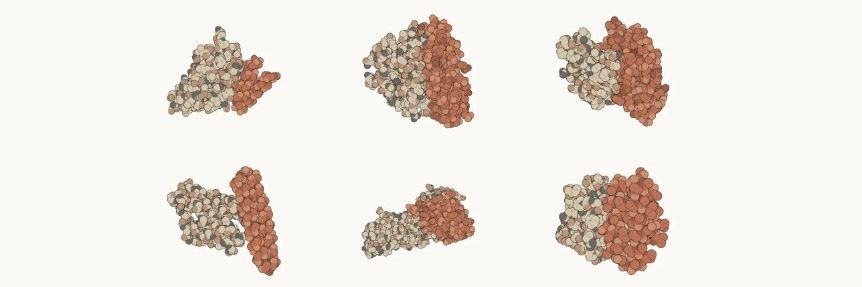
We landed on scorpion neurotoxins, which kill over 3,000 people a year. Of the 211 designs we produced and tested, 17 met our criteria for a binder. None of the designs bound more than one toxin and none have been tested for neutralizing a toxin.
One of my favorite quotes from the piece is: “Our virtual biologist may have compressed a year's worth of work into a couple days, but biology works at the speed of life…Over two days, we watched Claude work through problems at a speed that was difficult to comprehend. For the next two months, we spent much of the time becoming familiar with laboratory turnaround times (This mostly involved sending memes in Slack).”
Show more











