

GEN-1.5 packs a bottle into a box, then packs another bottle into a box, then another bottle, then another one, then another...
Read more about GEN-1.5 in our blog post in the comments below.
Show more

Robot puts a ring on it
GEN-1.5 puts an O-ring on a hydraulic rod gland, then takes the ring off, then puts the ring back on, then takes the ring off, then ring on, ring off, ring on...
Read more about GEN-1.5 in our blog post in the comments below.
Show more

We've reduced the time it takes to go from physical prompt → robot behavior.
The faster anyone can teach a robot to do something new, the easier it becomes to scale physical work.
Read more about GEN-1.5 in our blog post in the comments below.
Show more

Last week @willknight came by and got a preview of one-shot prompting and we had some fun improvisational moments with the robot. Thanks Will for helping capture the moment.

I'm usually wary about talk of "the ChatGPT moment for robots" because language is less complex than the physical world. After visiting @GeneralistAI, though, where I saw their robots perform impressive manipulation with just a prompt, I think you can see it happening in a limited way. (Thanks to @peteflorence and co for having me!)
Show more


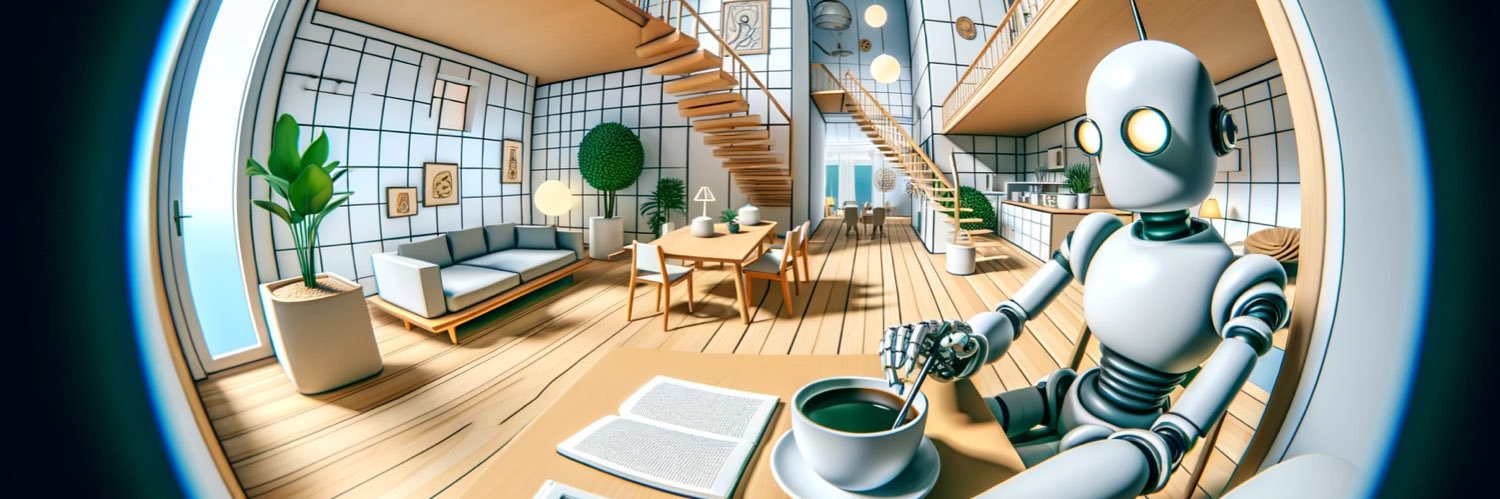
We started planning yesterday’s @generalistai GEN-1.5 announcement about 3 weeks ago. Two weeks ago, already feeling whiplash from new results, I asked ChatGPT to create this image to share in our internal meme channel.
Show more


beautiful error correction behavior from a single human demonstration...

I rarely repost content, but this is a step-change for robotics research. As an embodied AI researcher, I find this to be a truly special moment for the field

At 10:06pm on Aug 3, I watched a robot do something I thought was years away.
We were working on few-gradient learning with GEN-1.5, wondering how far we were from landing physical prompting: show the robot a task once, and it just does it. We YOLOed it, and the robot imitated exactly what we demonstrated, with 0 fine-tuning. We gave more prompts for different tasks. More successful rollouts landed. I could not believe my eyes.
Looking back, this represents the culmination of a huge amount of work across the entire team, many failed experiments, and years of groundwork from the community. I just happened to be the one standing in front of the robot when it all clicked.
@andyzengineer once asked me: "If Generalist failed tomorrow, what would we want to have left behind that could benefit humanity?"
I believe we found one answer: an existence proof of physical prompting.
Show more

Introducing GEN-1.5, a one-shot learner.
It can learn new tasks in a few seconds. Show it what to do, and it generalizes.
This capability emerged from pretraining on physical data at scale, as a step towards our mission of building general intelligence for the physical world.
Show more


During a recent visit to Generalist AI, I watched a robotic arm improvise and use a banana as a tool.
Ever since I started working on robot foundation models a handful of years ago, the broad ability to one-shot in-context learn has been the single most vivid goal in my mind along the long road ahead. It’s something @andyzengineer and I have especially been thinking together on for several years now, and something shared by the whole team at Generalist as a major goal.
But even before anybody started talking about robot foundation models, too, the capability this enables, i.e. generalized one-shot learning, has been both incredibly concrete and elusive. In terminology that I think many other people have come up with as well, in grad school we used to talk about a “Ctrl-C-Ctrl-V” type of capability. See something, and have the robot do it too. This same type of idea inspired the name of the 1970 MIT copy demo (
The thing is, it sounds simple, but is incredibly hard since the world is never quite the same when it got copied and where you want to paste it. The real world can be hard to predict and is full of variation. To do this, you need strong generalization, and it needs to be acquired in a single example. Doing this over a wide range of tasks, especially for dexterous tasks, is hard mode.
Lots of the components of the idea of making this all happen have been there for a long time. As an example, this 2017 NeurIPS paper “one-shot imitation learning” has excellent vision, with ambition well beyond what was achievable at the time, and although it’s not referred to as “in-context learning” since it was pre-Transformer, it actually uses attention to condition on a single demonstration.
And now, many things have happened since early 2017, including the broadly celebrated arrival of one/few-shot in-context learning in language models in 2020.
This new model GEN-1.5 takes in everything we have built and learned over the past couple years at Generalist. It has been training for 8 months. It has taken an incredible amount of commitment and grit from the whole team to get here. The level to which this model has survived many surgeries has continued to surprise me. And its capabilities have continued to surprise as well. We found compositional generalization on Friday. We found sim2real prompting earlier last week. We filmed the contiguous uncut videos of live prompting yesterday.
To be clear, the success rates are modest, and there’s still a long way to go. But now I have definitely seen a ~decade-long imagination come into the real world.
Show more
Introducing GEN-1.5, a one-shot learner.
It can learn new tasks in a few seconds. Show it what to do, and it generalizes.
This capability emerged from pretraining on physical data at scale, as a step towards our mission of building general intelligence for the physical world.
Show more
Butter, generalized
We've improved how GEN-1 learns to adapt to new actuators and new robots at the lowest level, with up to 10-20x gains on internal benchmarks. This significantly boosts performance on high-precision tasks like disassembling parts from a NIST board.
Read more about GEN-1 in our blog posts in the comments below.
Show more

Yes, “all the hands”. Yesterday we showed a glimpse and announced we’re at over 9,000 variations so far available for pretraining. 2-finger, 5-finger, power tools, cooking tools, tape dispensers — it’s all good. Robot intelligence should be able to use them all.
Amazing cooking across the full stack from the Generalist team!
Show more
Why create robot intelligence for just one hand, when we could have it learn from many?
GEN-1, our latest embodied foundation model, now supports a broad range of end effectors from 5-finger hands, to specialized tools, and everything in between.
Show more

Why create robot intelligence for just one hand, when we could have it learn from many?
GEN-1, our latest embodied foundation model, now supports a broad range of end effectors from 5-finger hands, to specialized tools, and everything in between.
Show more

Most robot demos are scripted.
Generalist's GEN-1 is not.
> GEN-1 was doing a task
> Mid-task, an extra object was thrown into the bin
> GEN-1 quickly adapted to the new environment
> Still completed the task smoothly
This is the difference between a scripted policy (seen in viral launch videos) and a real foundation model.
GEN-1 was trained on 500,000 hours of proprietary, real-world dexterous manipulation data.
It has NEVER seen that exact scenario before.
This was the coolest demo at @AutomateShow
@GeneralistAI @FlexivRobotics
Show more


These are the kinds of tasks that felt impossible to automate just a few years ago. and here they are showing it live










