
Pratik Sarkar
@pratiks_crypto
Cryptography Research Consultant @obsiduslabs | PhD in Cryptography, Boston University | ex-Researcher at @SUPRA_Labs, @Meta and @Visa Research
457 Following 843 Followers
Very useful set of tools, especially for non-Apple users.
On Apple you can get the same results using Preview.

I'm launching today.
70+ free tools for PDFs and files: compress, edit, sign, convert Word docs, remove image backgrounds, transcribe audio, and build workflows.
No account. No added watermark. Free to use.
Try it:
Show more


BREAKING: OpenAI’s solution to Navier–Stokes does not match its Lean verification.
The most important article to read today is not one of OpenAI’s 700 AI-generated math papers.
It is this other paper, making a deep and worrying point:
A Lean-verified proof does not automatically validate the proof written in natural language, nor does it mean that the formal statement captures the intended theorem.
During translation, an AI can change an assumption, weaken a statement, or replace the argument entirely.
It can hallucinate another theorem.
Lean correctly verifies the result.
But the proved result may no longer be what the paper claims.
This is a general problem. Things get spicy when the authors examine OpenAI’s proposed Navier–Stokes solution.
They identify at least two mismatches between the written intermediate results and their Lean counterparts:
One estimate claims that four additional input derivatives suffice. The Lean version requires five: a weaker result.
A pressure-flux estimate is obtained through a different bound, and proved through a different argument.
It is not clear whether these mismatches invalidate the entire proof.
But they raise an important issue.
OpenAI is flooding us with claimed revolutionary breakthroughs. Yet nobody knows whether the proofs are correct or whether they prove what they claim to be proving.
Epistemia at scale.
*
Paper in the first reply
Show more

Perfectly summed up by @yehuda

I wasn’t going to comment since this is a really bad take IMO, but since it’s taken off I feel the need to. To my understanding, there is no evidence whatsoever pointing to a break of decades old hardness assumptions like elliptic curve cryptography. 1/n
Show more
New paper on how to securely instantiate Fiat-Shamir using VRFs.
This is a joint work with @RiddhiGhosal (Nokia Bell Labs) @aniketpkate (Mysten Labs) @pratyaycrypto (Hashgraph), and @sinharo (Hashgraph).
The idea seems simple but the proofs are extremely complicated. Kudos to @RiddhiGhosal for taking the lead on that.
Show more

The best ideas are the ones that seem obvious in hindsight.

The all-time favorite 3SUM problem!

Suppose you have n integers, and you want to decide whether some three of them sum to zero. It's not hard to solve this problem in O(n^2) time (think how to do it, the dumbest algorithm takes O(n^3) time!) and for a long time it was thought that getting time O(n^{1.999999}) is not possible. This hardness assumption was shown to imply many other interesting hardness results.
Not anymore! Claude obtained the O(n^{1.9992}) time algorithm together with a Lean proof, and the algorithm was checked and digested by Josh Alman and Virginia Williams who are leading experts in fine-grained hardness, so my a priori estimate that it's 99.99%-likely to be correct.
My mind is just absolutely blown! It's crazy that in such simple to state problems progress is still possible after decades of many smart people thinking hard about them.
Show more
Alternative post quantum secure constructions of time lock puzzle from isogenies.

[New] Post-Quantum Time-Lock Puzzle from Isogenies (Shweta Agrawal and Andrea Basso and Sikhar Patranabis)
Sharing this for folks who have already read the Shielded Bitcoin paper.

Sat down to answer some of the questions that came up following our paper.
Thanks to everyone who took the time to read it carefully, challenge the ideas, and ask thoughtful questions. This kind of feedback and discussion is exactly how we move research forward!
Show more

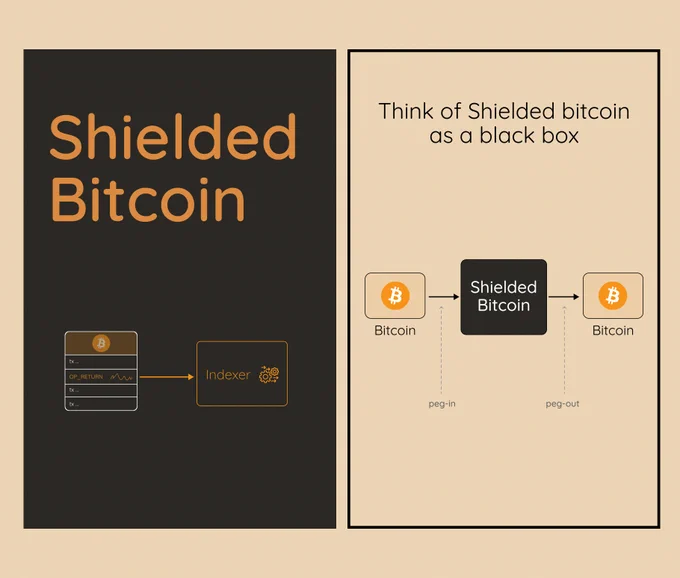
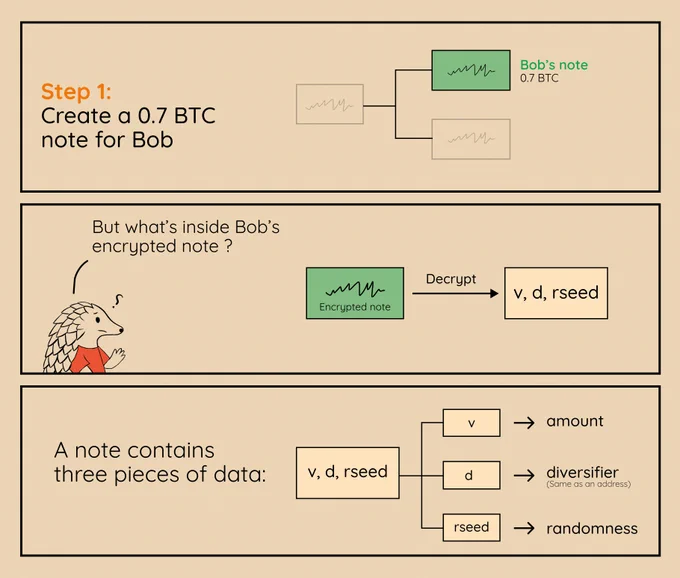
Shielded Bitcoin explained simply
1/3


I am happy to announce our work
"Practical Post-Quantum Secure Publicly Verifiable Secret Sharing and Applications"
has been accepted at ACM PQQS 2026. (
In this work, we show that in a publicly VSS with a non-interactive dealer, NIZKs(for correct dealing) can be completely avoided by combining lattice-based IBE + a verifiable complaint phase between the receivers.
This removes the necessity for a lattice-based NIZK for post-quantum PVSS and is useful for post-quantum secure applications over the blockchain.
This is a joint work with @aniketpkate (Mysten Labs) @pratyaycrypto (Hashgraph) @sinharo (Hashgraph) and @thehumzasaleem.
Paper link:
Show more
Very interesting work by @guruvamsip @commonwarexyz to obtain Batch decryption using pairings + high school algebra:
1. Each client chooses a random k_i, encrypts their message under k_i^2 and the validator's pk in the target group. Each client also provides pk.k_i^2, and k_i in group 1 and group 2.
2. The validators decrypt the sum of all the encrypted k_i's (denote it as K) by sending a single decryption share.
3. Given the decryption of K^2 as pk.K^2 one can compute the individual pk.k_i^2 as follows:
(Ignore the pk for now)
K^2 =(k_1 + k_2 + k_3)^2 = k_1^2 + k_2^2 + k_3^2 + cross terms.
(This omits a lot of crucial details for simplicity)
Suppose you want to decrypt the message under k_i^2 using K^2:
1. The cross terms can be removed by combining k_i in g_1 and k_j in g_2 (and vice versa) using pairings for all j!=i. This allows to remove the cross terms.
2. Then the individual pk.k_j^2 can be removed by using the client-provided material.
The brilliance lies in figuring out the optimal amount of information to put into the ciphertext, which allows the cross-term removal (using pairings) while preventing an adversary from decrypting the client ciphertexts without the decryption of the sum K.
Kudos on the great work!
Show more

It turns out all you need to deploy an encrypted mempool (via Batched Threshold Encryption) is an off-the shelf DKG. No CRS required.
Ciphertext overhead is 2G1 + G2 + 2F and partial decryptions are a single G1 element. Decryption runs in O(B log^2 B) time.
Show more


Compute Polynomials Twice as Fast -
Here's a fun result, done entirely without AI.
That because we proved it years ago, but it ran a hundred pages and we weren't quite sure enough to publish. Now AI verified it in Lean.
A fun fact about polynomials is that
P(x) = x⁴ + a₃x³ + a₂x² + a₁x + a₀
can be evaluated in just two(!) multiplications!
The trick is to write
y = (x + b₀)x + b₁
P(x) = (y + x + b₂)y + b₃
where b₀…b₃ are easy to calculate from a₀…a₃.
Polynomials are everywhere from computing exp/sin, to cryptographic hashes and codes. Over finite fields multiplications are particularly expensive, so a 2x speedup matters.
Donald Knuth and others showed ~n/2 multiplications suffice for any degree n, but their preprocessing needs complex roots: numerically unstable and useless over finite fields. Rabin & Winograd fixed that with rational preprocessing, but 2logn extra multiplications, which hurts at the small n we most care about.
Our new method solves this. It uses ⌈(n+1)/2⌉ multiplications, and we prove this is optimal.
You can try it out on your own polynomials at
Show more
Interesting read especially the last case where SNARK (proving aggregation of signatures) could economically lead to producing empty blocks by miners.


Really impressive that they could do the client-side proving in 22 seconds on a Rs. 9000 ($93) Android Phone.
Kudos to the @worldnetwork team.

Proud to announce ProveKit v1! Devs can build authentication with ZK privacy, running on all user devices.
2 years ago I started this project to show that every users’ phone is capable of ZK proving a passport document, under a minute, no trusted setup, 128bit post quantum secure. Thanks to collaborations with many world class teams, and several breakthroughs, this is now reality! Thank you everyone involved 🙏
ProveKit uses Noir as it's programming language, so try your circuits today!
Show more


Key recovery attack has been added and it works in less than 2^128 operations. Check table 3.
Really interesting talk. Looking forward to reading the paper and seeing how their Distributed Key Generation works for the threshold PRF.










