

The Rational Animal 🤔
@theobjectivist
Champion of Reason, Individual Rights and Capitalism.
946 Following 16.4K Followers
True. But will they name or assign blame to the one unwilling to do so?

Damn right!
Economics 101. Cap the price below cost and supply disappears. Texans should prepare for shortages, and then for the sequel, where capitalism gets the blame for socialism's results.
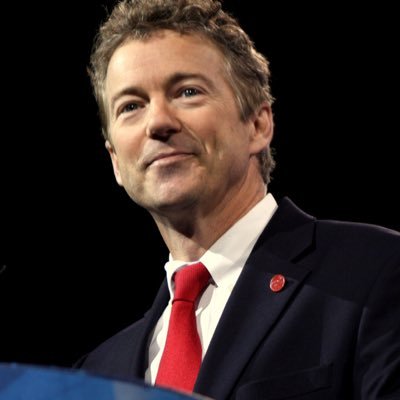
Nothing like your first act being out of the Venezuelan socialist playbook . . . This will not end well.

You have to laugh at how ridiculous it is that this is true. Earn it, taxed. Spend it, taxed. Invest it, taxed. Die, taxed. The one activity the government performs flawlessly, and then it asks for more because it ran out. There is a word for taking a cut of every exchange. Racket.
Show more


Great news: @freedomcaucus officially says Congress should “Pass a robust permitting bill to expand American energy dominance and drive down the price of fuel and electricity for families.”
As I explain below, being pro-freedom requires both de-subsidizing and unleashing energy.
Show more
This -->
The 2-minute electricity case for BAAJA
If we look at the overall effects of BAAJA on electricity compared to the other options on the table, it is a major improvement—above all because it helps unleash electricity supply.
Republican influencers are calling for changes to BAAJA on electricity that will kill it
Most Republicans acknowledge that overall BAAJA (the Bipartisan American Affordability and Jobs Act) by unleashing the freedom to build, will be great for America’s economy.
But some Republican influencers are calling for House Republicans to challenge and change BAAJA—specifically its electricity transmission provisions—to help American electricity.
Given the 20 days of floor-time remaining and many competing priorities, these calls for significant changes will almost certainly kill the bill.
We need to compare BAAJA’s overall effects to the other options on the table
The criticisms of BAAJA by Republican influencers tend to cherry-pick aspects of BAAJA that are imperfect, sometimes very imperfect.
When we have a binary option—pass a freedom-to-build bill virtually as-is or not at all, we need to look at its overall effects compared to the (very bad) status quo.
If we look at the overall effects of BAAJA on electricity, let alone our economy, it is a big improvement on the status quo.
BAAJA unleashes cost-effective electricity, which is priority number 1
Strangling reliable electricity supply is by far the biggest problem we need to address. If we don’t, prices will skyrocket as demand rises from computing, electrification, and new industry.
BAAJA unleashes supply across the board: power plants, pipelines, and power lines.
BAAJA places real but incomplete limits on wasteful utility spending
BAAJA includes multiple provisions designed to limit utilities’ ability to force ratepayers to pay for wasteful transmission infrastructure.
BAAJA’s limits on ratepayer-financed transmission are on paper much better than the status quo, but not tightly defined enough to stop all wasteful lines.
But today’s limits on wasteful spending are looser than BAAJA’s—enabling a lot of wasteful local trasmission—while strangling cost-effective transmission and electricity in general.
For pro-reliability administrations, BAAJA will make our transmission situation much better—more cost-effective transmission and less wasteful spending.
Given the options on the table, BAAJA is worth adopting on electricity grounds alone—and an absolute no-brainer given that it also unleashes development throughout the economy.
Answering electricity objections to BAAJA
Myth: BAAJA dramatically expands federal infringement on legitimate state authority over transmission.
Truth: The federal government already has the (constitutionally valid) authority to overrule states on interstate transmission. BAAJA actually limits that authority by setting new, stricter standards for what lines it can be used to approve.
Myth: BAAJA undermines state authority by letting FERC investigate local transmission spending—and this is unnecessary because states already oversee local utility projects.
Truth: Utilities are getting away with a lot of wasteful local spending because state regulators lack the resources and expertise to scrutinize every project. BAAJA increases state authority by giving states the option to ask FERC to investigate local spending.
Myth: BAAJA’s interconnection provisions give a future anti-fossil-fuel administration the power to block natural gas power plants from connecting to the grid.
Truth: BAAJA adds an explicit fuel-neutrality requirement and preserves existing protections against discrimination.
Myth: BAAJA favors certain forms of energy over others.
Truth: It’s a remarkably technology-neutral bill that increases all forms of energy’s freedom to develop and compete.
Myth: The House needs to demand major changes to BAAJA so the House “uses its voice.”
Truth: BAAJA overwhelmingly incorporates ideas and language led by the House, such as the SPEED Act and the PERMIT Act.
Show more
Mark, look at your premise. Do we need commercial insurance carriers at all. Who is we? You are not asking whether you would buy a policy. You are asking whether a group of people with the power to legislate should permit other people to sell one. That is a different question, and it is the only question you ever ask.
The real question is whether the state has any right to tell private individuals, and companies that are nothing but private individuals acting together, how they may trade for the things their health requires. Not whether a carrier takes enough risk to satisfy you. Whether it is any of your business, or Congress's, what two consenting parties agree to.
Ask that same question of every industry and watch what the record says. The government held a monopoly on phone service for most of a century and you waited weeks for a rotary handset you were not allowed to own. It still holds one on first class mail. It licenses the utility, franchises the cable company, builds the roads, runs the schools, and keeps public libraries open in a world where the entire contents of one fit in your pocket. In every case the service froze at the moment the monopoly was granted, and in every case the one that was eventually opened to trade is now cheap and everywhere. The phone in your hand is the answer to your question.
Medicine is not different. The best healthcare system in the world was built here under the principle that a man's life, his work, and his earnings are his own, and the doctor's are his. Antibiotics, anesthesia, insulin, the polio vaccine, open heart surgery. Every one arrived as a miracle for the rich and reached the working man within a generation, because nobody with a title was deciding who needed what. Then the planners took over in 1965, asking exactly your question, do we need this, do we need that, and never the question of right. Sixty years on, real spending per person is up seven times, the government pays half the bill, and you are asking whether the next thing should be allowed to exist.
Insurance is a product. A man who wants to pool his risk with strangers at a price he accepts is engaged in a trade, and a carrier that takes too little risk for the premium will lose him to one that takes more, the moment the law stops telling him which plan he must buy and which doctor he may see. The carriers you despise are 72 percent government revenue because government made them so. You are describing a creature of the state and asking whether the state should finish it off.
It is not your call. It is not Congress's. It belongs to the man whose body and whose money are on the table, and the entire history of this country's decline in medicine is the history of men like you deciding it was theirs.
Show more

The real question is do we need commercial insurance carriers at all ?
72 pct of revenues for the biggest comes from carriers. Another chunk comes from self insured companies
Does anyone have any data or research on how much risk the big insurance carriers actually take ?
Show more
I agree, and not the way you mean it.
What is Big Medicine? Strip away the branding and the only thing in American healthcare that is big in any meaningful sense is the government. It pays about half of every dollar spent on care, and more than half once you count the tax code steering employer insurance. It decides who may become a doctor or a nurse and how many of each get trained. In most states it decides whether a hospital may be built at all. It holds a monopoly on whether a drug or a device may be sold. The conglomerates you want broken up exist in the shape they do because that is the shape the rules reward.
Then look at the result. In 1965, the year Medicare and Medicaid began, this country spent about $216 per person on healthcare, which is $2,147 in today's dollars. Last year it spent $15,474. That is a 621 percent increase in real terms, seven times over, while the government's share of the bill went from under a quarter to about half. Healthcare went from 5.6 percent of the economy to 18.
CVS is not the monopoly. CVS does not have the power to stop you from buying a drug, opening a clinic, or hiring a nurse from another state. Only one entity in this market has that power, and it is the one AOC works for. Breaking up the companies while leaving that intact gives you smaller firms answering to the same monopoly, and the price keeps climbing, because the price is not coming from them.
So yes. Break up Big Medicine. Start with the only part of it that can use force.
Show more
Break Up Big Medicine
Please share this with anyone who says "What's the rush on BAAJA? Why can't politicians just work on it next Congress?"
Those people are either incredibly far-removed from the actual negotiations, or they just don't want real permitting reform to pass.
If reform doesn't happen now it'll be at least 2 years. But given that comprehensive Congressional permitting reform has been failing for 46 years I'd bet on a lot longer.
Show more
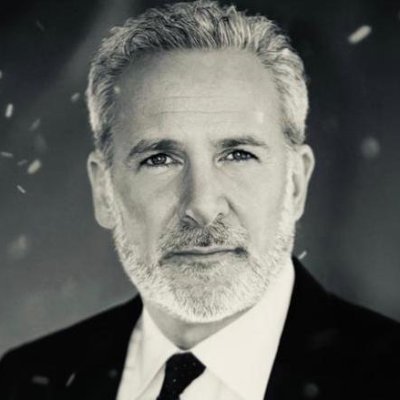
Abdul El-Sayed says that he wants the government to put money in people's pockets. But the government has no money that it doesn't first take from people's pockets. So what he's really advocating is that the government take money away from some people and give it to other people.
Show more

I’ve you’ve never read Atlas Shrugged, now would be a good time

JD Vance represents everything wrong with the Republican party. He should do everyone a favor and retire from politics altogether. He has no principles, only a reading of the polls.
In January, as Trump weighed war with Iran, Vance personally asked Rasmussen to add questions on how many American combat deaths the public would tolerate. A regime that has made war on Americans since 1979 is a matter of self-defense. Vance treated it as a matter of public opinion. He defended the war this summer, and now that Republicans have lost seven Senate seats, including his old seat in Ohio, he blames the war and says the party must change its relationship with Israel. The tariffs get none of the blame, because he champions them.
He rejects the idea the country was founded on. He told the Claremont Institute that defining America by the Declaration of Independence is over-inclusive and under-inclusive at the same time, and that men whose ancestors fought in the Civil War have more claim to America than those who say they don't belong. Rights belong to every man by his nature, not by his bloodline. He praised Lina Khan's war on successful companies, and his new memoir has a chapter attacking free market economics.
The Republican party does not need an heir. It needs men who will defend individual rights and capitalism on moral grounds, whether the polls agree or not. Ten years of Vance's record show he is not one of them.
Show more

Mark, you are welcome to help anyone you like. Fund any clinic. Pay the premiums. Build Cost Plus. Nobody is stopping you, and nobody will in a free country.
That is not what you are proposing. You are proposing that every working American be made to fund your idea whether they agree with it or not. Your choice of motivations is yours. It does not become a claim on anyone else's paycheck, and calling the claim help does not change what it is.
Read your own post again. Every example in it is voluntary. The entrepreneur picks his reward. The worker picks his employer. The customer picks what to buy. Those people are all traders, owner and employee alike, and each arrangement stands because both sides said yes.
But then you want a Treasury payroll deduction from everyone. A trade you cannot refuse is not a trade. It is the one thing in your entire post nobody chose.
Capitalism is not an economic policy. It is the social system in which all property is privately owned and all human relationships are voluntary, which means it is the political form of freedom itself. The only thing it bans is the initiation of force. That is why the signal are the result of voluntary choices, as you say, and also why your plan is outside it. The moment you reach for the Treasury you have left capitalism, and no amount of good intention brings you back in.
So the question is simple. Why do you believe it is right to confiscate one man's earnings against his consent to fund an idea you think is good? If the idea is good, people will invest in it voluntarily. You have raised money your whole life. You know what it means when nobody will write the check.
Capitalism and Medicare for All are not two options on the same menu. One rests on consent and the other on force, and you cannot run both on the same patient. What we have now is the remnant of a free market in medicine, and the record since 1965 is not in dispute. Medicare projected at $9 billion, running $444 billion. Premiums doubled after the law that promised to cut them. Three quarters of insurer revenue already tax money. Prices climbed in exact step with the government's share, and you want the share to be all of it.
Capitalism works for everyone who trades. What it refuses to do is give any man a right to another man's life, and that refusal is not its failure. It is the reason a free man can walk into a hospital in the first place.
Show more
Profit isn't the only signal. Feeling great about helping people. Changing people's lives. Helping your country. Putting people in a position to succeed. To enjoy their lives. People get to pick their own motivations. If they are fortunate, they will reach those goals.
That's the beauty of capitalism. People get to choose the reward that motivates them.
Entrepreneurs can choose to make as much money as possible. Or not. They can choose to make enough money to focus on using their most valuable asset, their time, to not have to work at all. They can choose to make money to help people.
But. Every entrepreneur that wants to reach their goals needs people. People to work for them, buy from them, sell to them. Even the person in the basement with nothing but AI, needs to connect to humans to reach their personal goals.
Capitalism works. But not for everyone.
Where Capitalism fails people, Capitalism isn't the problem. It's the people that put profits above all else that are the problem.
If you put your personal net worth or cash flow above all else, you may make insane amounts of money, but you will suffer the greatest indignity. You will be hated. Your time will not be your own. You will never experience the joy that comes from helping others.
No one is born knowing where their life will take them. We get to do our best, in our circumstances, to try to enjoy our lives.
Capitalism allows us to try to get there. Capitalism allows people who have achieved those goals to help others. Capitalism allows us to choose our own personal path.
Unfortunately, we don't all get there. But we get to try to choose the path we want.
The signal is personal choice. Not profit.
Show more

What gets overlooked about Republicans getting crushed in the midterms is that they didn't even lose to particularly good Democrats.
They couldn't even manage to appear preferable to some of the most economically illiterate, far-left candidates in American history, some of whom have expressed views that seem disturbingly sympathetic to America's enemies.
That's actually pretty hard to accomplish by accident.
Show more
Serious answer.
A regime is people, money, and weapons. Take all three away.
People. The supreme leader, the Assembly of Experts, the IRGC command, the Basij command, the intelligence ministry leadership. Named targets, found and killed. The last Basij chief was killed in March. The regime named a new one in August. He gets the same treatment, and so does the next one, until nobody wants the job.
Money. Kharg Island handles around 90 percent of Iran's crude exports. We already hit the military targets there in March and are blockading the rest. Finish it. The regime cannot pay the IRGC, Hezbollah, or the Houthis with oil it cannot ship.
Weapons. The nuclear sites, the missile production plants, the drone factories, the launchers, the navy. Everything that reaches past Iran's borders.
That is a few weeks of air and sea power plus a short ground component for the targets bombs cannot reach, which is what Israel asked for in March. Then you leave, after telling whoever is left that rebuilding any of the three gets the same treatment.
Nobody writes their constitution. Nobody polices their streets. The Iranian people decide what comes next, which is more than they have had since 1979.
Show more

@theobjectivist Serious question: “finish off the regime” how?
Mark. Do you hear yourself?
You say government doesn't have to make a profit, and that is true. It is the whole problem. Profit is the signal that tells a producer he created more value than he consumed. Government has no such signal, which is why it cannot know whether anything it does is worth doing. That is not a friction AI removes. It is the absence of the one piece of information AI would need.
And everyone else in your plan does have to make a profit. The researcher who spends ten years on a molecule that may never get through the FDA. The engineer who designs the scanner. The company that risks capital on a manufacturing line. The doctor who borrowed three hundred thousand dollars for the right to work ninety hour weeks. The nurse. The hospital that has to keep the lights on. Every one of them has to take in more than they put out or they stop, and when they stop, the care stops with them. Government not needing a profit means nothing if the people who make the thing still do.
Then there are the people whose money you intend to run through the Treasury. They earned it. They need it. And they have a right to it that does not depend on whether your commission has a good use in mind. A government that doesn't have to make a profit is a government that only has to take, and the taking is the part you keep leaving out of the pitch.
You know all of this. You built Cost Plus on exactly these premises. Publish a price, earn a margin, let the customer decide. You just refuse to grant the people who make medicine the same thing you granted yourself.
Show more
There are plenty. FAA, etc. Plenty they make worse too. But AI will be a great equalizer. So much of the friction and cost that bureaucracy introduces, can be eliminated by AI.
Gov doesn’t have to make a profit. So AI used well, can allow services from all levels of gov to do some things better, for less cost than private companies.
It won’t happen tomorrow, but if government agencies can find a way to use AI to optimize for the betterment of the people in this country (I know for many the default answer is no ), and are completely transparent about how AI is used, gov could look dramatically different in a decade
Show more
If by End the War you mean finish off the regime and come home, I am with you.
If you mean leave the regime standing and come home, then check your premises, Senator. What is the proper role of government? You answer that well in economics. In foreign affairs you drop the principle. The one job a government exists to do is protect the individual rights of its citizens from force, and foreign force counts.
1. Do you believe that a regime that has chanted death to America for 47 years would hold a nuclear weapon and not use it?
2. Do you believe protecting us from foreign threats is the job of government or not?
3. Is the record below, coupled with a ruling clergy that treats martyrdom as a virtue, not enough evidence that the threat is real and that ending it is the government's job?
Nobody here is asking for nation building. The job is to remove the threat and leave.
This is also why you have not won a national primary and most will not back you if you run for President. 84 percent of Republicans backed the strikes on Iran in the March Marist poll, and about 8 in 10 say they make Americans safer. That base will not accept the answer that if we just left them alone they would leave us alone. They have read the record below. Voters can tell when a man means it on the deficit and goes quiet on the people trying to kill them.
I am not asking you to abandon a principle. I am asking you to apply it all the way.
The Iranian record:
US Embassy in Tehran seized, 52 Americans held 444 days. Nov 1979 to Jan 1981
US Embassy in Beirut bombed, 63 killed including 17 Americans. Apr 1983
Marine barracks in Beirut bombed, 241 US servicemen killed. Oct 1983
CIA station chief William Buckley kidnapped in Beirut, tortured and killed in captivity. Mar 1984 to Jun 1985
US Embassy annex in Beirut bombed. Sep 1984
Americans kidnapped and held for years in Lebanon by Hezbollah. 1982 to 1992
Khobar Towers bombed, 19 US airmen killed. Jun 1996
Iranian made EFPs used against US troops in Iraq, 603 Americans killed. 2003 to 2011
Plot to assassinate the Saudi ambassador in a Washington restaurant. 2011
American citizens taken as hostages for prisoner swaps and ransom. 2007 to present
Ballistic missile strike on US forces at Al Asad, 110 troops with brain injuries. Jan 2020
Plots to assassinate Bolton, Pompeo, and Trump on US soil, charged in federal court. 2022 to 2024
Drone strike on Tower 22 in Jordan, 3 US soldiers killed. Jan 2024
Hundreds of missiles and drones fired at US bases across the Gulf, 13 Americans killed and over 300 wounded within a month. Feb to Mar 2026
Show more

All exit polls showed Americans were concerned about the high cost of living.
Republicans need to understand that inflation from deficit financing eroded paychecks by about 27% over the past 6 years, and the Iran war caused gasoline, diesel, and fertilizer prices to soar. Tariffs added another cost to consumers.
Republicans need to offer balanced budgets and end the Iran War and the Trade wars.
Show more

True. Mankind started in anarchy and anarchy is what every society crawled out of, not toward.
The whole history of civilization is the history of men trying to get force under objective control, and the anarcho-capitalist proposal is to hand it back to whoever can field the most muscle.
Competing defense agencies is just a polite name for competing gangs, and the gang with the biggest arsenal becomes the government anyway, except now without a constitution, without rights, and without anyone to appeal to. Capitalism does not grow out of anarchy. It requires the one thing anarchy cannot provide, a single government restricted to protecting individual rights under objective law.
Freedom is not the absence of government. It is government confined to its proper job which is to protect individual rights.
Show more
Question for anarcho-capitalists:
If anarchy naturally leads to freedom and capitalism, how does that happen when the overwhelming majority of people believe freedom includes an entitlement to something at someone else's expense?
If people don't understand or respect individual rights, why would removing the government suddenly make them respect those rights?
And what prevents them from simply establishing a new government to enforce their preferences?
Show more
Get the government out. Completely out. That includes the FDA and the American Medical Association. Phase out Medicaid and Medicare and let insurers produce any products they choose and individuals purchase any they choose. It is called capitalism, and it is what built the greatest healthcare system in the world in the first place. Antibiotics, anesthesia, insulin, the polio vaccine, open heart surgery. Every one of them arrived as a miracle only the rich could reach, and within a generation a working man could afford it. That is what capitalism does with every product it is left alone to make. The price falls toward the cost of production and the thing that once saved only the wealthy ends up on a pharmacy shelf.
What you are calling for profit healthcare has not existed here since 1965. What you are looking at is a mixed economy, and a mixed economy is a system in which the government has no principles and therefore no limits. Each control produces a problem, and the problem is then offered as proof that the market failed and more control is needed.
In 1942 the government froze wages to fight wartime inflation, so employers who needed workers could not offer more pay. They offered health insurance instead, and Washington ruled that the benefit did not count against the freeze and would not be taxed as income. A dollar of coverage was suddenly worth more than a dollar of wages, and within a decade insurance was something you got from your job rather than something you bought. That is why the patient stopped seeing a price. The man receiving the care, the man choosing the plan, and the man paying the bill became three different people, and nobody in that chain has a reason to ask what anything costs.
Medicare in 1965 made the government the largest buyer and put it in the business of dictating what care is worth. The FDA holds a monopoly on the right to sell a medicine. The AMA holds a monopoly on who may practice. A 1986 law compels every hospital to treat whoever walks in and shift the bill to you. And now three quarters of insurer revenue is tax money. There is no profit motive left in that structure to blame. There are men responding to the incentives a legislature wrote.
Medicine is a product of the human mind. It exists because particular men chose to study, to invent, to build, and to risk their own capital doing it. To call it a right is to claim those men. You can have the medicine men produce when they are free, or you can have the medicine men produce when they are commanded, and the record of the second is the queue.
Nobody is asking you to take capitalism on faith. Compare the fields where the government left medicine alone. Lasik and cosmetic surgery got cheaper and better every year while everything the government touched got more expensive and slower. That is what a price does when the buyer is the one paying it.
The fix is not a better plan. It is removing the premise that anyone has the right to plan another man's care, or another man's life.
Show more

@theobjectivist Wow that’s a lot of words. None of which offer any improvement or solutions to the shitty state of for profit US healthcare.
I agree suicidal empathy is an invalid concept. It's a package deal: it lumps a cognitive faculty, understanding how others think and feel, with a moral code of self-sacrifice, then blames the faculty for what the code produces. Understanding is valuable. She is also right that you can understand behavior without excusing it and care about suffering without owing its repair. There are no unchosen obligations.
But the problem isn't excess compassion or empathy. It's altruism, the code that holds self-sacrifice as virtue and need as a claim on the able. Boundaries don't fix it. A boundary is a compromise with a premise you've already accepted.
Compassion is proper toward innocent victims, not those who choose harm. Empathy that refuses to judge becomes a sanction of evil, paid for by the people who produced the values being sacrificed.
The issue isn't how much a person feels. It's what he believes he owes.
Show more
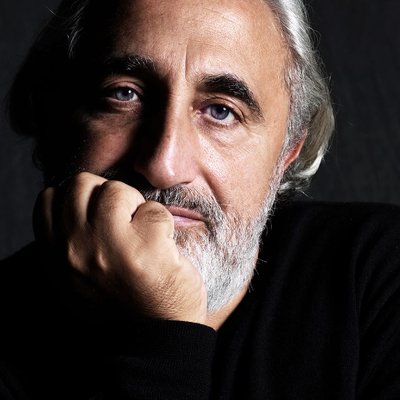
I hate the term "cancer" because it misrepresents the concept of how unchecked cell division leads to the growth of tumours. It takes a truly luminary person to post such brilliant takes.










