

David Rennie
@DSORennie
Geopolitics Editor & author of “The Telegram” column @TheEconomist.Postings in Beijing, Washington, London, Brussels, Washington, Beijing, Sydney. Panelist @1a
905 Following 44.3K Followers

How will Donald Trump deal with Ukraine after the midterms? If voters deliver a heavy defeat next week, Mr Trump could follow in a long line of lame-duck presidents who turn their attention to foreign policy. Our top editors debate whether that will mean a pro-Putin push and whether Congress or public opinion can rein him in. Watch the full show
Show more


Aiming to addict children and young people under 18 to nicotine of any kind will set them up for lifelong health harms and is completely unacceptable.
New regulations coming in today will make it harder for those trying to profit from doing this.
Show more


DeepSeek and Moonshot distilled Astra. Let them
In @TheEconomist this week, we argue that distillation is good for consumers and good for America.
The biggest losers are China's AI labs. They are sacrificing long-term innovation for short-term gains
Show more

The folly of Donald Trump’s vision of a Middle East at once run by nationalist strongmen unconstrained by international law, and also made rich by international commerce, shipping, aviation and data centres. My column The Telegram, reported from The Gulf
Show more


The cost of living, growth and jobs are all impacted by global events. To pass the ‘Makerfield Test’ and - deliver for ordinary people - the next UK budget should build resilience to external shocks.
Read @AsthanaRoli's latest analysis for Chatham House.
Expert comment | |
Show more

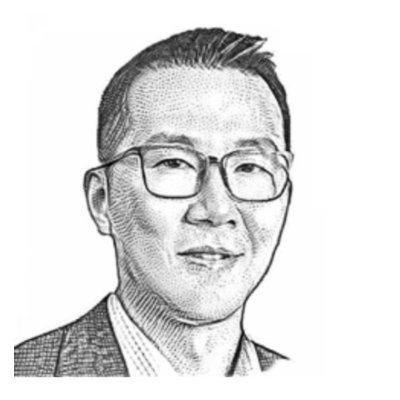
.@DSORennie: “The starkest examples of middle-power irrelevance involve AI. With America and China far ahead…there are few signs…of serious co-operation…There is little evidence that America and China are interested in the views of AI also-rans.”
Show more

Now that’s a column.


"A consistent message from these [Democratic] envoys [to Europe] is that the old post-1945 order is not coming back, and that some pillars of Trumpism—rhetoric about putting Americans first, and a focus on industrial production—will remain, whoever wins."
Show more

Here is a safe but unhelpful prediction. The next US president, especially if a Democrat, will pledge to reverse Donald Trump’s harmful foreign policies. But his 2nd term is so chaotic that “doing the opposite to Trump” could mean wildly different things
Show more
I was really delighted to join my colleagues @shashj and @EWRCarr as a contributor to a new Economist Education course on the changing world and how to navigate it. Enrolment closing soon…
Show more


And while the AI controls are getting most of the focus, the ones around solar and biomedical tech may cause lots of issues. Today’s announcement is a BFD


This move does not mean “China is shutting down open-weight models,” but it does indicate the Chinese government establishing the optionality to shut down future open-weight models at will. It’s also a mirror image of the model-weight export control regime USG has already used.
Show more

Huge: The Chinese government moves to place registration and licensing requirements on frontier AI model weights, chip designs, and other key AI technologies.
A registration requirement is effective immediately, with a public comment period over the next month before the more expansive regulations are finalized.
The draft includes a range of prohibitions and licensing requirements that could shape the evolution of the Chinese AI ecosystem. It also provides simplified pathways for certain open-source releases and a range of excluded areas.
This is a major step and could give Beijing substantial new leverage over the global spread of Chinese AI. But there are lots of questions about the practical consequences:
—How much will model companies reshape the definitions, thresholds, and processes during the "consultation" period?
—What will firms actually start doing to comply in the coming days?
—Will implementation materially restrict the global spread of Chinese models, or chiefly give Beijing greater visibility into—and discretion over—how they spread?
Show more
In January Mark Carney told middle powers to fear a world order made lawless by great-power rivalry. Actually the more urgent threat is big-power collusion via a Trump-Putin-Xi love-in. My 3-pager, in place of The Telegram column this week
Show more
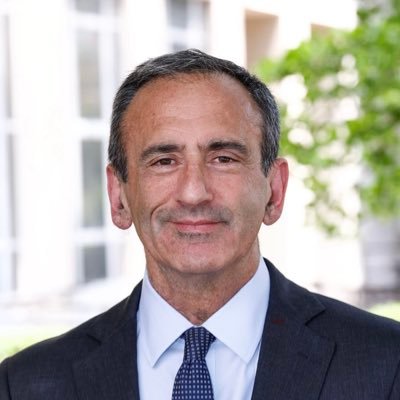
The notion that Trump might use an American lead in AGI to bully allies and extract concessions from them is shocking because it is so plausible—as demonstrated by Greenland, the punitive tariffs, the Ukraine minerals deal, the threats over defense spending, digital-services taxes and diesel releases, and countless other examples.
The United States should be working with its allies to develop common norms and safeguards for AGI development. Instead, it is giving them powerful incentives to develop independent capabilities, regulatory regimes, and partnerships—fragmenting the Western tech ecosystem and weakening the common front against China.
Agree with @thomaswright08 that next US president will need policy not only to deal with China but with allies to avoid dangerous AGI free-for-all--if by then it is not already too late.
Show more
Putin is escalating his aggression against Ukraine and Europe and European governments are calling out his crimes. That makes short-term sense as a deterrent. One day, it will complicate the messy work of halting the war. My column, reported from #HSF2026#
Show more


💥Boom - it's ready, the joint Franco-German paper / letter to VDL on China.
Berlin & Paris - previously at polar opposite ends of the scale on China policy - now want a kill switch to cut China out of the EU market. This would have been unfathomable a few short months ago 🤯
Show more


China’s battle for global dominance with America “is on”. That’s the view from Beijing, according to @MrKRudd, former Australian prime minister and eminent China watcher. He tells @DSORennie that Beijing is banking on America’s long-term decline, but risks underestimating the ruling power. Watch the full Inside Geopolitics interview:
Show more

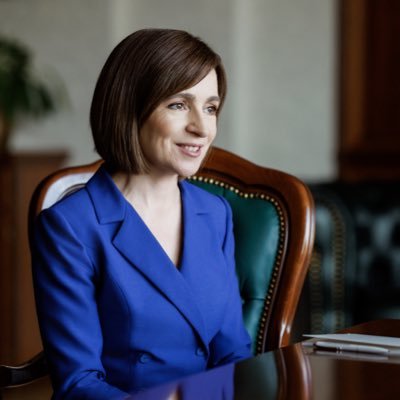
Moldova's EU accession is a security investment for Europe. That was my message at the Helsinki Security Forum.
A European Moldova secures 1,222 km of Ukraine's south-western flank and the EU's eastern border. Thank you, @alexstubb and @DSORennie, for a good conversation.
Show more


Foreign Ministers of Finland & Lithuania, @elinavaltonen & @BudrysKestutis, in conversation with @TheEconomist’s @DSORennie on the main stage of the @HelSecForum, opening with questions of @USWPColby’s forthcoming working group & trust in @NATO. 🇫🇮🇱🇹 #HSF2026#
Show more












