NASA Goddard
@NASAGoddard
Welcome to your friendly neighborhood space flight center, home to the largest community of scientists & engineers on Earth.
143 Following 932.9K Followers
Get ready to wave to an asteroid 👋🪨
In 2029, asteroid Apophis will swing by Earth, passing safely about 20,000 miles from the surface. The OSIRIS-APEX mission will meet up with the asteroid shortly after, to map the surface and study its chemical makeup.
Show more

@NASAWebb @NASAHubble A planetary nebula can be one of the eeriest places in space, haunted by a dead star. This @NASAWebb image of NGC 6072 showcases a mess of gas and dust expelled by the central star at the end of its life.
Show more

Curling up next to a crackling fire? @NASAWebb and @NASAHubble captured this cosmic scale bonfire in the Cigar Galaxy, M82, no matches needed. The galaxy is in the midst of a burst of intense star formation, likely the result of a galaxy merger.
Show more

@NASAArtemis @astro_reid @NASARoman We know how much @Astro_Reid loves moons, so we showed him a few of our upcoming missions, including Dragonfly — headed for Saturn’s moon Titan — and the Lunar Environment Monitoring Station instrument, which future @NASAArtemis astronauts will deploy on the lunar surface.
Show more


It is Rocket Frog week my dudes
We're all celebrating a successful launch!
@NASAAdmin Jared Isaacman visited Goddard yesterday to commend the workforce on the launch of @NASARoman, ahead of schedule & on budget. The Roman operations team visited with the administrator about the mission's progress so far.
Show more


This weekend, @NASARoman launches to join @NASAHubble and @NASAWebb in space, teaming up to expand our view of the universe. Each telescope brings a unique set of skills and interests. Curious where you’d fit in the exploration squad? Find out which telescope you are!
Show more

A stellar Coat of Many Colors for Dolly Parton, forever among the stars 💗

The Eagle Nebula for Jackie the eagle ❤️


When the Lucy spacecraft starts flying by Trojan asteroids next year, it’ll snap photos, detect chemical “fingerprints” of materials on the asteroids’ surfaces, and more. Scientists are already calibrating the camera settings with test images like these.
Show more

Black, white, and pink all over! 🐧
These flightless birds are making their impact on Antarctica’s Danger Islands, seen from space. The pink-orange hue to the islands isn’t from the land’s minerals, but from penguin droppings, tinted by a diet of krill.
Show more


The Case of the Missing Black Hole
Omega Centauri has long been a mystery for astronomers, with minimal evidence for black holes where they’re expected to be. @nasahubble and @nasawebb now have helped scientists locate the first stellar-mass black hole.
Show more

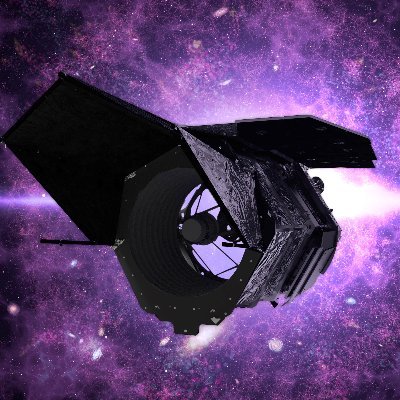
Over one million names will be traveling a million miles away in space in less than a month!
Roman’s Send Your Name campaign wrapped up with over 1.3 million names submitted. Make sure to tune in Aug 30 at 7:26 am ET to watch the observatory launch from @NASAKennedy.
Show more

NavCube3-mini is ready to go!
After testing, the payload was delivered to Intuitive Machines for the Altus-1 lunar relay. Built on Goddard-developed tech, NavCube3-mini will help demonstrate navigation ability at the Moon from Earth-based GPS signals.
Show more

No shade, but are you ready for the total solar eclipse on August 12?
In this Goddard Glossary, dive into the difference between umbra and penumbra — two parts of the same shadow you may see as the Moon passes in front of the Sun.
Check visibility:
Show more


Extremely hot and dry conditions in June and July enabled large fires to break out in Europe.
Spain saw its largest fire on record in Ávila, as shown in this Landsat 9 false color image. Unburned vegetation is light green and burned areas appear brown.
Show more

As we start our countdown to launch, we’re taking a trip back down memory lane, to building Roman at @NASAGoddard in our final hardware highlights video.
Roman is set to launch no earlier than 7:26 a.m. EDT on Sunday, Aug. 30.
Show more

Need a break from mindlessly scrolling?
Take a deep dive into some mysterious space rabbit holes, curated by us, for you. Bizarre enough to keep you locked in, and it all starts at
Show more


It's National Intern Day! 🎉
We're celebrating with a special message to interns (past, present & future) from @NASAArtemis II astronaut @Astro_Christina!
Learn more about internships & other ways to get involved in this week's NASA EXPRESS newsletter!
Show more

There's a solar eclipse happening on Wednesday, Aug. 12 — and if you're not in the path of totality, you can watch along with us online! Get the details:
Show more












