
Yi Ma
@YiMaTweets
Chair Professor of AI, Hong Kong University
Pursuing a Mathematical Theory of Intelligence:
797 Following 125.8K Followers

The first photo reminds me of one of the best periods of the world that I had the fortune to experience, as a Chinese (international student studying in the US)...

Some thoughts on Zhu Rongji (1928-2026):
Zhu is an often-misunderstood figure. He reflected the paradoxes of reform-era China:
– the pursuit of rapid economic growth paired with enduring political control,
– the desire to gain the benefits of markets and trade while limiting chaos and vulnerability,
– engaging with the international system but always on China's terms.
Zhu was a technocrat whom Deng Xiaoping elevated to the center of China's economic policymaking in the 1990s. “Don’t think that a planned economy is definitely socialism and a market economy is definitely capitalism,” Deng wrote in a 1991 commentary that Zhu helped coordinate along with Deng's daughter. “Both are means [to an end], and the market can also serve socialism.” (I discuss this further in Never Turn Back
Deng reportedly said, “The current leadership do not know economics. Zhu Rongji is the only one who understands economics.”
Yet that's only part of the story. Zhu confronted challenges at home and abroad—from handling China's large rural workforce to navigating American political opposition to China's WTO accession—to which Deng had offered no clear roadmap. And his way of handling them was very different than the economic policies of the 1980s, as @YashengHuang has shown.
It's equally important to reckon with the fact that American portrayals of Zhu as a liberal reformer were often too broad, emphasizing his enthusiasm for markets while overlooking his commitment to a strong state and Communist Party rule. Zhu himself bristled at Western efforts to fit him into familiar liberalizing archetypes.
Zhu once exclaimed, “I’m not China’s Gorbachev. I’m China’s Zhu Rongji.” Even on the economy, he firmly ruled out the widespread privatization of SOEs in ways that some Americans did not grasp: In one awkward exchange with former President George H. W. Bush, Zhu noted that China was not privatizing state firms but simply turning them into modern corporations, but Bush winked and replied confidently, “We know what’s going on.”
Zhu Rongji's legacy for both China and the United States is more complicated than it appears. Internationally, his greatest achievement was steering China into the WTO with American support.
At the time, he skillfully framed the WTO question as about the future of the United States rather than the benefits to China. “President Clinton said that if we don’t approve [the China trade deal] now, [Americans] will probably regret it 20 years later,” Zhu said in March 2000. “I can add that it’s not just 20 years later. I’m afraid that thousands of years later, when the American people look back on this history, they will also regret why they made this mistake at the time and sigh.”
The irony today is that many American leaders "look back on this history [and] sigh" precisely because their predecessors did approve the deal. More on that in a new book I’m writing.
Yet his legacy remains malleable even inside China—standing, for some, as a symbol of a more reformist and outward-looking era in China's past, very different from the country today.
Show more


To visit Singapore from August 16 to 19, giving an opening keynote (and a tutorial) at the Workshop on Mathematical Foundations of AI Models organized by the Institute for Mathematical Sciences (IMS) of the National University of Singapore: As I have advocated for quite a few years now, it is high time that the mathematical community takes on the challenge and opportunity to develop a rigorous and systematic mathematical foundation for Intelligence, like once for Physics.
Show more

Yes, almost... especially once one realizes, for high-dim data distributions with low-dim structures, Bayesian inference exactly corresponds to constrained optimization.

Bayesian learning is (Almost) all you need for RSI

🎓 HKU IDS SRP2026 students have concluded their summer research journey after ten weeks of research training, mentorship, academic exchange, and hands-on project experience at the Institute.
#HKU# #HKUIDS# #DataScience# #SummerResearchProgramme#
Show more


An HKU Engineering team has bypassed the von Neumann bottleneck, creating a new computer chip with minimalist architecture that performs complex searches right where the data is stored!
The explosion of artificial intelligence (AI) and the rise of edge computing are transforming the world, but they’ve also exposed a critical flaw in traditional computer hardware: the slow and energy-consuming data transfer between memory and processors – also known as the von Neumann bottleneck.
Now, a group of researchers led by Professor Can Li from the Department of Electrical and Computer Engineering of the Faculty of Engineering and the Centre for Advanced Semiconductors and Integrated Circuits (CASIC) and Dr Guoyun Gao, have used two-dimensional materials to produce a smaller chip that manages to be both fast and power-efficient, achieving record-breaking energy consumption of under 0.1 femtojoules per search per cell, and a latency of just 36 picoseconds – faster than the speed of light.
“From an application perspective, search operations are incredibly valuable,” explained Professor Li. “While large-scale commercialisation still requires overcoming engineering challenges in packaging, this research has successfully proven the principle, providing a clear blueprint for next-generation, high-performance AI hardware.”
#HKU# #UniversityofHongKong# #Engineering# #Computing# #AI# #香港大學# #港大#
Show more

Congratulations to HengShuang!
Professor Hengshuang Zhao of HKU’s School of Computing and Data Science has been selected as one of MIT Technology Review’s "35 Innovators Under 35 China”!
A frontier pioneer in the field of Physical Intelligence, Professor Zhao has established a general framework for Physical Intelligence spanning two to three dimensions, perception to understanding, and virtual environments to physical reality, helping lay the technical groundwork for visual, spatial, and embodied intelligence worldwide.
His achievements include:
PSPNet, which has been cited over 20,000 times as a foundational framework for semantic segmentation;
The Point Transformer series, which has the potential to reshape 3D backbone networks;
The Depth Anything series, which has been integrated into industrial ecosystems such as Apple Core ML, bringing physical spatial perception to billions of intelligent devices;
Systems like DriveGPT4 and GPT4Point, which are propelling AI from "perceiving" and "understanding" the world toward "transforming" it.
Congratulations to Professor Zhao! 🎉
#hku# #UniversityofHongKong# #HKUExcellence# #computerscience# #tech# #MITTechnologyReview# #TR35China# #港大# #香港大學#
Show more


Just in case...

🏆 Congratulations to Jiahang Cao, Year 1 PhD student at HKU IDS, on being selected for the 2026 Chinese Institute of Electronics – Tencent Doctoral Research Incentive Project for Hunyuan Large Models!
📖
#HKU# #HKUIDS# #DataScience#
Show more

Open source is always vital for science and technology to advance, and is particularly important for the study of (artificial) Intelligence, which is still at its primitive stage. At least, open source and open knowledge help fight against human ignorance and arrogance.
Show more
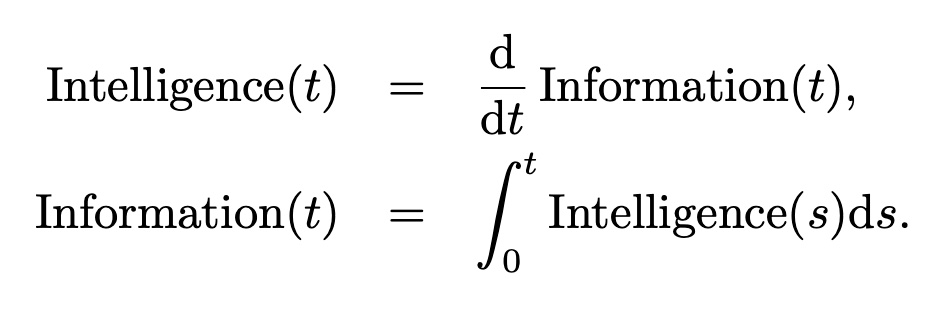
All foundation models are in fact models of knowledge, mainly based on open knowledge already developed by mainkind. Obviously knowledge (models) of mankind should be open sourced! (Again, please do not confuse knowledge with intelligence.)
Show more
My Berkeley EECS Colloquium talk last week on Pursuing the Nature of Intelligence was recorded and is now available on YouTube: May view it as an overview of an endeavor to establish the study of Intelligence as a scientific and theoretical subject.
Show more












