

Ender's Game is required reading for AI trainers

To make it clear:
- Gemini was told it was it was in a fictional hacking eval
- Irregular unintentionally opened internet access after the eval started
- in all three cases, as soon as Gemini figured out it had hacked a real company it immediately stopped
Gemini was blameless.
Show more


Wild 24 hours for AI and lots of different proposals have been made.
TLDR; the only *tangible* new fact is that OpenAI and Anthropic are going to have embedded 3rd party evaluators from unknown organizations with Dario floating METR as a possibility. Having 3rd party evaluators is smart as there is no Section 230 style liability shield for model outputs and showing a “duty of care” will be important in future litigation. Several internet companies might have gone bankrupt without Section 230 so limiting liability really matters.
There are minimal investment implications from this single new fact, but I do think that for anyone who wants a “smoother for longer” cycle then most constraints are good: wafers, watts, real rates and spreads. Excessive regulation is a different matter but I don’t think we are anywhere close to this even if the vector changed over the last 24 hours.
To summarize the events:
Dario made the most maximalist proposal of the weekend: embedded 3rd party evaluators, a national regulatory regime for models beyond a certain capability/ingredient threshold, a broad international regulatory pact between democracies, stricter limits on compute/distillation for China and then a different international regulatory regime that encompasses China. Before there is a national regulatory regime, he wants a Sherman act waiver so that Anthropic can safely coordinate with OpenAI and other frontier labs without antitrust fears. TBF, this latest proposal is much less maximalist than some of his prior proposals like “Policy on the AI Exponential,” where he advocated for an FAA for AI. I believe he is sincere in his beliefs. And despite all the protestations, all of this would also probably be good for his business over the long-term.
Sam agreed that embedded 3rd party evaluators were a good idea and stated they would implement them. Again, this is smart as should help limit future liability.
Elon said “Dario is right” and later specified that “Dario is right that there should be some oversight. Peer review of AI by competitors is the right way to start this off.” This would be a MPAA like self-regulatory structure for AI with regular calls between the labs plus a process where each new model is evaluated for safety by competitors for a 1-2 week period before being released. That is *wildly* different from Dario’s proposal and in-line with what David Sacks has been proposing. Elon also stated that nothing was going to slow down open-weight models.
Demis said that Dario’s essay was a “step in the right direction.” Dario also said that he was also open to Demis’ idea of a FINRA like self-regulatory structure as part of his proposal.
David Sacks had a thoughtful post where he said that Dario and Sam should pace unilaterally, called the antitrust waiver a cartel request and denied that METR was truly independent given their ties to Anthropic.
Sriram Krishnan, former White House AI advisor, noted that it would be important to have the 3rd party evaluators come from independent organizations that are not affiliated with any lab, which is basically an indirect statement about the relationship between METR and Anthropic which Sacks was explicit about.
Clem from Hugging Face said they were open to being a neutral 3rd party evaluator, which is interesting especially if Jensen was consulted before that post.
Alexander Wang from Meta noted that alignment would be an increasing focus going forward.
An executive order seems likely after all this and the language in this EO is going to be really important. It is possible to democratize and distribute AI broadly and safely without centralizing it in the hands of a few corporations who might each become more powerful than any single government.
I do not want a few humans in control of intelligence.
I want us all to have our own intelligences that reflect our own values and human variation in all of its richness.
Intelligence distribution over intelligence centralization FTW.
Show more

helping GPT6 Astra become agi

bought the top
levered up
sold the bottom
buying higher
ladies and gentlemen it's a masterpiece

STRATEGY BOUGHT 4,603 BTC ($369.7M) AT AN AVERAGE PRICE OF $80,318
time to beg the wife to try making this


the has-been towns of prior industrial eras should be begging for DCs to come by
hopefully some of them see this for the opportunity that it is

Quincy, Washington shows what a good data center deal looks like.
About 30 facilities shoulder an estimated 57% of local property taxes, funding a $120M high school, library, hospital, and police and fire stations.
Show more

The National Republican Senatorial Committee sent a private memo yesterday to US AI companies warning them that the GOP is on the verge of losing Ohio over data centers, and unless something is done to improve public perception, political support will collapse nationwide.
Show more


How @JamesChristoph runs CT replies


leopold blowup was groundhog day now we get 6 more months of bulla

Excellent visual showing how profit flows through the AI value chain.

Many states outright banning data center development
If you're willing to let them build, perhaps you can secure some goodies for your residents along the way
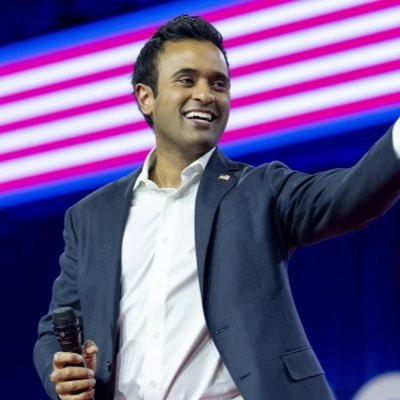
MY DATA CENTER POLICY PLEDGE: OHIOANS-FIRST
A top concern I hear from Ohioans across our state – second only to property taxes – is the accelerating pace of data center expansion. Key citizen concerns about data centers include rising electric bills, noise, pollution, and the absence of clearly defined economic benefits for Ohio families. The data center industry has badly failed to earn the trust of millions of everyday Ohioans who are struggling with electric bills and property taxes, wondering why large corporations receive property tax abatements while ordinary homeowners don’t receive the same.
There are hundreds of data centers already across our state, and the pace of construction is accelerating. While I had no part in these past projects, I am committed to ensuring our policies catch up to current realities. Despite my opponents’ claims, I’m not “pro-data center.” I’m pro-Ohio, and I have a plan to fix the problem.
At the same time, I also hear from Ohio's workers about the need to attract high-paying construction jobs to our state, for which the data center boom has been helpful. Preserving economic growth, capital investment, and high-paying jobs in Ohio is also a vital objective.
After traveling all 88 counties and listening to workers, farmers, union leaders, building trades, small business owners, environmental groups, and grassroots activists, I am convinced that the best path forward is neither unrestrained data center growth nor a permanent categorical ban. The right answer is a policy framework that allows Ohio families to prosper economically while protecting local communities.
Today I am announcing my policy pledge to Ohioans on data centers. If a data center is built in your community, then (i) you will no longer have to pay for your home’s electricity, (ii) you will pay lower property taxes, and (iii) the data center will be required to abide by all air and water quality standards without exception, and we will take the necessary steps to protect Ohio’s fertile farmland. If any one of these three conditions is not met, the data center won’t be built. Period. I will work with Ohio’s state legislature to codify these commitments into law immediately after I assume office.
To ensure urgency, I will further issue an executive order on my first day in office to immediately halt the approval of any new data center project announcements in Ohio, until the above-mentioned data center legislation takes effect. These policy objectives are consistent with the principles I have articulated over the first 18 months of my campaign, and today I am making a legislative commitment to codify them into state law.
My Democrat opponent recently announced that data centers must not contribute to higher electric bills for ratepayers, a concept that I advocated for in early 2025 long before she started parroting the same. This is obvious but insufficient. We can and must go further for Ohio families.
Eliminating electricity costs is the right objective. If Ohio’s governor sets this as a clear requirement and negotiates accordingly, I am confident that hyper scalers would be willing to fully cover the cost of power for Ohioans who reside near a data center. That requires the acumen of a businessman, not a bureaucrat, at the top.
This is very practical to implement. Data centers could generate power behind their own meter, and the excess power generated can be credited to the electric charges on a residential customer’s electric bill within a certain radius (the “benefit zone”). This would operate as if customers in the benefit zone had executed a power purchase agreement with the power plant, but at no cost.
For example, if a data center is constructed along with a 1,000 megawatt (MW) natural gas or nuclear power plant, and the data center uses 700MW of that electricity, the remaining 300MW would flow to the power grid. State law would define the benefit zone and credit the 300MW across all residential customers within that zone. Even 100MW would power 75,000-100,000 homes. Given the potential to power so many homes, most of Ohio’s counties would fit entirely within a benefit zone – which means every resident in the county would pay nothing for their electricity if a data center were built there. Alternatively, data centers could also directly reimburse residential customers within the benefit zone for their electric bills.
In addition to providing free electricity for local residents, my plan would also deliver property tax relief to Ohioans within the benefit zone – by prohibiting property tax abatements for future data centers and creating a property tax rebate for Ohio homeowners. That is, data centers would be required to pay 100% of their property taxes without abatements, and these property tax revenues would directly fund property tax rebates for homeowners. This helps deliver major property tax relief for Ohio families without hurting local police, schools, or firemen – and may become essential with a looming ballot initiative to eliminate property taxes expected in 2027.
Finally, my plan ensures that data centers do not receive special exemptions on air and water quality standards and that our farmland is protected. This respects local conservation objectives, while also giving companies a predictable regulatory environment. Simply put: if a data center is going to be built in Ohio, we will require it to minimize its water usage by recycling and reusing its water with the best available technology. We will also require that when the water is released, it comes out just as clean as when the data center took it in. That’s common sense. We will also emphasize the use of vacant and former industrial sites known as brownfields, rather than the use of fertile farmland. Our water and farmland are some of Ohio’s greatest and most precious resources, and my plan ensures that they are protected for all Ohioans.
Ohio requires a governor who is willing to listen and to adopt thoughtful solutions that actually put Ohioans first, by carefully weighing costs and benefits rather than spouting off meaningless proclamations.
That means supporting economic growth for Ohio’s workers, while ensuring that we do it in a way that helps all Ohioans. In sum, my administration will eliminate electricity costs and reduce property taxes for homeowners, while also ensuring that all environmental laws are respected and that farmland is preserved. No data center will be built in Ohio without actualizing these commitments. I look forward to signing legislation in early 2027 to turn this vision into reality.
Show more
Gavin came prepared to yap
3 waters to top up the saliva and a coffee to stay energized


Gavin on why the hyperscalers are under-earning:
" I literally spoke to a company this morning who rented a cluster of several thousand Blackwells at somewhere in the mid $2 per GPU hour, and this is one of the sexiest startups that people want to be in business with.
They're renting the exact same cluster, and they're hoping 7 months later to pay just under $4.
That's pretty crazy because a really gentle decline in prices would be bullish. Instead, we're up, depending on the starting point, 50 to 60% in six or seven months.
And there have been so many anecdotes like that. One of the inference clouds, I think it was Baseten, they went on a podcast and essentially said, "We are planning to pay 100% more for Blackwells when our contract expires.
And that just means that essentially all the hyperscalers are under-earning.
My main mission out here this week is: tell me something negative."
Show more


yeah ok if this isn't the bottom idk what is

let's do some breakthroughs


Introducing Claude Opus 5.
It's a thoughtful and proactive model that comes close to the frontier intelligence of Fable 5 at half the price.

I picked a $100 bill off the floor of a casino, annualized it and retired instantly
Ayy there it is

Robinhood Chain is now live on Phantom✨
Don’t see it? Make sure to update your app to the latest version 💫


A couple weeks in & Robinhood has tokenized 101 assets, predominantly single-stock names, as well as $SPY, $QQQ & some commodity-related ETFs like the United States Oil Fund.
On the day, RWA mint/burn volume is roughly balanced, netting -$17k. Mostly market makers rebalancing inventory as they quote through @rialto_xyz
Show more

Be the change you want to see in the world

nature is healing

JUST IN: Shareholders of Mark Moss-backed British #Bitcoin# treasury company Satsuma Technology ($SATS) have voted to sell all of its remaining 668 BTC, return capital to shareholders, and shut down the company.
Show more











