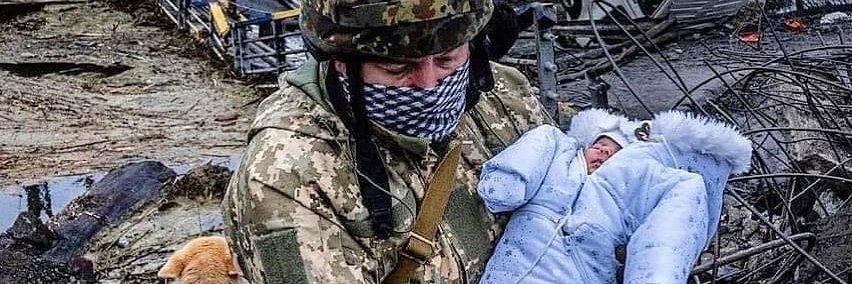


The US Senate voted overwhelmingly to advance Lindsey Graham's Russia sanctions bill, with 86 senators voting in favor and 12 against.
President Zelenskyy was present in the chamber during the vote.
The legislation would allow for up to 100% tariffs on major buyers of Russian oil and gas and introduces new restrictions on Russia's shadow fleet.
Show more

President Zelenskyy:
We had a good meeting with President Trump in the Oval Office. We discussed the licenses to produce interceptors for the Patriot systems and several other ideas that might help.
We also talked about diplomacy - it is important to reinvigorate the diplomatic process. Our teams will arrange the details of their further communication.
I am grateful to the United States for its steadfast support.
Show more

On the morning of July 26, russian drones completely destroyed the hypermarket in Kryvyi Rih. Almost 19 years of work, 400 people employed, and thousands of memories—all reduced to rubble.
But Sonia the cat survived. Along with all the store's employees.
One cat, and one story of kindness despite russian terror. A reminder that even the smallest life matters.
Show more

President Zelenskyy on upcoming mobilization in Russia:
We have solid intelligence reports on Russian plans for the fall. What is not there – in the Russian plans – is peace. Unfortunately. Not yet.
Putin is preparing the conditions for expanding mobilization. The figures for his losses speak for themselves. In less than seven months of this year, 221,000 people have joined the ranks of the Russian armed forces. While the losses of the Russians in the same period amounted to almost 225,500, and of them 131,000 killed, almost 93,000 wounded. A significant number of injuries are serious, because the Russians have totally poor front-line medicine.
Putin is simply preparing to take new Russians to the war. He masks it with other words, signals, but he is preparing. It is important that we and our partners can put enough pressure on Russia so that thoughts about stopping this aggression begin to dominate – thoughts about peace, not about additional Russian mobilization. Our long-range operations, our mid-range strikes contribute to this. More and more Russians are noticing Putin’s war and losing from it and think that the war should not be dragged out. We see this.
We also see Russia’s cooperation with North Korea. Russia wants to receive another 30,000 soldiers from North Korea: since June, preparations have been underway in the Voronezh region to receive them. North Korea is also preparing to transfer new ballistic missile launchers to Russia. This is a threat not only to Ukraine. Russia is helping North Korea learn war, improving their weapons – giving them experience in the real use of weapons. All this is a threat to everyone in Asia who is within the range of North Korean missiles. We will counteract it.
Show more


Lola, a golden retriever, was given just months to live after terminal cancer spread to her lungs. She joined an experimental UC Davis immunotherapy trial. At first, her tumors appeared to get worse. Months later, every single one had disappeared. Nearly 2 years on, Lola is still cancer-free.
Show more



Spain's Muslim population has grown to 2.5 million people, accounting for around 5% of the country's population, making Islam the country's fastest-growing major religion by demographic growth.
The growth is driven primarily by immigration and second-generation Muslims born in Spain. Around 3.6% of Spain's population are first-generation Muslim immigrants, while another 1.4% were born in Spain with at least one Muslim parent.
Among younger generations, the trend is even more pronounced: approximately 11% of babies born in Spain in 2024 had at least one Muslim parent, around one in every nine births. The report attributes this largely to Muslim women having fertility rates estimated at two to three times higher than Spanish women.
Around 85% of first-generation Muslim immigrants come from Africa, roughly 65% are of Moroccan origin, and the largest Muslim populations are in Catalonia (~700,000), Andalusia (~400,000), and the Valencian Community (~300,000).
Show more


POWERFUL WORDS.
“𝘞𝘢𝘯𝘨 𝘞𝘢𝘯𝘨 𝘪𝘴 𝘯𝘰𝘵 𝘫𝘶𝘴𝘵 𝘢 𝘥𝘰𝘨. 𝘞𝘢𝘯𝘨 𝘞𝘢𝘯𝘨 𝘳𝘦𝘱𝘳𝘦𝘴𝘦𝘯𝘵𝘴 𝘦𝘷𝘦𝘳𝘺 𝘢𝘯𝘪𝘮𝘢𝘭 𝘵𝘩𝘢𝘵 𝘩𝘢𝘴 𝘴𝘶𝘧𝘧𝘦𝘳𝘦𝘥 𝘴𝘪𝘭𝘦𝘯𝘵𝘭𝘺 𝘢𝘯𝘥 𝘦𝘷𝘦𝘳𝘺 𝘷𝘰𝘪𝘤𝘦 𝘵𝘩𝘢𝘵 𝘸𝘢𝘴 𝘯𝘦𝘷𝘦𝘳 𝘩𝘦𝘢𝘳𝘥.
𝘞𝘦 𝘤𝘢𝘯𝘯𝘰𝘵 𝘤𝘩𝘢𝘯𝘨𝘦 𝘵𝘩𝘦 𝘱𝘢𝘴𝘵 — 𝘣𝘶𝘵 𝘸𝘦 𝘤𝘢𝘯 𝘤𝘩𝘢𝘯𝘨𝘦 𝘸𝘩𝘢𝘵 𝘩𝘢𝘱𝘱𝘦𝘯𝘴 𝘯𝘦𝘹𝘵.”
TRUE.
GENTLE WANG WANG PERSONIFIES THE FIGHT WE MUST WAGE TO MAKE THIS WORLD A BETTER PLACE.
WANG WANG PERSONIFIES THE GREAT CHANGE AND THE FALL OF EVIL IN ITS DIVERSE SHAPES IN THIS WORLD. #FascismIsEVIL# #IslamismIsEVIL# #WokismIsEVIL# #CommunismIsEVIL#
• JUSTICE FOR WANG WANG #JusticeForWangWang#
• WE ALL ARE WANG WANG #WeAreWangWang#
Show more
This morning, Ukrainian attack drones successfully struck the second-largest order-fulfillment center of the Russian ecommerce giant Wildberries.
Seen here, the Moscow-area facility, completely engulfed in flames, sends a massive plume of smoke skyward over Russia's capital.
Show more

11-year-old Ukrainian ballerina Polina Denys has become the absolute champion of the Dance World Cup 2026.
Her emotions are priceless. Ukrainian kids are amazingly talented.
Congratulations, Polina!
📹: astiasya/Instagram
Show more

🇵🇸🇩🇪🇯🇵 What the difference between Palestinians, Germans and Japanese people?
The people of Germany and Japan both achieved miraculous economic recoveries after WWII with just a fraction of the aid given to Palestinians in Gaza.
Germany and Japan received roughly $250 to $300 per person, sparking the greatest economic triumphs in human history.
It took Germany just 10 years and $1.44 billion in foreign aid to go from ruins to a top industrialized economy.
It took Japan a mere 15 years and $2.20 billion in foreign aid to go from a nuked, hopeless ruin to a global technology powerhouse.
Meanwhile, the Gaza Strip received global solidarity and over $45 billion in international aid from the US, EU, UK, and UN over the last three decades, only to devolve into a heavily dependent Islamist dictatorship and terror hub.
Show more


Over 2,000 foreign volunteers have given their lives for Ukraine.
Not for money. Not for land. But for freedom when it mattered most.
Their sacrifice will never be forgotten.
Thank you, heroes. Your courage will live on. Ukraine will never forget you.
Show more


In just one week, Ukraine destroyed or immobilized 105 russian ships operating in the Azov and Black Seas.
For months, many people asked: Why isn’t Ukraine targeting more russian ships?
The answer may be that Ukraine wasn’t waiting - it was preparing.
What we’re witnessing now looks less like a series of isolated attacks and more like a systematic campaign to cripple russia’s maritime logistics.
Ukraine has dramatically expanded its long-range strike capabilities and drone production. Instead of going after individual targets, it is now hitting entire supply networks: tankers, ferries, cargo vessels, ports, and fuel infrastructure. The objective is not simply to sink ships - it is to make the occupation of Crimea and southern Ukraine increasingly difficult and expensive to sustain.
Over a seven-day period, Ukraine destroyed or immobilized 105 russian ships in the Azov and Black Seas. Even if not every vessel was sunk, disrupting shipping on this scale can have enormous military and economic consequences.
Wars are not won only by destroying armies. They are won by destroying an enemy’s ability to supply, fuel, reinforce, and sustain those armies.
If this campaign continues, it could become one of the most consequential phases of the war.
Show more


It was the middle of the night, at about 1.30am, when Norway lost to England.
Yet thousands of Norwegians went to the Palace in Oslo and celebrated with one final Viking row.
They did not riot. They did not burn cars. They did not smash bus stops or glass windows of shops.
They smiled. The laughed. They saw the positive in their performance. They celebrated their heritage. They were proud of who they have been in the past and who they are today.
Norway might be out of the World Cup 2026 but they are in our hearts.
In the last three weeks, I think we have all fallen a little bit in love with Norwegians.
Show more

Ukraine Is Becoming China's Military Laboratory
For years, many insisted that China was a "neutral" actor in russia's war against Ukraine. But the joint investigation by The Insider, Der Spiegel, and Le Monde showed that it is not the case.
According to the leaked documents, China reportedly proposed providing artificial intelligence technologies and the industrial capacity to mass-produce autonomous drone swarms. In return, russia would supply real combat data from the battlefield in Ukraine.
The documents also describe plans to undermine Starlink through a combination of cyberattacks, electronic warfare, diplomatic pressure, and even the development of low-cost weapons capable of targeting satellites in orbit.
The reported cooperation doesn't stop there. The investigation also describes discussions on advanced air and missile defense technologies and an expanding military partnership that goes well beyond the trade in so-called "dual-use" goods.
These findings paint a disturbing picture. Ukraine is not only fighting russia - it is unwillingly serving as the proving ground where China can study modern warfare, test emerging technologies, and refine weapons that could be used in future conflicts against the US and Europe.
This is no longer just a Ukrainian war.
Show more

Could the fuel crisis in Russia break the back of the Russian war economy? It has already evolved from a problem into a systemic vulnerability. Strikes on oil refineries have put at risk the domestic infrastructure essential to the day-to-day functioning of the Russian state.
A symbolic and practical turning point was the strike on the Omsk refinery - Russia's largest refinery and one of its key producers of gasoline and diesel. After the attack, the refinery halted processing. The Moscow refinery in Kapotnya, the largest fuel supplier to the capital region, is unlikely to resume operations before at least the end of the year following strikes in June.
Estimates of the scale of the damage vary, but they point to the same trend: Ukraine is no longer merely carrying out isolated strikes on individual targets but is creating a cumulative effect in which Russia's repair capacity is beginning to fall behind the pace of damage.
The most vulnerable point in this crisis is the agricultural sector. The harvest has coincided with peak summer fuel demand, making diesel a critical resource. Russia's harvesting campaign in early July was running one to two weeks behind last year's pace, with weather and fuel supply problems cited among the reasons. Crops are being harvested late, grain quality is deteriorating, and logistics costs are rising.
As expected, large agricultural holdings - which have stockpiles, long-term contracts, access to the wholesale market, and administrative channels - are faring better. Small and medium-sized farmers, by contrast, are likely to go bankrupt.
The Russian authorities continue largely to deny the problem, but in practice they are shifting toward emergency management of the shortage. The first set of measures involves a ban on diesel exports and the start of fuel imports. For a country accustomed to presenting itself as an energy superpower, the very need to import petroleum products is humiliating.
The second set of measures is the degradation of standards. The Russian government has allowed the use of Euro-3 gasoline until the end of 2026, and parliament has passed tax changes that permit the use of lower-quality components for blending straight-run gasoline, postpone part of the refinery modernization, and provide for subsidies for fuel imports.
The third set of measures is administrative rationing. In June, most Russian regions introduced some form of restriction on gasoline or diesel sales: volume limits, unreliable fuel availability, pumps marked "out of service," lines, and periodic disruptions at gas stations.
In the medium term, the worst effects may emerge not only in the 2026 harvest but also in the next agricultural cycle - primarily during the 2027 sowing season. The fuel crisis has only just begun, but the most interesting period still lies ahead: seasonal demand peaks in August and September.
The future of Russia's war economy will depend primarily on the balance between the pace of Ukrainian strikes, the effectiveness of Russian air defenses, and the ability of repair crews to restore refinery operations. If that balance continues to shift against Russia, the fuel crisis could create conditions in which the Russian authorities would want to end the war.
📹: Fiery footage of attacks on the Moscow oil refinery and other targets in Russia
Show more


Reminder of what Khrushchev said 60 years ago...."Your children's children will live under communism. You Americans are so gullible. No, you won't accept communism outright; but, we will keep feeding you small doses of socialism until you will finally wake up and find you already have Communism. We will not have to fight you. We will so weaken your economy, until you will fall like overripe fruit into our hands. The democracy will cease to exist when you take away from those who are willing to work and give to those who would not" It was September 29, 1959, when Nikita Khrushchev delivered his prediction for America at the United Nations. Remember the television coverage of him banging his shoe on the podium? At that time, just the word "communism" was feared throughout our nation. Remember this. Socialism leads to Communism How do you create a Socialist State? There are eight levels of control:
1) Healthcare - Control healthcare and you control the people
2) Poverty - Increase the poverty level as high as possible, poor people are easier to control and will not fight back if you are providing everything for them.
3) Debt - Increase the debt to an unsustainable level. That way you are able to increase taxes, and this will produce more poverty.
4) Gun Control - Remove the ability to defend themselves from the government . That way you are able to create a police state.
5) Welfare - Take control of every aspect (food, housing, income) of their lives because that will make them fully dependent on the government.
6) Education - Take control of what people read, listen to and take control of what children learn in school.
7) Religion - Remove the belief in God from the government and schools because the people need to believe in ONLY the government knowing what is best for the people.
8)Class Warfare - Divide the people into the wealthy and the poor. Eliminate the middle class. This will cause more discontent and it will be easier to tax the rich with the support of the poor.
WE ARE THERE!
Show more


It was July 4, 1976, the Bicentennial, and New York Harbor filled with the grandest parade of tall ships.
Operation Sail 🇺🇸

Have you ever wondered what happened to the 56 men
who signed the Declaration of Independence? Their story. . .
Five signers were captured by the British as traitors,
and tortured before they died.
Twelve had their homes ransacked and burned.
Two lost their sons serving in the Revolutionary Army;
another had two sons captured.
Nine of the 56 fought and died from wounds or
hardships of the Revolutionary War.
They signed and they pledged their lives, their fortunes,
and their sacred honor.
What kind of men were they?
Twenty-four were lawyers and jurists.
Eleven were merchants.
Nine were farmers and large plantation owners;
men of means, well educated.
But they signed the Declaration of Independence
knowing full well that the penalty would be death if
they were captured.
Carter Braxton of Virginia, a wealthy planter and
trader, saw his ships swept from the seas by the
British Navy. He sold his home and properties to
pay his debts, and died in rags.
Thomas McKeam was so hounded by the British
that he was forced to move his family almost constantly.
He served in the Congress without pay, and his family
was kept in hiding. His possessions were taken from him,
and poverty was his reward.
Vandals or soldiers looted the properties of Dillery, Hall, Clymer,
Walton , Gwinnett, Heyward, Ruttledge, and Middleton.
At the battle of Yorktown, Thomas Nelson, Jr., noted that
the British General Cornwallis had taken over the Nelson
home for his headquarters. He quietly urged General
George Washington to open fire. The home was destroyed,
and Nelson died bankrupt.
Francis Lewis had his home and properties destroyed.
The enemy jailed his wife, and she died within a few months.
John Hart was driven from his wife's bedside as she was dying.
Their 13 children fled for their lives. His fields and his gristmill
were laid to waste. For more than a year he lived in forests
and caves, returning home to find his wife dead and his
children vanished.
So, take a few minutes while enjoying your 4th of July holiday and
silently thank these patriots. It's not much to ask for the price they paid.
Remember: freedom is never free!
I hope you will show your support by sending this to as many
people as you can, please. It's time we get the word out that patriotism
is NOT a sin, and the Fourth of July means more than beer,
picnics, and baseball games. True "reflection" is a part of this country's
greatness. Please be a participant.
© 2015 Microsoft Terms Privacy & cookies Developers English (United States)
Show more


For 4th July, I share this lovely American Autochrome from 1910, capturing a woman darning the US flag (which, at the time, only had 46 stars, as there were only 46 US States). It was taken in colour 116 years ago by Mrs B Russell, using an early colour glass plate process. It isn't colourised.
Show more

You asked me to find some positive news from Ukraine for you.
I found some!
The bottom of the Kakhovka Reservoir, which was drained after Russians destroyed the Kakhovka Hydroelectric Power Plant dam, is now covered with willows that have already grown 7-9 meters tall. Birds and animals are beginning to settle in this new forest.
In May, zoologist Oleksii Vasyliuk visited the bottom of the former Kakhovka Reservoir nine times and recorded a huge number of nightingales and warblers.
"I have never heard so many nightingales at once anywhere else. This may be the largest nightingale forest in Europe," Oleksii Vasyliuk said.
Show more













