
Lina Khan
@linamkhan
Served as 57th Chair of the Federal Trade Commission. Retweets, Follows, & Likes ≠ Endorsements.
780 Following 150.8K Followers

As America’s new Congress gets ready to launch real oversight over this lawless president and the entire executive branch and all of the corruption flowing through and around them, we offer this word of advice to the wise in both the government and private sectors: don't start shredding documents, deleting emails or engaging in any other kind of obstruction of justice or destruction of evidence.
It will make matters a lot worse for you in Congress and in the courts.
Show more

Do you want to work with the new populists in Congress in creating a more fair economy? Submit your resume to American Economic Liberties Project's resume bank here:

Why should Congressional Democrats investigate corporate America if their mandate is to deliver real economic change? Because investigations are a key catalyst for securing reform and legislation. For much of the last century, Congress used to be the main institutional player working to secure an economy that serves working people. A key tool was oversight. Lawmakers routinely investigated complex markets and major corporations, identifying problems and exposing wrongdoing. A major goal of these investigations was to learn what was driving certain problems and figure out how to fix them.
After Democrats took back the House during the first Trump administration in 2019, I joined the House Judiciary Committee as a staffer on the Antitrust Subcommittee. Under the terrific leadership of @RepJerryNadler and then-Rep @davidcicilline, we pursued an 18-month investigation into Amazon, Apple, Facebook, and Google, securing key evidence of how their business practices were undermining competition and harming people, setting the basis for both lawsuits and proposed legislation.
A few lessons from that experience:
1. The quality of legislative oversight depends on the staff and the support of top members to confront power. Committee and Subcommittee Chairs that are focused on getting answers and unafraid to take on powerful corporate interests will make the difference between oversight that doesn’t surrender to their evasion tactics and oversight that aims low or flames out.
Even a relatively small number of dogged, talented lawyers ready to dive in can make a big impact. In the 1930s a single congressional lawyer, Ferdinand Pecora, helped reshape our entire banking system by subpoenaing records and interrogating top financiers, including J.P Morgan. The investigation exposed self-dealing, market manipulation, and tax avoidance, and laid the groundwork for foundational New Deal legislation, including the Glass-Steagall Act and the Securities Exchange Act.
2. Eliminating bottlenecks to moving investigations forward is key. For example, the House should make sure that Subcommittee Chairs can issue subpoenas rather than needing the sign-off of the full Committee or its Chair. A credible threat of sending subpoenas is critical for credible oversight.
3. Ensuring that members can develop the muscle to effectively interrogate CEOs requires investing in real preparation. In the lead up to the hearing with Bezos, Pichai, Cook, and Zuckerberg, the Antitrust Subcommittee spent months reviewing millions of documents collected from the firms, interviewing affected parties, briefing members on key evidence, and conducting practice hearings. Members came into the hearing deeply informed and able to rebut and call out CEO dissembling. The result was some of the most effective member questioning of executives we’ve seen in decades. @TheProspect wrote up a great overview:
4. For decades, institutional capacity in Congress has been extremely weak. Much of this traces back to the Gingrich Revolution, which was effectively the 1995 DOGE-ing of Congress. Republican leadership fired over 600 professional staffers, eliminated the Office of Technology Assessment, and gutted research capacity. None of that capacity was ever meaningfully restored.
As a result, members have way fewer resources to develop serious expertise or go deep on a new topic. Members should start rebuilding that capacity so the institution can fully play its Article I role, where Congress can again do serious policy development and legislating and serve as a real check on the executive and judicial branches.
5. AI markets should be high on the list of investigations. The business decisions of the major AI firms have huge public ramifications, yet the public is at a severe informational disadvantage when it comes to how these markets work and the choices these firms are making. A congressional investigation will help ensure future legislative action is based on a more complete view of what is going on rather than selective and partial corporate disclosures.
Show more


Dems won big on an affordability message, but as @linamkhan said via @CrookedMedia last year, "How much can you fix affordability without demanding some type of accountability" from corporate players?
Show more


CVS says it's going to break itself up. After more than a decade of calls to separate its retail pharmacies from its PBM/insurance business, that's big news. But here's the thing: CVS's breakup has two major loopholes. Both are designed to preserve its power.
First, CVS Health would keep its specialty pharmacy business. These pharmacies dispense expensive, often complex medications. They account for 40+% of the pharmacy market by revenue. They're a major site of anticompetitive practices that squeeze independent pharmacies.
Second, CVS says the ties between the two new companies will be "preserved in commercial agreements." In other words, separate ownership, but keep the arrangements that create conflicts of interest and enable anticompetitive practices. A real (government-led) breakup would sever those ties.
CVS didn't arrive here all on its own. Tennessee and Arkansas passed laws forcing a breakup of vertically integrated pharmacy giants like CVS. CVS is fighting the laws in court. Senators Warren and Hawley have a federal bill. Antitrust scrutiny has grown, both at the state level and when @linamkhan ran the FTC.
Trying to sidestep these efforts is one motivation here.
But CVS also has business reasons to jettison its struggling retail stores. Amazon's growing pharmacy business is one. The perils of running an overbuilt retail chain when you haven't invested in workers is another. Anyone who's been inside a CVS lately knows these stores suck.
For more than a decade, I've been working with independent pharmacies and my colleagues here at @ilsr to expose the anticompetitive structures and practices that have driven so many local pharmacies out of business, and calling for a breakup of CVS.
But CVS shouldn't get to decide what counts as an effective breakup. Policymakers need to ensure that it actually dismantles its power.
Show more

Street safety concerns all New Yorkers. Some want to blame workers trying to make a living.
We’re taking a different approach — going after businesses cashing in on dangerous, illegal devices, and fighting unfair deactivations that pressure delivery workers to rush.
Show more


It's morning again in America.

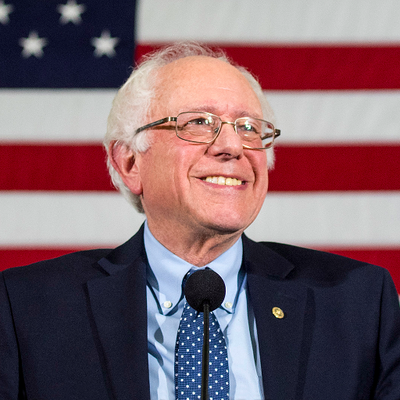
Last night saw some of the greatest progressive victories in modern American history. All across the country, in rural and urban areas, Americans said NO to oligarchy, and YES to an agenda that fights for the working class.
Congratulations to the following candidates:
U.S. SENATE
Abdul El-Sayed (MI)
Peggy Flanagan (MN)
Troy Jackson (ME)
U.S. HOUSE
Bob Brooks (PA-7)
Rebecca Cooke (WI-3)
Sam Forstag (MT-1)
Adam Hamawy (NJ-12)
Melat Kiros (CO-1)
Brad Lander (NY-10)
Will Lawrence (MI-7)
Donavan McKinney (MI-13)
Brian Poindexter (OH-7)
Analilia Mejía (NJ-11)
Claire Valdez (NY-07)
Randy Villegas (CA-22)
Aisha Wahab (CA-14)
Show more


It is my honor and privilege to be headed to the US Senate to serve the great state of Michigan.
Michigan, we did what they said couldn’t be done. We won. Together. Now the real work begins.
Show more


Google is trying to use its monopoly power to force AI into our public schools.
No corporation should have the power to dictate how we teach our children.
Our public schools exist to serve students, not to grow the profit margins of Big Tech.
Show more


Once again, @linamkhan is right. Google has already been found to have violated antitrust laws. Now, they’re trying to withhold access to their search function from schools that don't want to use their AI.
Big Tech needs to stop forcing AI on us - in schools and otherwise.
Show more

Google is using its “search monopoly to coerce schools” into adopting its A.I., says former FTC chair @linamkhan
As the public increasingly pushes back against Al in schools, she says "Google is making clear it will punish those who don’t fall in line.”
Show more
Google is using its search monopoly to coerce schools into adopting AI. This highlights the danger of allowing an unregulated monopolist to control an essential service.
Multiple courts have found Google liable for violating antitrust laws, and this latest move shows it remains unchastened.
As the public increasingly pushes back against the use of AI in schools, Google is making clear it will punish those who don’t fall in line.
Show more

Breaking: Google will turn off web search for schools that opt out of A.I. for kids.

Just last month, DoorDash couldn’t seem to find the money to pay their deliveristas — until our administration forced them to give back $131M+ in stolen wages and penalties.
This week, they’ve managed to find $17 billion to acquire one of their main competitors.
Corporate consolidation means higher prices, harsher exploitation, and greater economic inequality for New Yorkers.
We’ve stood up to these giants before. That doesn’t stop now.
Show more

DCWP issued this statement on DoorDash's potential purchase of Instacart. ⬇️
No matter the outcome, New York City will continue to enforce delivery workers' rights without fear or favor.
Show more

Thrilled that the Center for Law and the Economy will be hosting Isabella for a discussion of her book today at 4pm ET.
We'll hear from Isabella, as well as commentary from Professor @superwuster, before opening it up for questions.
Sign up for the livestream here:
Show more

Tonight, I’ll be talking about ANTI-FASCIST ECONOMICS with Lina Khan (@linamkhan), Chair of the New York City Economic Development Corporation, at Columbia Law School.
Lina was kind enough to offer an advance blurb for my new book!
🔗 Register to watch live online at the link below.
Show more

As AI firms recklessly unleash hacking agents across the internet, longstanding cybersecurity vulnerabilities are being exploited with even greater ease and frequency.
Hackers who compromise accounts or expose sensitive data can upend people’s lives.
This is not happening in a legal vacuum, and businesses across sectors face real legal duties.
At @FTC we routinely brought lawsuits against firms whose lax data security practices led to major hacks, exposing people to identify theft, stalking, and serious data misuse.
1. AI firms that are unleashing hacking agents could be held liable for engaging in “unfair or deceptive” practices under the FTC act and state UDAP laws, as well as other statutes.
2. Businesses whose systems get hacked because they’ve failed to follow basic security protocols may also be liable for failing to implement reasonable safeguards. Bad actors may be the ones exploiting these vulnerabilities, but that doesn't absolve businesses from having allowed the vulnerabilities to persist in the first place.
Here is a list we published of some basic security vulnerabilities businesses have a legal obligation to patch up:
3. CEOs can also be personally liable for presiding over lax data security practices, as we held in our case against Drizly:
4. Lastly, businesses that suffer hacks or breaches must alert any affected parties with clear disclosures that are timely, accurate, and actionable. Failing to disclose security breaches can also violate the law:
Show more


Lina Khan on AI: "These are individuals that have become used to a certain level of impunity, elite impunity that I think we've talked about in the past as being a broader cultural, social phenomena that results when we're not holding the rich and the powerful to the same rules and the same standards that we do to everybody else.
I think there are a lot of magazine profiles and other assessments looking at what these individuals as a personal matter and their character. I think to me, some of that is a little bit less interesting than this basic question of: Who is deciding in the first instance what trajectory these technologies take?
And whenever you have a tiny number of elites getting to call the shots around this potentially transformational technology, that is gonna be dangerous even if you have the most benevolent, well-meaning people in the driver's seat. It really comes down to the concentration of power."
From our people's town hall with @AINowInstitute
Show more

Look forward to joining this terrific event tonight to discuss how we should govern AI.
Livestream at 7pm:

TONIGHT (10/19): The People’s AI Assembly! Together with @MorePerfectUS, we're bringing together organizers, policymakers, labor leaders, journalists & artists who are charting an alternate trajectory for the future of AI.
Watch the livestream at 7pm ET:
Show more


In their bankruptcy filings Character AI disclosed that the FTC opened an investigation into them under Chair Khan, only for it to be closed by the Trump-Vance FTC.
No justice for the parents of children who harmed themselves because of their chatbots.
Show more











