
Peter Boghossian
@peterboghossian
Philosopher, author, father.
189 Following 342.5K Followers

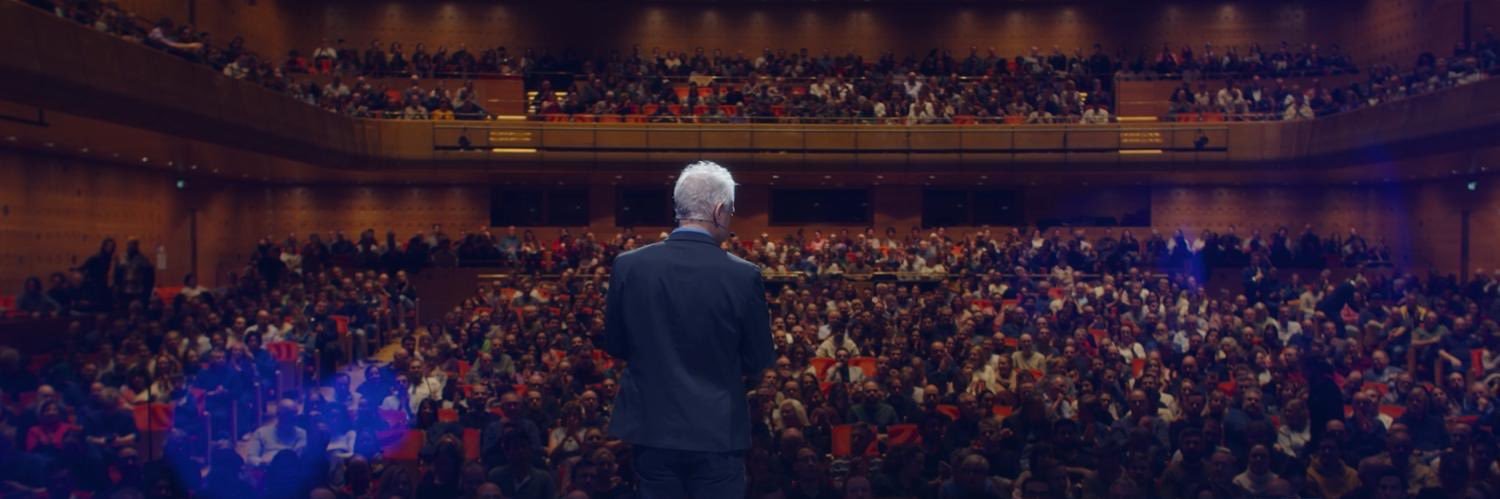
Richard Dawkins (@RichardDawkins) at Carnegie Hall, and I get to sit across from him
Genes and the Meaning of Life
October 20 | 7:00 PM | Carnegie Hall
Fifty years ago, a 35-year-old zoologist gave us the gene's eye view, the word "meme," and a book that rearranged how we think about life itself. Now Richard Dawkins takes the Carnegie Hall stage for the first time, and I'll be in the chair beside him.
We'll go past the greatest hits: his new work on the "genetic book of the dead," the idea that every creature is a readable archive of the worlds its ancestors survived. And a question I keep turning over: could our own genes be a giant colony of cooperating viruses?
Get your tickets here -
Show more

Turkey raided gay bars and LGBTQ groups this week and jailed activists. (BBC, Reuters, & AP.) Same-sex relations aren’t even a crime there.
HRC, GLAAD, and Stonewall have not written a word. HRC spent the week posting Senate endorsements.
A week of mass arrests. Silence.
Show more
Strange times.
I wonder how many of these women will fall in love with their new role: Settle down, marry, and finally be happy.

JUST IN: FBI reportedly believes women are pretending to be tradwives, targeting ICE officers to seduce & dox them — The Guardian
Thought for the day: Progressivism vs. Conservatism
Progressivism is a universal ideology: It entails disparate cultures becoming increasingly similar as they converge upon a singular ideal of “good” society. Conservatism is the opposite force. It is the belief that the traditions, culture, and way of life of your society is worth preserving, especially in the face of progressive change.
Conservatism is a necessarily diverse ideology because traditional cultures vary tremendously. While a progressive activist in Riyad and a progressive activist in London will believe roughly the same thing, a conservative activist in London and a conservative activist in Riyad will have profoundly different beliefs. The former look toward a shared ideal of a future, while the latter look toward two different beginnings.
Show more
I'd like to extend an invitation to an accomplished Muslim scholar to come on my show and refute these claims about Islam.
If interested:


So what if a Muslim wins an election in America and becomes a congressman or senator? Why is that any different from a Buddhist winning an election?
Because Buddhism is a religion. Islam is a state.
Islam has a population: the ummah. It has a constitution: Sharia. It has courts, criminal law, family law, taxation, rules for minorities, doctrines of war and peace, and a foreign-policy framework governing relations between the land of Islam and the lands outside it.
The ummah is not tied to Egypt, Pakistan, Saudi Arabia, Indonesia, or any other modern country. It crosses all of them.
Islam's population "Muslims" belong to one political-religious community.
That is fundamentally different from Buddhism.
A Buddhist American may practice Buddhism faithfully, but Buddhism does not give him a second universal political order with its own law, sovereignty, territorial doctrine, and theory of government.
Islam does.
This is why reducing Islam to “just another religion” misses the point.
Muslim officeholders are literally citizens of another existing country, and their loyalties can never be American first, because the two projects are contradictory.
Show more
Portland City Councilor Mitch Green is a lunatic. He wants to ABOLISH the police. Let that sink in. Green wants to eradicate the entire police force in a major US city.

An astonishing prediction. The implications of this for humanity are profound.

My guess is that AI roughly doubles US GDP growth next year from ~2% to ~4%. Maybe even more.

My Op-Ed…
Piker is a man of means. He lives in a $2.7M house in LA.
If you genuinely believe you live in a morally horrific country, and you had the means to move, what does it say about you if you don't move?
Show more
JUST IN: Abdul El-Sayed condemns Hasan Piker for saying America is “worse than Al-Qaeda.”
Mounting machine guns along the Mediterranean. Polyamory. Gene-editing embryos. Ukraine vs. Russia. Abortion in the 3rd trimester.

Many people are puzzled as to why any sane individual would advocate for mass immigration given immigrants gross over-representation in crime statistics.
The answer: People who advocate for mass immigration do so on what they believe to be moral grounds, independent of data.
Show more

Lots of people discuss immigration & crime in Europe, so I compiled what I think is ALL the data on the topic, which is hard because many countries hide it.
Do they commit more crime?
Is it because of age? Sex? Education? Poverty? Culture?
1. Sexual offenses & violent crime:
Show more


The medical profession is STILL removing healthy organs from children and calling it medicine. @_CryMiaRiver and I take a fresh look at trans medical scandals, examine new arguments, and Mia makes a "radical" suggestion.
Show more

This is brilliant.
Teach this in every class in every school on Earth.

In response to the clip going around with the African lady saying 'WHAT WHITE CULTURE!?!'
Because I can explain it in more detail than anyone else... here are the main things that create western civilisation.
The principle, the law of nature that is an adaptation to and what operation it creates in our civilisation.
THE WESTERN CIVILISATION STACK
Western civilisation can be understood as a set of adaptations to the laws of nature that allow millions of people to cooperate, solve problems and innovate together.
1. SOVEREIGNTY — Let people act.
Law of nature: Knowledge and ability are distributed among individuals.
No ruler or institution can know everything everyone knows. Sovereignty gives people freedom to choose, experiment and solve problems for themselves. That creates millions of independent problem-solvers instead of waiting for one authority to find the answer.
2. RECIPROCITY — Don’t impose your costs on others.
Law of nature: Cooperation survives when it benefits both sides.
Freedom cannot mean freedom to steal, defraud, injure or force others to carry your costs. Reciprocity means pursuing your interests while respecting the same right in others. It turns conflict into cooperation and makes peaceful life among strangers possible.
3. RESPONSIBILITY — Make people accountable for consequences.
Law of nature: Every action produces consequences.
Freedom works when the person making a decision also bears responsibility for its results. When people can keep the benefits of their choices while forcing the costs onto others, cooperation breaks down. Responsibility reconnects choice with consequence.
4. PROPERTY — Make control and consequences clear.
Law of nature: Resources are scarce and cannot satisfy every competing use at once.
Property establishes who controls something, who may use or exchange it, and who bears the consequences of those decisions. That reduces conflict, encourages people to improve what they possess, and makes investment and long-term planning possible.
5. TRUTH — Correct error faster than reality punishes you for it.
Law of nature: Reality does not change because we believe something false.
Truthful testimony, open criticism and evidence allow people to discover mistakes before those mistakes become catastrophes. A civilisation that can criticize and correct itself can learn faster than one that protects comforting falsehoods.
6. CONTRACT — Make cooperation possible across time.
Law of nature: Cooperation requires predictable future behaviour.
Promises backed by reputation and law allow strangers to trust one another enough to cooperate. Contract lets one person invest today because another can credibly promise performance tomorrow. That makes enormous networks of specialization, trade and investment possible.
7. RULE OF LAW — Replace arbitrary power with predictable rules.
Law of nature: People have conflicting interests, and power creates opportunities for predation.
Law provides a common procedure for resolving disputes without violence or personal rule. When rulers and citizens are both constrained by known rules, people can cooperate, invest and experiment without constantly fearing arbitrary interference.
8. DUE PROCESS — Test accusations instead of trusting authority.
Law of nature: Human beings are biased, mistaken and sometimes dishonest.
An accusation is not proof. Evidence, defense, confrontation, impartial judgment and appeal create an adversarial process for discovering error. Due process protects both society from wrongdoing and individuals from arbitrary punishment.
9. DECENTRALISATION — Let many solutions compete.
Law of nature: No one knows in advance which adaptation will work best.
Families, firms, towns, institutions and governments can try different solutions to different problems. Failures can remain local while successful solutions spread. Decentralisation therefore turns society itself into a continuous experiment.
10. MARKETS — Let reality select among competing solutions.
Law of nature: Evolution advances through variation, selection and retention.
Markets allow people to try different products, services and ways of organising resources. People select among them through voluntary choice. Successful solutions attract resources; unsuccessful ones disappear or improve. Markets turn millions of choices into continuous social learning.
11. SPECIALISATION — Let differences become advantages.
Law of nature: People differ in knowledge, ability, resources and circumstances.
Instead of everyone doing everything badly, specialization lets people become exceptionally good at different things and exchange the results. Cooperation converts human differences from a source of conflict into a source of increasing productivity.
12. SCIENCE — Institutionalise error correction.
Law of nature: A false model eventually fails when tested against reality.
Science turns doubt into a productive institution: observe, propose, test, criticize, replicate and correct. Knowledge therefore does not have to depend upon authority or tradition. Every generation can discover where the previous generation was wrong and build upon what it got right.
13. CAPITAL — Preserve successful adaptations.
Law of nature: Progress compounds only when successful adaptations survive.
Tools, businesses, infrastructure, institutions and knowledge allow yesterday’s successful experiments to become tomorrow’s starting point. Each generation does not begin again from zero. It inherits accumulated solutions and adds another layer.
14. EDUCATION — Transfer accumulated knowledge between generations.
Law of nature: Individuals die; knowledge does not have to.
Writing, schools, apprenticeships and universities allow discoveries to survive their discoverers. Instead of every generation rediscovering mathematics, engineering, medicine and law, it begins with thousands of years of accumulated learning.
15. COMMONS — Build things that make everyone more capable.
Law of nature: Cooperation can produce benefits no individual could produce alone.
Courts, roads, standards, security, scientific knowledge, infrastructure and trustworthy institutions multiply everyone's ability to act. A successful civilisation does more than protect private interests: it continually creates shared capital that makes future cooperation cheaper and more productive.
THE RESULT
These principles form a system:
Sovereignty creates experimentation.
Reciprocity makes it peaceful.
Responsibility makes it sustainable.
Property makes interests clear.
Truth corrects error.
Contract creates trust across time.
Law suppresses predation.
Decentralisation preserves alternatives.
Markets select successful solutions.
Specialisation multiplies productivity.
Science accelerates discovery.
Capital preserves what works.
Education transmits it.
Commons multiply everyone's capabilities.
That is the deeper logic of the Western stack:
Stable rules + distributed freedom + relentless error correction = cooperation at scale and accelerating innovation.
Show more
There needs to be a sign for this

The full article is found below. The entire article is worth reading.

AI can predict race from medical images.
If race is a social construct, how is this possible?
"AI recognition of patient race in medical imaging: a modelling study". (Link in following post.)
Show more

It's repeated for social and political reasons.

Lewontin's fallacy is incessantly repeated over & over & over again in the Social Sciences. The consequences for our politics & cultural hygiene have been catastrophic.
Show more

Canadian fork. 🇨🇦











