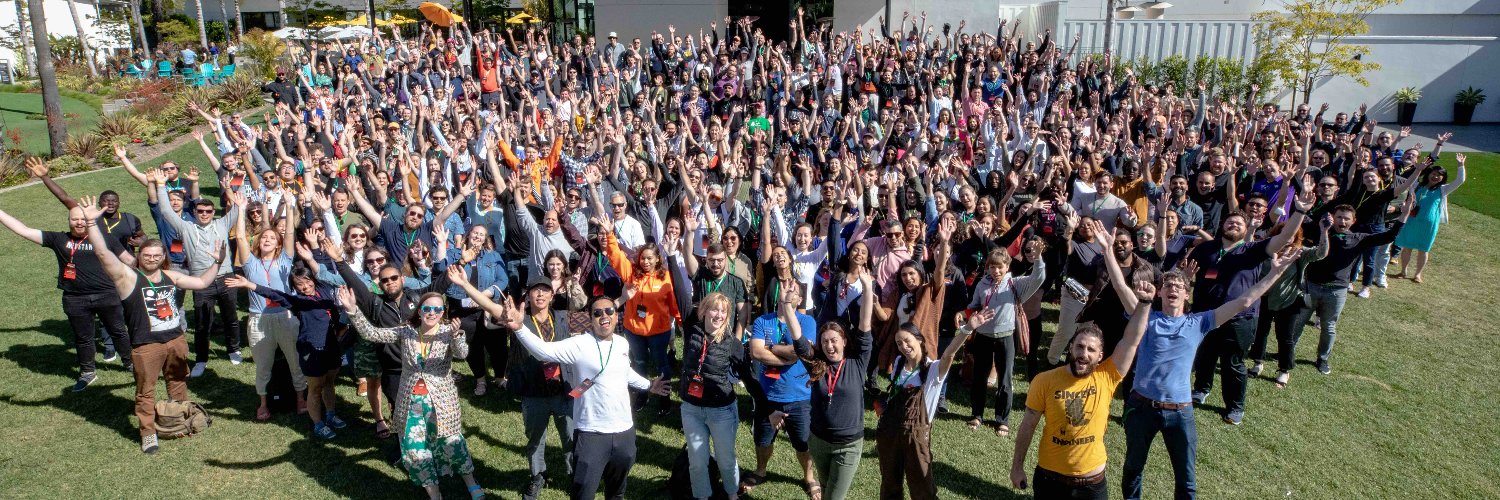

Today at ZapConnect, we debut Next Gen Zaps.
One of the most important product moments in @Zapier's history.
With Next Gen Zaps, customers can deploy agent-built Zaps in seconds. Simply describe your problem to your agent and it will build you a Zap that runs automatically, even when your laptop is closed.
Use it from Claude, ChatGPT, etc. to migrate existing Zaps, create new ones, or bring external automations onto Zapier. It's one line of text away.
My two favorite parts:
1. Hardening: Zaps will run the deterministic parts with code not AI. That means more reliability and lower cost.
2. Healing: When a Zap breaks, it falls back to agentic mode and can figure out how to recover without human intervention.
The early data shows how much we still have to learn. But we think it's good enough to share now.
One early access customer told us, "This is what Zaps were always supposed to be: easy."
Now in beta. Let us know what you think:
Show more

GPT-6 Astra is now live in Zapier!
GPT 6 Astra is here. We ran the numbers on AutomationBench:
It's the highest score we've ever recorded. Clean sweep across every domain.
Scores 41.4% at Max effort. For context, no model had cleared 40% before today (GPT-5.6-Sol scored 28.8%)
𝗕𝗲𝘀𝘁 𝗳𝗶𝘁 𝗳𝗼𝗿: reconciliation, deal review prep, vendor scorecards, anything where touching the wrong record is expensive.
𝗪𝗲𝗮𝗸𝗲𝗿 𝗳𝗼𝗿: outbound comms where the guidance is scattered. Operations and support are its strongest domains. HR is its weakest, same as every model we test (still the new high score, though)
Its edge is arithmetic across messy sources. Finding the policy doc, the logged correction, the exception rule, etc.
Example 1: rebalance a quarterly media budget from last quarter's actuals, with finance adjustments and channel eligibility rules buried in email. Both models produced a budget and landed on the same total. Astra found the adjustments, so every per-channel number was right. Sol's looked finished and had the splits wrong.
Example 2: answer and log 15 integration inquiries using a reply standard stored in a doc. Astra searched, could not find the standard, and stopped. Zero replies sent. Sol did not find it either, took its best shot at all 15, and earned partial credit.
Those examples highlight how these two models make tradeoffs... Astra will not guess. When the instructions exist and it can find them, it finishes the whole job. When it cannot, it pauses the work instead of improvising.
Crazy week for LLM releases after a few quiet ones. Astra isn't available to the public yet, but should be soon.
We run every new model through @Zapier's AutomationBench, 657 of the hardest workflows we have, across finance, HR, marketing, operations, sales, and support.
See every model and every score here:
Show more

4 in 5 leaders say their teams are working around AI rules.
Shadow IT applies to shadow AI too.
@Zapier surveyed 548 directors, VPs, and C-suite leaders. In companies with 500 to 4,999 people, 81% report shadow AI. Over 5,000 people? That drops to only 64%.
Better enforcement, or something else?
The bigger orgs have more layers between the exec filling out a survey and the person actually building the workflow. So maybe that's lower visibility showing up as a better score? Playing devil's advocate, maybe the big orgs did invest earlier and it worked. I don't know for sure, and I'd want to see how they measure it before I’d believe that.
Shadow AI shows up for the same reason every time: the approved path is slower than the workaround. 3 weeks and a ticket to get AI access, and people will find their own way.
Data here:
Show more

WSJ just wrote about our Slack transparency leaderboard.
It measures what % of our messages are public vs hidden in DMs. I'm at 79%. Our CMO is at 98% (coming for you, Dan)
An agent can only use what it can read. On a customer call last week, I had an agent build a deck from 60 days of Slack messages about that account. It finished during the call because the messages were public and parsable.
Public-by-default has limits. HR issues, legal issues, and sensitive conversations stay private.
Brainstorming, work decisions, and project updates belong in channels when they can. That gives people and agents a foundation to build on later.
@Zapier's leaderboard is just how we make that habit visible.
Show more

Italy's largest car dealership found €150,000 in its voicemail box.
Autotorino gets 100k inbound calls a month across 74 locations. Nobody was ever going to answer all of them.
Instead of hiring their way out, they built a capture layer for the ones falling through.
Here’s how their @Zapier workflow works:
- When a call goes unanswered, the caller leaves a voicemail
- AssemblyAI transcribes it
- OpenAI classifies what the caller is asking for
- @Zapier formats it and writes a structured lead into Salesforce, tagged with the right lead source
When AI accuracy fell short, they split the step and tuned until Salesforce got data the business could act on.
That system now recovers 1,500 customer requests a month, influencing about €150,000 in net profit.
And because everything now flows through structured workflows, the business can finally see why people call and which showrooms generate missed demand. All signals that used to disappear entirely.
When sales asked "can we trust AI output in our CRM?", they had the data.
Show more

Your AI will agree with you on most things.
3 ways to make it less sycophantic:
1. Stop asking just one agent. I hand the question to my /War-Council skill, a swarm of personalized subagents with different incentives
2. Give the AI something to lose. Mine incorporates game theory and bets $1,000 of imaginary money on the ideas it thinks will work (massively improve the answers)
3. Grade the plan in a brand new chat. I find the conversation that built the plan is usually too invested to judge it.
This is a problem even at @Zapier. Run an idea through AI and it comes back sanded down, you lose a piece of it each time. There's a Ship of Theseus metaphor in there somewhere…
Don't just ask your AI what it thinks, build it to argue.
Show more
Chatted with @Forbes about tokenmaxxing and what we spend on AI at Zapier.
Our top builders hit $30,000 a month.
That’s mostly devs looping coding agents on greenfield projects. Bug fixes, new functionality, clean feedback loops. It’s not cheap, and that’s why it's some of the most scrutinized work we do.
Spend alone doesn't tell you much. @Zapier studied 1500 companies and leading adopters run AI in only 18% of their agentic workflow steps. The rest is just code and logic.
Even @OpenAI's own research found that revenue per employee wasn't meaningfully associated with token output.
You can be a top builder who burns tokens on purpose. You can also be one who points AI at writing the code, then lets the automation run cheap.
Everyone in that piece can name their spend to the dollar, but not one of us measures ROI the same way.
Full article here:
Show more


Surprise drop today: Gemini 3.7 Flash.
On AutomationBench, it beats models that cost twice as much.
The progress here is insane. 3 weeks ago Gemini's 3.6 Flash scored 19.8%. Today, 3.7 is the first model to crack 30% on AutomationBench. At only 3 cents more per task.
𝗪𝗵𝗲𝗿𝗲 𝗶𝘁 𝘄𝗶𝗻𝘀: Marketing (38%), Finance (37.5%), Sales (28.2%), and Support (22%)
Example: Confirm a project is done in the CRM, then run our standard label cleanup on its email threads. Archive the closed ones, leave restricted ones alone. 3.7 was a full pass in 22 steps. GPT-5.6 Sol failed the same task in 8, then hallucinated a summary.
𝗪𝗵𝗲𝗿𝗲 𝗶𝘁 𝗹𝗼𝘀𝗲𝘀: Operations. Opus 5 still runs that domain at 50%.
Example: On a revenue-attribution task, 3.7 ran the math, updated the records, posted the summary, sent the escalation, and then never wrote the one required row on a second tracker. Came close, but still failed.
How @Zapier's AutomationBench works: we score every new model on 657 of the hardest workflows we run. Scoring is deterministic: either the right records got updated and the right messages got sent, or they didn't (no partial credit)
@GeminiApp’s 30% is a new record.
See every model and price here:
Show more

Opus 5 dropped today. It wins every function we test, for about half the cost.
We benchmarked it on AutomationBench: 657 real workflows across finance, HR, marketing, operations, sales, and support.
Opus 5 performed best in every one.
Example: raw account-health workbook in, full churn-prevention sequence out. Flag at-risk accounts, alert the right owner, summarize for retention ops. No previous model passed that test.
Dial Opus 5 to the lowest effort, about $0.75 a task, and it still beats every competitor's best run. Right around half the price.
@ClaudeAI's Opus 5 is live in @Zapier today. Try swapping the model and see what changes.
Show more


We're killing the DM at @Zapier. Starting with the executive team.
We've long held Default to Transparency as a value. That value has largely encouraged communication in public channels. But as the company grew, DMs are a hard habit to resist and break.
But every DM is a gap in our Shared Brain. It's context that is lost for humans and AIs. As a result the cost of DMs keeps going up.
So earlier this year I posted about our exec transparency leaderboard. The leaderboard has become quite the competition internally…
I'm 3rd today. My co-founder @BryanHelmig has held the top spot as long as I can remember…
It sets a standard for the rest of the company. In fact, since last year we’ve seen the % of Slack messages in public channels go from 33% to 46%.
What the leaderboard measures
Transparency is a team sport, and a disinfectant. Every month we track what percentage of our execs' Slack messages happen in public channels versus private DMs.
When your CEO debates strategy in a DM, that decision is invisible to every agent and every team that needs to know what was decided and why. The decision happens but the reasoning vanishes.
When that conversation happens in a channel, it stays. New hires can search it, agents can read and verify it, etc. Your Shared Brain knows what's true now: ask it a question and the answer reflects the latest reality.
Taking It to the Next Level
Reducing DMs are one way to increase transparency and open up context for humans and AI, but there are other mechanisms that help too. Three things beyond the leaderboard:
1. Meetings get recorded, transcribed, and become queryable
2. We run a shared skills library. Anyone on the team can encode a workflow they've figured out into a skill and share with the team
3. And we keep score. It's a silly scoreboard, but it subtly drives positive behaviors
Raising Your Ambition
In order to get the most of AI in your company, the AIs need context. So making your context queryable is one of the most practical moves you can make to improve the effectiveness of your AI agents.
P.S. I’m coming for #1#, Bryan...
Show more












