
I hope (and it seems) that mech interp gets bitter-lessoned, which would be a huge deal. A lot of time was been spent on SAEs (and others ideas) over the last few years, and it seemed like the field wasn't moving fast enough overall (unlike capabilities).
Mech interp continues to be the field with the most interesting research.
Show more

interpretability might be the most important scientific problem in the world right now, as I don't think we can solve alignment if we don't know what we're building. I think I have good news about it. I co-authored early work in mechanistic interpretability at OpenAI and came away pessimistic, because neural networks appeared to fold into arbitrary tangled knots. years later, I started openai's first large-scale automated interpretability project, finding about 2% of neurons legible with the primitive tools we had
with modern agentic tools and a much closer look, the picture looks totally different. the vast majority in models up to trillions of parameters are legible, and their circuits beautiful. many famous examples of tangled neurons turned out to be misunderstood. The roadblocks I expected mostly aren't there. I now think ambitious interpretability will be solved by the time we need it most, and possibly quite soon, as automated scientists keep improving. it may be a bitter lesson for interpretability: the simple thing, at absurd scale, works
Show more

interpretability might be the most important scientific problem in the world right now, as I don't think we can solve alignment if we don't know what we're building. I think I have good news about it. I co-authored early work in mechanistic interpretability at OpenAI and came away pessimistic, because neural networks appeared to fold into arbitrary tangled knots. years later, I started openai's first large-scale automated interpretability project, finding about 2% of neurons legible with the primitive tools we had
with modern agentic tools and a much closer look, the picture looks totally different. the vast majority in models up to trillions of parameters are legible, and their circuits beautiful. many famous examples of tangled neurons turned out to be misunderstood. The roadblocks I expected mostly aren't there. I now think ambitious interpretability will be solved by the time we need it most, and possibly quite soon, as automated scientists keep improving. it may be a bitter lesson for interpretability: the simple thing, at absurd scale, works
Show more

anthropic predicted everything back in 2021
they were RLHF-pilled, coding pilled, RL-pilled, scaling-pilled
everything


Congrats on the incredible momentum, Adam & Jeffrey!
Insane progress since you started at @Neo Residency less than 6 months ago.

been dooming tn so let me also say I expect really strong mechinterp progress in the coming months. like maybe more than we’ve seen in years. models getting good enough to do research, and I’ve been seeing lots of good things. (sorry to vague poast, not my updates to share)
Show more
and biggest fan 💪

@Mascobot ^ First investor
I've always been a big fan of Runpod, it's a phenomenal product since day 1 - and their growth shows it.
Congrats too the @runpod team!

The data/RL env market is the most active I've ever seen. There’s so much going on.

soon all progress will be data bottlenecked, not intelligence bottlenecked. bio? data bottlenecked. astronomy? data bottlenecked. data all the way down
I can't imagine a humanoid in a set up like this.
In industrial setup, it would make everything slower and worse than purpose built robots.

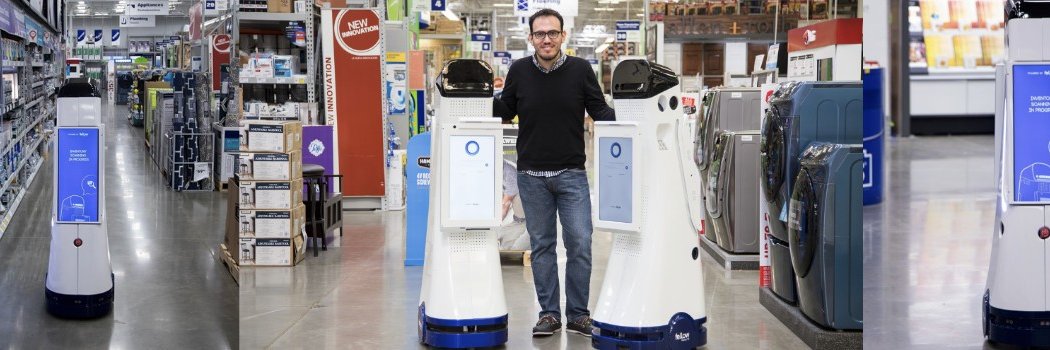
Warehouse robots are here!
Introducing Flexport's newest automated fulfillment center just outside of Chicago.

Bitter Lessons and Jevons Paradox everywhere
A few have been saying this for some time now but for some reason many didn't believe it

Dario turned out to be right. Maybe even a little cautious. But look at the comments. All so very convinced that they knew more and better, and what an idiot he was.
Dario turned out to be right. Maybe even a little cautious. But look at the comments. All so very convinced that they knew more and better, and what an idiot he was.
Anyone who has worked with @JenniferHli knows she's the GOAT.

@JenniferHli is an absolute superwoman. Full stop.

launched a model
accidentally served trillions of tokens a day
29.4% of the fortune 500 showed up
raised a really big series A from @a16z
it's been 3 weeks
we would like to sleep now
Show more

I love mcmaster carr, and their website is top notch.
Can't believe they did a great site without AI even back in time.
The fact that many folks/investors are surprised by data and RL environments Cos that are reaching high eight-figure to mid nine-figure run rates in less than a year, tells me how late they are to the game and how little they understand about models, training and data.
Show more
We def might be in a ~GPT3 era in robotics

unlike Hemant, we don’t re-write history.
not featured in this memo: the goat @cdixon who sourced (Alex was a 2nd time a16z founder - Opensea, OR) and surfaced it 3x!!!
we win as a team 💪

What will be left at the end of computer science is databases, neural networks and chips











