
NASA JPL
@NASAJPL
The Jet Propulsion Laboratory advances science and discovery through NASA robotic missions exploring Earth, the solar system, and the universe.
129 Following 3.7M Followers
Today, NASA announced PRIMA, a new space telescope that will explore long-standing mysteries around the formation of planets, stars, black holes, and even how water on Earth came to be.
Show more

As of Sept. 22, it's officially fall in the Northern Hemisphere…while spring begins in the Southern Hemisphere. 🍁 🌎 💐
That's the September equinox, when the Sun is directly above Earth's equator and day and night are close to equal in length around the world.
Show more

Venus’ greatest elongation is now visible!
When a planet is at its greatest elongation, we observe the greatest visual separation between the planet and the Sun, as seen from Earth – making it an ideal time for viewing.
This weekend is a great time to catch Venus, especially through a telescope!
Show more


NASA’s PREFIRE satellites have now collected two full years of data showing how surface temperatures change at Earth’s poles. Tracking these changes helps scientists better understand how energy moves into and out of the Earth system.
Show more

The Perseid meteor shower peaks tonight into tomorrow! For your best chance to see meteors: Find a dark location, let your eyes adjust, and look northeast towards the constellation Perseus.
Rather stay in? Tune in to our livestream here:
Show more


If you're fortunate enough to be in the path of tomorrow's total solar eclipse, we're here to help you capture the moment!
Learn how to take the best photos with these tips from our photography experts.
Show more

Tomorrow’s solar eclipse is partially visible from parts of the northeastern U.S. and Canada. Check local coverage for timing details, or tune in to our livestream!
Are you planning to watch? ☀️
Show more

A Mars helicopter with a tuxedo tail?
In this demo for SkyFall, a new, flexible antenna is put through its paces. This ground penetrating radar antenna will hunt for frozen water beneath the Martian surface ⏤ a critical resource for future astronauts.
Show more


In its 14 years on Mars, the Curiosity rover has taken more than 700,000 images, but this one is special – because it was one of the first.
Happy landiversary, Curiosity!

JPL engineers have freed up power on Voyager 2 by simultaneously turning off certain devices and substituting them with lower-power alternatives.
Learn more:

We're taking your questions now!
Our spacecraft have been on the surface and in the skies of Mars for more than 50 years. What would you ask NASA Mars scientists about the past, present, and future of exploration?
Join us on Wednesday, Aug. 5, from 11:00am-12:30pm PT for a @Reddit AMA:
Show more

What’s up for August?
A solar eclipse, one of the year's best meteor showers, Venus at its brightest, and a lunar eclipse!

Now through the end of the month, Saturn’s rings are on view – but you might notice something a little bit odd about them through your telescope. 🪐
The rings look thinner than normal because of the way that Saturn is tilted in relation to the Earth.
Show more

We’re celebrating 30 years since the discovery of the first exoplanet around a Sun-like star with a new poster in our much-loved Exoplanet Travel Bureau series!
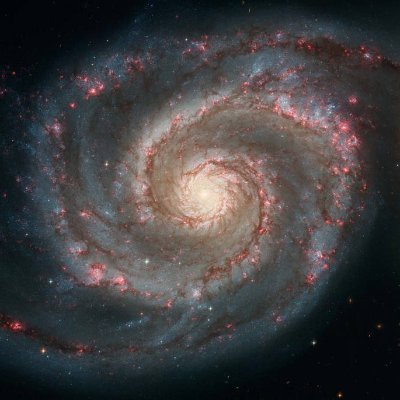
Join the jam on Proxima Centauri b, Earth’s closest-known exoplanet neighbor!
Download the poster here:


🎵 H-O-T-T-O-G-O! 🎵
@voyagertech_’s Griffin-1 lunar lander is hot to go... through environmental testing.
The lander has arrived at @NASAJPL, where it will undergo testing to help verify it can withstand launch, landing, and the harsh conditions of space before its commercial mission supporting development of @NASAMoonBase.
Show more

A hummingbird in Antarctica?
This striking image, taken by the NISAR satellite, is actually a mountaintop surrounded by flowing, fractured ice. Radar reveals features at and beneath the surface that ordinary images can miss. More:
Show more

It’s a Martian marathon!
NASA's Perseverance Rover has surpassed a total distance of 26.2 miles (42.195 kilometers) of travel on the Red Planet. It crossed the milestone while exploring intriguing ancient terrain to the west of Jezero Crater.
Show more


Four JPL-built propulsive drones – known as MoonFall – will survey the lunar surface at potential @NASAArtemis landing sites in unprecedented detail. The mission is part of the initial phase of the @NASAMoonBase initiative.
Learn more:
Show more

Built to carry science payloads, the next generation of Mars helicopters could gather critical data for NASA's future human and robotic missions. 🚁
More on the test:












