

Archaeo - Histories
@archeohistories
History is an unending dialogue between present and the past, that's why few pages of history give more insight than all the metaphysical volumes. (9)
21 Following 641.4K Followers

Vikings vs Knights 🇳🇴🏴🔥
© mechastudio.ai-

English King vs Viking Warrior 🏴🇳🇴 who will conquer the kingdom 🏆⚽
© _mota.ai-

Vikings captured the Miami Beach....
© cheatdayeats

Claudette Colbert in a shimmering metallic dress designed by Travis Banton for the 1934 film Cleopatra.
The film was directed by Cecil B. DeMille.Colbert won an Academy Award for her performance in another film that same year.
The costume is known for its Art Deco influence, despite the ancient Egyptian setting.
(Colorized Photo)
#drthehistories#
Show more

A white-ground kylix unearthed in a Delphi tomb, created by an anonymous Athenian vase-painter around 480–470 BC, depicts Apollo seated on a stool with lion-paw legs, wearing a wreath of myrtle leaves. He is dressed in a white peplos and a red himation draped over his left shoulder. Apollo's left hand is poised on the strings of his lyre, while his right hand pours a libation from a navel-phiale.
This scene brings together music, ritual, and prophecy, underscoring Apollo's importance. The lyre represents his role as god of music, while the libation links the image to religious practice. A bird, probably a crow associated with Apollo in myth, is shown beside him, possibly alluding to the story of Koronis. The white-ground technique produces a unique effect, with the pale background providing space for color and fine detail, making the image feel delicate and almost painted.
Archaeological Museum of Delphi
#drthehistories#
Show more

A 300-year-old samurai armor with striking antlers — built for the battlefield....
This samurai armor was crafted about 300 years ago during Japan’s mid-Edo period and represents a practical yet highly refined example of traditional battlefield equipment. Its most distinctive feature is the dramatic pair of black-lacquered antlers mounted on the helmet. Such crests made a warrior instantly recognizable on the battlefield while projecting strength and authority.
The helmet is an 18-plate toppai-style kabuto, a pointed design favored for its practical construction. It is paired with a fierce iron face mask, a two-piece cuirass, and a complete set of matching arm, thigh, and shin defenses. Despite its imposing appearance, every component was designed for combat rather than ceremony, reflecting the evolution of samurai armor during the peaceful Edo period.
Today, it is recognized as a Specially Valuable Historical Artifact, preserving an outstanding example of Japanese armor craftsmanship.
📷© Touken World Nagoya
#drthehistories#
Show more

When Dorothy Height showed up at Barnard College in 1929 with her admission letter in hand, a dean looked at her and told her they had already reached their quota of "two Negro students per year." Height had just graduated with honors from an integrated high school in Rankin, Pennsylvania, a small steel town outside Pittsburgh. She had won a national oratorical contest and a $1,000 scholarship. None of it mattered. "It was such a shock to me," she later recalled. "I never thought there would be a racial quota. I couldn't eat, I couldn't sleep for days."
Unwilling to give up on her dreams, she walked into New York University with her Barnard acceptance letter in hand -- and they admitted her on the spot. She earned both her bachelor's and master's degrees in four years. Years later, Height said the rejection at Barnard taught her the most important lesson of her life: "That there is no advantage in bitterness, that I needed to go into action, which is something I have tried to follow since."
Born in 1912, Dorothy Height would become what President Barack Obama called "the godmother of the Civil Rights Movement," observing that she was "the only woman at the highest level of the Civil Rights Movement -- witnessing every march and milestone along the way." Yet for decades, sexism ensured that her name was rarely mentioned alongside the men she worked beside as an equal.
In 1933, Height graduated from NYU with a master's degree in educational psychology and began working as a caseworker with the New York City Welfare Department. But it was a chance encounter four years later, in 1937, that set her on the path of her life's work.
The 25-year-old Height was assigned to escort First Lady Eleanor Roosevelt into a meeting of the National Council of Negro Women. The organization's founder, the legendary Mary McLeod Bethune -- the daughter of former slaves who had built a college for Black women and become one of the most powerful figures of the New Deal era -- noticed the young woman's poise and ability.
"What is your name?" Bethune asked.
"Dorothy Height," she whispered.
"We need you," Bethune said.
By the time Height returned from walking Roosevelt to her car, Bethune had already appointed her to a committee. "On that fall day," Height later wrote in her memoir, "the redoubtable Mary McLeod Bethune put her hand on me. She drew me into her dazzling orbit of people in power and people in poverty." Height joined Bethune's crusade to end poll taxes, lynching, and unfair employment practices. "I don't think that outside of my mother and my church," she reflected, "there's been anything of greater influence than Mary McLeod Bethune."
In 1957, two years after Bethune's death, Height was named president of the National Council of Negro Women -- a position she would hold for the next forty years. She advised presidents from Eisenhower to Obama, pushing Eisenhower on desegregating schools and Johnson on appointing Black women to government positions. And she became the only woman working directly alongside the leaders who would come to be known as the "Big Six" of the Civil Rights Movement: Martin Luther King Jr., John Lewis, A. Philip Randolph, James Farmer, Roy Wilkins, and Whitney Young.
On August 28, 1963, Height sat an arm's length from King as he delivered his "I Have a Dream" speech at the March on Washington. But she was not allowed to speak.
Height had helped organize the march. She mobilized thousands of women volunteers and arranged transportation. When it came time to set the program, the male leaders refused to include a single woman as a speaker. Height pushed back.
© A Mighty Girl
#drthehistories#
Show more

A Short-Lived European Republic (1918-1919)
Following the collapse of Austria-Hungary in 1918, the West Ukrainian People's Republic emerged as one of several new states in Eastern Europe. This historical map highlights its claimed territories, neighboring regions, and the complex borders that shaped the post-World War I landscape.
The republic claimed Lviv as its capital, but due to conflict, the government operated from cities like Ternopil and Stanislaviv. The republic was involved in a war with Poland over control of Galicia, leading to a largely unstable border until the state was dissolved.
The map highlights claims overlapping with the Kingdom of Galicia and Lodomeria (Austria-Hungary), the Kingdom of Romania, and the Kingdom of Hungary.
#drthehistories#
Show more

Olivier de Clisson had served King Philip VI of France in the Breton War of Succession. He was a noble, a landowner, a knight. But when politics turned, he was accused of treason, dragged through a mock trial, and executed in Paris. His head was placed on a spike at the city gates. No one gave Jeanne a reason.
She got her answer in other ways.
Jeanne de Clisson sold her estates, gathered her remaining wealth, and armed herself. Not with lawyers. With steel. She raised a private army in Brittany and began targeting supporters of the crown. Then she took it a step further.
Jeanne became a pirate.
She bought three warships and painted them black. Their sails were red. She hunted French ships in the English Channel, capturing them, executing every nobleman aboard, and leaving the rest to spread the story. Her fleet became known as the Black Fleet. She was no longer a noblewoman. She was a hunter.
The English, who were fighting France in the early years of the Hundred Years’ War, gave her safe harbor. Jeanne used it well. She spent over a decade attacking the French crown at sea. She didn’t spare much. Her vengeance was personal.
But she was also more than rage. Jeanne was a mother. She took her children with her. One son, Olivier, would grow up to become Constable of France, the kingdom’s highest military office. Another would die in her arms.
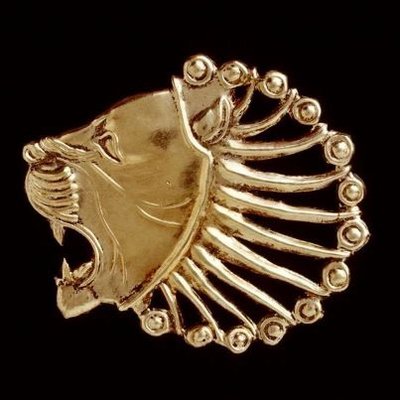
When she finally laid down her weapons, Jeanne remarried and lived quietly in Brittany. But her name never stopped traveling. To this day, she is remembered as the Lioness of Brittany.
Not because she roared, but because she struck. Relentlessly. Without apology. And with a clarity that came from loss, not ambition.
Jeanne’s story isn’t legend. It’s history. Brutal, human, and real. Just like her.
#drthehistories#
Show more

In its final days, the Sumer fragmented city by city, until only its capital, Ur, remained—isolated and encircled by hostile forces. The end came when the Elamites, once subjects of Sumer living in the Iranian foothills, descended along the mountain routes, gathering tribal allies as they advanced. Together, they laid siege to the last great Sumerian stronghold.
King Ibbi-Sin made a final, desperate attempt to save his kingdom. In a striking reversal, he sought aid from the Martu—the very groups that had earlier breached his father’s defensive walls—offering payment in exchange for their support. He even appealed to Ishbi-Erra, the former general who had betrayed him and established himself as ruler of Isin. Yet these efforts proved futile; no alliance came to Sumer’s rescue.
The Elamites eventually broke through Ur’s defenses and unleashed devastation. The city was set ablaze, its sacred precincts desecrated and looted. One can imagine the invaders surging up the steps of Ur’s great ziggurat, slaughtering priests and stripping the temple of its treasures. The surrounding countryside was ravaged—fields burned, irrigation systems destroyed, and waterways polluted, spreading disease and famine.
The royal palace fell soon after. Ibbi-Sin was captured, bound in chains, and taken back to Elam, where he died in captivity. With his fall, a civilization that had endured for millennia came to a symbolic and definitive end—its last king perishing as a prisoner in a foreign land.
The people who witnessed this catastrophe responded in a deeply human way: they mourned through literature. For each of their fallen cities, they composed laments. Among the most poignant is Lament for Ur, which conveys the anguish of the time:
“The gods have abandoned us. Like migrating birds, they have gone. Ur is destroyed. Bitter is its lament. The country’s blood now fills its holes like hot bronze in a mold. Bodies dissolve like fat in the sun. Our temple is destroyed. Smoke lies on our city like a shroud. Blood flows as the river does… Ur is no more.”
The fall of Ur stands as a major turning point in ancient history. It marked the collapse of a unified Sumerian state and ushered in a period of fragmentation—a kind of dark age in which rival city-states once again struggled for dominance over the remnants of a once-great civilization.
📷 : Lament for Ur," a Sumerian clay tablet composed around 2000 BC to mourn the destruction of the city of Ur. (Louvre Museum)
© Fall of Civilizations: The Sumerians - Fall of the First Cities
#drthehistories#
Show more

This 18th-century chest ornament was made in Flores, one of Indonesia’s Lesser Sunda Islands, located east of Komodo and west of Lembata. While it is a relatively small island—covering just over 12,000 square kilometres—it is exceptionally famous due to the 2003 discovery of Homo floresiensis, an extinct species of tiny humans who lived there until roughly 50,000 years ago.
The island was colonized by the Portuguese in early 16th century, who introduced Catholicism. Dominican friars quickly established a stronghold, baptizing many local kings and their populations. As Islam spread throughout the rest of the Indonesian archipelago, Flores managed to maintain its deep-rooted Catholic faith, remaining one of the few predominantly Christian islands in a Muslim-majority country. This unique history fostered a distinct visual art style that set Flores apart from the rest of the archipelago, blending European Christian symbols with ancient indigenous traditions. This blending can be seen in the pendant's design, which features a stylized Catholic Sacred Heart topped by a crown flourish that doubles as a suspension loop—mirroring the ancestral figure motifs common in Lesser Sunda art.
Yale University Art Gallery
#drthehistories#
Show more

A timber from a Roman wharf in London displayed at St Magnus the Martyr church near London Bridge.
This large, dark, weathered oak beam is a remnant of the massive wooden waterfront structures built by Romans in Londinium starting around the mid-1st Century AD, shortly after the city's founding in c. 43–50 AD.
The one at St Magnus the Martyr was found in 1931 on Fish Street Hill and is dated to around 75 AD.
Roman engineers constructed successive timber quays, revetments, and box structures along the north bank of the Thames, mainly around Lower Thames Street, Billingsgate, Pudding Lane, and New Fresh Wharf areas, to create a major port.
These used massive oak baulks, often squared, jointed without nails using notches/tenons, and sometimes iron-reinforced, piles, and tie-backs.
Large prefabricated timbers formed rigid boxes or stacked fronts, infilled with gravel/clay. These show how the Romans reclaimed land from the Thames, built a bustling harbor with warehouses, and supported trade. The river level and shoreline have shifted dramatically since then.
Many similar timbers were excavated in the 1970s–2000s during City of London redevelopment, but this one is publicly displayed as a tangible link to Roman London.
#drthehistories#
Show more

On June 24, 1813, the Battle of Beaver Dams became one of the most important turning points of the War of 1812. Just days earlier, Laura Secord had learned of an American plan to launch a surprise attack against a British outpost in Upper Canada.
With American troops occupying the Niagara Peninsula, she secretly left her home and trekked roughly 20 miles through forests, swamps, and enemy-controlled territory in the summer heat. Along the way, she encountered Indigenous allies who escorted her to Lieutenant James FitzGibbon, allowing her to deliver the warning before the American force arrived.
Armed with advance notice, British commanders and their Indigenous allies prepared an ambush. When the American column reached Beaver Dams on June 24, it was met by determined resistance, leading to the surrender of hundreds of American soldiers and ending another major offensive into Upper Canada.
Although Laura Secord received little recognition during much of her lifetime, she later became one of Canada’s best-known historical figures. Her remarkable journey remains a lasting symbol of courage, determination, and the impact one individual can have during wartime.
Laura Secord’s warning helped prevent a surprise attack and contributed to the American defeat at Beaver Dams, strengthening the British and Indigenous defensive position in Upper Canada. The victory discouraged further American advances in the Niagara region, demonstrated the value of local intelligence and cooperation with Indigenous allies, and elevated Secord into a national symbol of bravery whose story continues to be remembered more than two centuries later.
#archaeohistories#
Show more

On January 27, 1944, the Red Army finally ended the Siege of Leningrad after 872 days, bringing an end to one of the deadliest and longest sieges in history.
For nearly two and a half years, German and Finnish forces surrounded the city, cutting off food, fuel, and vital supplies while subjecting it to relentless artillery bombardment and air attacks.
Starvation became the greatest killer. Hundreds of thousands of civilians died from hunger, disease, and freezing temperatures as daily food rations fell to desperate levels during the brutal winters.
Despite unimaginable suffering, the city’s defenders and civilians refused to surrender. Factories continued producing weapons, supplies crossed the frozen Lake Ladoga on the famous “Road of Life,” and the population endured conditions few cities have ever faced.
The Soviet January 1944 offensive finally pushed German forces away from the city, ending the blockade and marking a major turning point on the Eastern Front. Leningrad survived, but at an enormous human cost that left lasting scars on the city and its people.
The end of the Siege of Leningrad was both a military and humanitarian milestone. It secured a major Soviet victory, tied down large German forces for years, and helped shift momentum on the Eastern Front. The siege also became a lasting symbol of civilian endurance, demonstrating the devastating consequences of total war against population centers. Its immense loss of life influenced postwar remembrance, military planning, and the world’s understanding of the human cost of prolonged sieges, ensuring that the resilience of Leningrad’s defenders and civilians would remain one of the defining stories of the Second World War.
#archaeohistories#
Show more

In 324 BC, Alexander the Great staged one of the most ambitious political ceremonies in ancient history at Susa. He personally married Persian royalty and arranged mass marriages between around 80 of his top Macedonian officers and Persian noblewomen to unite the empire’s ruling elites.
The weddings were meant to erase divisions between conquerors and conquered while creating a new aristocracy loyal to Alexander alone. Thousands of his soldiers who had already married local women also received generous gifts and official recognition.
But Alexander died just a year later, and his empire quickly fractured. Many of the political marriages lost their purpose as his generals fought each other for power. While tradition long claimed that nearly all the Persian brides were abandoned, modern historians note the evidence is more complicated, with some marriages continuing while the fate of many others remains unknown.
The Susa weddings remain one of history’s boldest attempts to unite rival civilizations through politics, family, and empire—and one of its most debated experiments in cultural integration.
The Susa weddings demonstrated both the vision and the limits of Alexander’s empire. By tying Macedonian commanders to Persian noble families, he hoped to create a stable ruling class that blended two cultures into one. His sudden death, however, left the policy without its driving force, and the empire dissolved into years of conflict among competing successors. Even so, the marriages symbolized an unprecedented effort to bridge cultural divides through political integration rather than simple conquest, influencing later debates about empire, assimilation, and the challenges of governing diverse peoples. The long-held belief that nearly every general abandoned his Persian wife has also been challenged by modern scholarship, showing that the aftermath was more complex than traditional accounts suggest.
#archaeohistories#
Show more

In May 1942, Britain launched Operation Ironclad, an amphibious invasion of Vichy French-controlled Madagascar, fearing that Japan might seize the island and use its deep-water ports to threaten Allied shipping across the Indian Ocean. The campaign began with landings near Diego Suarez on May 5 and quickly captured the strategic naval base after fierce fighting.
Although Japan never established a base on Madagascar, British leaders viewed the risk as too great to ignore after Japan’s rapid expansion across Southeast Asia and the Indian Ocean. The operation was one of the first major Allied amphibious assaults of the war, combining naval, air, and ground forces in a carefully coordinated attack. Fighting continued across the island for several months before Vichy French forces surrendered in November 1942.
By securing Madagascar, Britain protected vital sea lanes linking the Middle East, India, Australia, and East Africa. The victory denied any potential enemy foothold in the western Indian Ocean and strengthened Allied control over one of the world’s most important maritime routes.
The capture of Madagascar helped secure Allied shipping routes through the Indian Ocean at a critical stage of World War II. By eliminating the possibility that Japanese naval forces could operate from the island’s ports, Britain reduced the threat to convoys carrying troops, fuel, and supplies between Europe, Africa, the Middle East, India, and Australia. The campaign also demonstrated the growing ability of the Allies to conduct complex amphibious operations, providing valuable experience that would later be applied in much larger invasions. Although often overshadowed by other battles of 1942, Operation Ironclad played an important role in maintaining Allied control of the Indian Ocean and protecting the logistical network that sustained the broader war effort.
#archaeohistories#
Show more

Alexander the Great spent his final months planning projects on a staggering scale that went far beyond his previous conquests.
His reported plans included building a massive fleet, invading Arabia, expanding into the western Mediterranean, constructing enormous temples and monuments, relocating populations across his empire, and even building a colossal tomb for his father.
After his death in Babylon in 323 BC, these plans were presented to his senior commanders.
Rather than carry them out, the generals rejected most of the proposals as impractical, too expensive, and impossible to accomplish while the empire itself was already becoming unstable.
Instead of launching new campaigns, they focused on securing their own power.
Within months, Alexander’s empire began to fracture as his successors fought one another in decades of civil wars that permanently divided the empire he had created.
The rejection of his final ambitions marked the end of Alexander’s dream of an ever-expanding empire and the beginning of the Hellenistic kingdoms that reshaped the ancient world.
The decision to abandon Alexander’s reported final plans changed the course of history. Rather than preserving a unified empire capable of launching even greater expeditions, his successors turned their armies against one another in a prolonged struggle for power. Although the empire fragmented politically, Greek language, culture, science, and commerce continued to spread across the eastern Mediterranean and Near East through the Hellenistic kingdoms. The generals’ choice effectively ended the era of worldwide conquest envisioned by Alexander and replaced it with competing kingdoms whose influence shaped politics, trade, learning, and culture for centuries.
#archaeohistories#
Show more

On April 5, 1933, amid the depths of the Great Depression, President Franklin D. Roosevelt signed Executive Order 6102, requiring Americans to turn in most privately held gold coins, bullion, and gold certificates to the Federal Reserve. The government paid $20.67 per ounce, while limited exemptions existed for small amounts of gold, certain collectors’ coins, and industrial or artistic uses.
The order was designed to stop gold hoarding, stabilize the banking system, and give the federal government greater flexibility to expand the money supply during the economic crisis. Those who refused to comply faced severe penalties, including substantial fines and possible prison sentences.
The policy remains one of the most controversial economic actions in American history. Supporters argue it helped combat deflation and restore confidence in the financial system, while critics view it as an extraordinary expansion of federal power over private property. The restrictions on private ownership of most gold remained in place for decades before being lifted in 1974.
Executive Order 6102 fundamentally changed the relationship between Americans, gold, and the nation’s monetary system. By concentrating gold reserves under federal control, the government gained greater ability to expand the money supply and eventually devalue the dollar against gold, actions intended to stimulate the economy during the Great Depression. The policy influenced banking, monetary policy, and public confidence for decades, becoming a lasting example in debates over emergency presidential powers, private property rights, and how far governments should go when responding to severe economic crises.
#archaeohistories#
Show more

On June 14, 1846, just 34 American settlers seized the Mexican outpost at Sonoma and proclaimed the independent California Republic. They raised the famous Bear Flag, elected William B. Ide as their leader, and hoped to establish a new republic in Alta California.
The new nation was remarkably short-lived. Lasting only 25 days, it existed during the opening weeks of the Mexican-American War before U.S. military forces arrived and replaced the Bear Flag with the Stars and Stripes on July 9, 1846.
Although the California Republic disappeared almost as quickly as it was created, its legacy endured. The original Bear Flag became the inspiration for California’s modern state flag, making one of America’s shortest-lived republics one of its most recognizable historical symbols.
The 25-day California Republic became a pivotal moment in the American conquest of California. It weakened Mexican control in the region, aligned local rebels with advancing U.S. forces, and accelerated the transfer of California during the Mexican-American War. While the republic itself vanished almost immediately, its symbolic impact lasted for generations through the Bear Flag, which evolved into the basis of California’s state flag. The episode also shaped the state’s identity, marking the transition from Mexican rule to eventual U.S. statehood and influencing the political and cultural development of the American West.
#archaeohistories#
Show more

Napoleon Bonaparte seized power in France during the Coup of 18 Brumaire in November 1799, ending the unstable Directory and becoming First Consul.
With France facing major challenges in Europe and ambitious colonial plans in the Caribbean and Louisiana, Napoleon quickly decided that the undeclared naval conflict with the United States was no longer worth the effort.
Rather than continue the Quasi-War, he pursued negotiations that led to the Convention of 1800, restoring peaceful relations between France and the United States.
The decision allowed Napoleon to redirect French attention toward Europe while giving the young United States time to strengthen its navy and avoid a costly full-scale war with one of the world’s most powerful nations.
Although tensions had pushed the two countries to the brink, diplomacy ultimately prevailed, marking one of the first major foreign policy successes of the early American republic.
Napoleon’s decision to deprioritize the conflict with the United States had lasting consequences for both nations. It ended the Quasi-War before it could grow into a larger conflict, preserved American independence from European power struggles, and allowed the United States to continue developing its navy and expanding its economy. For France, ending hostilities freed resources for campaigns in Europe and set the stage for broader strategic plans in North America, including the events that eventually led to the Louisiana Purchase. The episode demonstrated how shifting priorities by a single leader could reshape international relations and alter the course of history for two emerging powers.
#archaeohistories#
Show more












