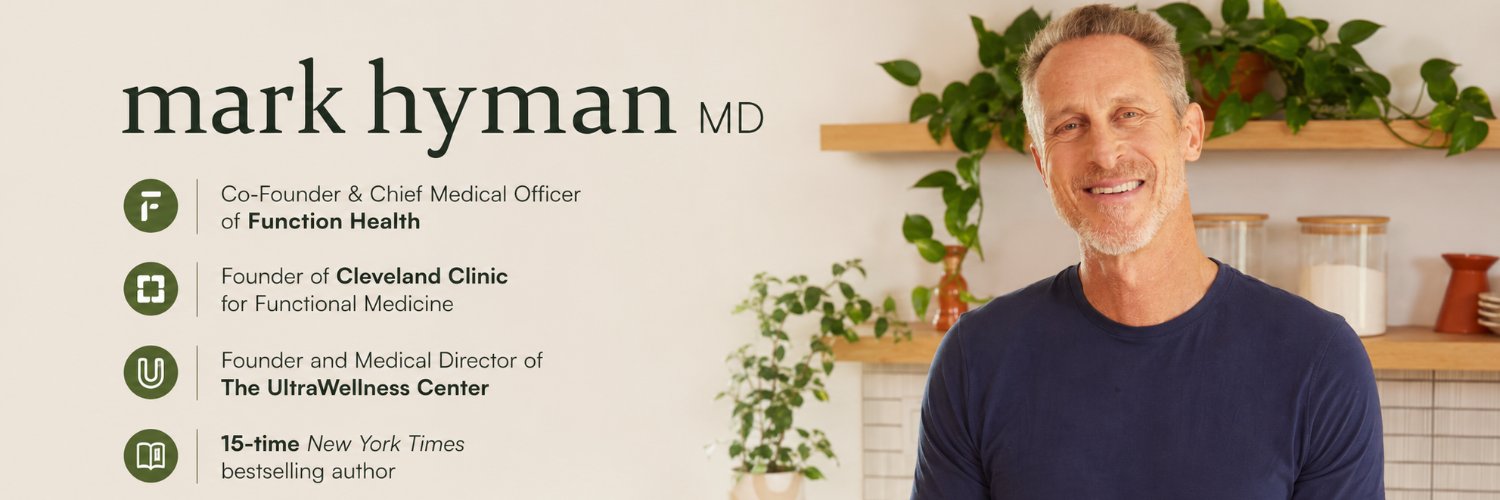

Mark Hyman, M.D.
@drmarkhyman
15X NY Times bestseller. Tackling the root causes of chronic illness and our broken food & health system. Co-Founder & CMO @function
1K Following 1.5M Followers
Creatine is one of the few supplements I return to again and again.
It supports the rapid energy system used by muscle, and emerging research is exploring its role in brain health, cognition, and healthy aging.
Show more
The next time you feel mentally stuck, go for a brisk walk without your phone.
Movement changes blood flow, shifts your nervous system, and gives the brain space to solve what force could not.
The easiest way to eat more plants is to stop thinking only in servings.
Add herbs to your eggs, berries to yogurt, seeds to salads, mushrooms to dinner, and spices to everything.
Diversity adds up quickly.
Show more
Choose one meal each day that contains at least three different colors from plants. Polyphenols give those foods their color and provide information to your microbiome, immune system, and metabolism.
Practice getting down on the floor and standing back up every day. This single movement trains mobility, balance, coordination, and strength while preserving a skill that becomes increasingly important with age.
Show more
Brain fog is a messenger, not the root problem of cognitive health.
When you start looking at what’s happening throughout your body—especially your gut, blood sugar, inflammation, and microbiome—you can begin uncovering what’s getting in the way of a clearer, healthier brain.
0:00 Introduction, Dr. Hyman's experience, and foods contributing to brain fog
1:31 Functional medicine and the gut-brain connection
2:30 Vagus nerve, gut microbiome, and inflammation
4:21 Long COVID, gut damage, and ultra-processed foods
6:51 Alcohol, artificial sweeteners, and their effects on the brain
8:34 Sponsor: Function Health
9:51 Dairy, gluten, and elimination diets
15:41 Ten Day Detox Diet, food journaling, and reintroducing foods
18:23 Personalized nutrition, functional medicine, and conclusion
Show more

Use this grocery-store filter:
Did it grow in the ground?
Did it come from a tree?
Did it swim?
Did it run or fly?
Would your great-grandmother recognize it?
If the answer is no, read the ingredient list very carefully.
Show more
If you wake up tired, look at your nights before reaching for more caffeine. A cool room, an early dinner, and consistent sleep and wake times can completely change how you feel in the morning.
Aging isn’t what makes you weak. Being weak is what makes you age.
Two of the most powerful forms of exercise for healthy aging are strength training and high-intensity interval training (HIIT). Both help your body build healthier mitochondria—the tiny power plants inside your cells that create the energy your brain, heart, and muscles need to function.
And you don’t need a gym or an hour-long workout to benefit. Think of movement as “exercise snacks” throughout the day:
• Stand up from a chair 10 times
• Do wall push-ups
• March quickly in place for 30–60 seconds
• Walk fast enough that you can talk, but not sing
Your starting point doesn’t matter. What matters is going from nothing to something—and gradually challenging your body as you get stronger.
Thank you for having me on, CBS Mornings.
Show more

Try this sleep experiment for seven days:
Wake up at the same time every morning.
Get outdoor light soon after waking.
Stop caffeine by noon.
Finish dinner three hours before bed.
Make the bedroom cold, dark, and quiet.
Do this before deciding you are “just a bad sleeper.”
Show more
If you sit for work, set a timer for every 30 to 45 minutes.
When it goes off:
Do 10 squats.
Walk up a flight of stairs.
Stretch your hips.
Take 20 deep breaths.
A workout cannot completely undo a day without movement.
Show more
The sequence of your day matters because biology runs on timing.
Light after waking. Movement throughout the day. Food while you are active. Darkness before sleep.
Your body functions better when its signals arrive in the order it expects.
Show more
You do not lose muscle because you get old.
You get old faster because you lose muscle.
Strength training is one of the most powerful tools we have to preserve independence, metabolic health, and longevity.
Show more

Is dancing the secret to more life? 🕺💃
Research shows dancing can support your mental and physical health in powerful ways.
Here’s how. ⤵️🧵
Depression, cancer, heart disease, obesity, diabetes, dementia, allergies, asthma, chronic fatigue, autoimmune disease, and more are all inflammatory diseases.
That begs the question, what is causing all this rampant inflammation? It’s mostly our food—too many inflammatory foods and not enough anti-inflammatory foods.
While many foods can trigger inflammation, food is also the most powerful source of anti-inflammatory compounds. Plant-based foods contain over 25,000+ phytochemicals, many of which are potent anti-inflammatories. The polyphenols in colorful plant foods are some of the best inflammation-fighting compounds nature has to offer!
Extra virgin olive oil, for example, contains oleocanthal, which activates the same anti-inflammatory receptors as ibuprofen—without the side effects.
Spices are anti-inflammatory powerhouses too, including:
- Turmeric
- Ginger
- Rosemary
Cooking your meat with spices can neutralize inflammation, while omega-3 fats from wild fish, seafood, and certain nuts and seeds also fight inflammation. Medicinal mushrooms such as shiitake, maitake, reishi, and chaga contain powerful immune-boosting and anti-cancer compounds called polysaccharides.
Nutrient-dense foods rich in vitamin C, zinc, selenium, and vitamin D can further reduce inflammation.
For example:
- Guavas & parsley (vitamin C)
- Pumpkin seeds & oysters (zinc)
- Brazil nuts & sardines (selenium)
- Porcini mushrooms & herring (vitamin D)
The best thing you can do for your health? Cut out or cut down on inflammatory foods and fill your plate with anti-inflammatory ones!
And if you'd like to take it a step further, drop a YES below and I'll DM you a link to join my 10 Day Detox Program.
Show more


Our brains are on overload.
Bombarded by endless notifications, doomscrolling, and heated debates—especially with politics dominating social media.
This constant stimulation floods your system with stress hormones like cortisol, over-activating your amygdala (the brain’s fear center) and leaving you feeling anxious, irritable, and exhausted.
Research shows that chronic exposure to this kind of stress impairs focus, disrupts sleep, and even weakens your immune system.
Step away.
Let your brain reset.
Take a walk in nature, practice breathwork to calm your nervous system, or simply embrace moments of boredom where creativity and problem-solving thrive.
Disconnecting from the noise is essential for your mental and physical health.
Love this post by @tjpower
Show more

Did you know this? ⬆️
The field of sociogenomics reveals how positive relationships influence gene expression, turning on genes that repair cells and turning off genes associated with inflammation and disease.
When you experience love and connection, your body releases hormones like oxytocin and endorphins, which calm the nervous system, lower cortisol levels (the stress hormone), and promote anti-inflammatory pathways.
These hormonal shifts signal your genes to activate cellular repair and longevity mechanisms. Even physical touch, like cuddling, can boost oxytocin and enhance your immune system.
On the flip side, chronic stress, isolation, or conflict triggers the expression of pro-inflammatory genes, accelerating aging and increasing your risk of chronic illness.
Love and connection are powerful for health and longevity.
Show more

The reason why you’re so hungry + can’t lose weight 🔊⬆️
When you consume sugar or starchy foods, your blood sugar levels spike. This triggers a surge of insulin, the hormone responsible for storing excess fuel. Insulin shuttles that fuel straight into your fat cells—especially around your belly—leaving your bloodstream depleted of energy.
This phenomenon, called “fuel partitioning,” tricks your brain into thinking you’re starving, even though your fat cells are full. It’s a biological mismatch that leads to intense cravings and overeating.
Over time, this cycle can drive significant weight gain and metabolic dysfunction, as your body becomes increasingly insulin-resistant and struggles to regulate blood sugar.
Breaking free starts with stabilizing your blood sugar. Focus on high-quality proteins, healthy fats, and fiber-rich foods that support your metabolism and keep hunger in check.
When you work with your biology, you can reclaim your health.
Show more

What you eat matters. Real, whole foods are always the foundation.
But there’s a second layer almost nobody talks about: what you do in the minutes before a meal, how you eat it, and what you do immediately after.
Show more
Have you ever found yourself scrolling through your phone at midnight, knowing you should sleep—but just one more video, one more post?
Research shows that exposure to blue light in the evening can disrupt sleep patterns. However, it’s not just the blue light; these devices are engineered to hijack your brain’s attention, stimulate dopamine, and keep you awake—a phenomenon known as sleep procrastination.
@drmattwalker breaks down how to reclaim your sleep, avoid these attention traps, and create a wind-down routine that actually works.
Episode is live on The Dr. Hyman Show wherever you listen to podcasts.
Show more












