
MiniMax Design (H3)
@Hailuo_AI
Discord:
INS:
Creator Partnership Program(CPP):
688 Following 82.7K Followers

Tried fast cut montage prompt with these characters.
MiniMax H3

🔥The community never stops cooking.
Not just building on top of H3, but keeping reaching inside and finding new ways to make it smarter.

流行のJevをMiniMax H3に組み込んで、動画生成を高速化してみた!Attention処理のスパース化にJevを使用。
・層ごとにJevが重要度を判定(4step 49層が対象)
・Jevがスパース率1%, 3%, 5%, 10%を選択
RTX4070で6分7秒→3分34秒で41.7%短縮!動画生成中にJevクラウドに問合せしているのに速い!
Show more

Storyboarding just got a fast-forward button. ⏩

この3x3画像を1枚 r2v でAI動画化すると以下の設定でおおよそそのまま映像になる
Minimax H3 Max r2v 480p 15秒 Prompt調整:Quality 参照強度:標準
「左上から右下のパネルにカットが切り替わる2Dアニメーション、
複数パネル禁止、BGM禁止」
Show more


🎉 MiniMax Design Update
💸 Save 20% on annual plans.
🛠️ Custom model support is now live.
Create with your preferred models now>>
#MiniMaxDesign# #MiniMax#


ONE WEEK TO GO ⚡️
→ MiniMax H3 AI film screening
→ Arlo — guest speaker + showcase
→ Avi from Mirelo — guest speaker + AI audio demo
→ Muamba Masala — DJ
→ Pizza · drinks · community
📍 Mira Rio · Lisbon / Caparica
📅 24 Sept · 17:00–23:00
🎟️ LINK IN BIO
SEE YOU SOON ⚡️
Show more

GPT-6 Astra + MiniMax H3
Created the kinetic typography effect in Blender using Astra, then used the resulting video as a reference in MiniMax H3 to restyle it.
If you're curious, here's the MiniMax H3 prompt:
Restyle @[video1], the supplied grayscale kinetic typography animation, into a finished, vibrant 15-second 16:9 motion-design film. Use it as the sole reference for typography geometry, animation, composition, camera movement and editing. Replace the grayscale materials and lighting with the treatments below, and create original music and synchronized sound effects.
Preserve the six words exactly, in this order: BREAK / EVERY / RULE / CREATE / PURE / MAGIC. Keep each word in its original 2.5-second section, with its own recognizable font, letter shapes, cutouts and proportions. Inherit the reference's entrances, collisions, elastic deformation, secondary rebounds, connected folds, sliding slices, spiral paths, exits and camera impulses. Preserve the large ! ? + * # = > symbols, their trajectories, depth layers and foreground passes. Keep the central word legible when it resolves. Carry the source choreography through the final MAGIC pose.
Give the sequence bold, carefully separated colors, rich material detail, directional studio lighting, convincing contact shadows and controlled reflections. Each section has its own material identity within one energetic graphic world. Enhance the existing backgrounds with the assigned palette, subtle texture and depth. Use restrained highlight bloom and directional motion blur on fast travel while keeping the resolved letter edges crisp. Preserve the source framing and cut rhythm.
0-2.5s, BREAK: Distressed scarlet-red painted letters against a deep charcoal background. Bright acid-yellow exclamation marks and punctuation explode around the red word. Preserve the rough type contours and dimensional sides. Raking light catches the paint texture; the existing impacts receive brief lighting accents. Dry heavy impacts, a low bass punch and fast outward whooshes follow the assembly and recoil.
2.5-5s, EVERY: Glossy cobalt-blue rubber letters against a warm off-white field, with coral question marks and plus signs. Broad soft reflections travel across the stretching surfaces. Keep the rubber wave and bouncing symbols from the reference. Add tightly synchronized elastic boings, rubber snaps and airy swishes, integrated into the rhythm.
5-7.5s, RULE: Brushed metallic letter faces on dark graphite carriages, with signal-orange pistons and orange punctuation accents. Retain the font's distinctive geometric cutouts. Warm orange edge light separates the machinery from the textured graphite setting. Give the opposing block collisions sharp metallic clacks, short low thuds and small ricochet ticks.
7.5-10s, CREATE: Warm cream paper leaves with deep petrol-blue lettering, coral punctuation and a dark petrol backdrop. Fine paper fibers and grazing light reveal every connected crease. Preserve the opening, traveling refold and spring-back. Add crisp paper flicks, folding rustles and light percussive pops as the symbols leave the folds.
10-12.5s, PURE: Acid-yellow enamel backing strips with glossy black condensed letters and a restrained graphite surround. Preserve the three actual horizontal text slices, opposing slide directions, secondary register slip and clean realignment. Specular streaks slide across the enamel without hiding the seams. Use precise sliding swishes and satisfying mechanical clicks at each registration.
12.5-15s, MAGIC: A rich violet background, pearlescent letter faces with turquoise edge reflections, and luminous turquoise and violet punctuation. Keep the source's orbital slingshot and outward symbol recoil; subtle iridescence shifts with the existing motion. Add a rising spiral whoosh and bright crystalline ticks, ending with a short shimmering chime while MAGIC remains readable and the surrounding symbols continue their source motion.
Create one continuous original instrumental electronic breakbeat across all six sections: punchy kick and snare, rapid hi-hats, syncopated synth bass and compact rising accents. Match strong musical accents to the existing word changes and impacts. Keep the mix energetic and clean, with distinct foreground effects and stereo movement following the symbols. Resolve the music with a decisive final accent and a short chime tail within the 15-second ending. No vocals, spoken words or subtitles. Add no extra words, logos or watermarks.
Show more

One brief ➕ One canvas 🟰 A whole production crew on #MiniMaxDesign#.

I gave Astra one brief and it delivered the whole scene in Blender, camera direction included.
All of it ran inside MiniMax Design. Astra sits there as the agent and talks to Blender over an official connector, so everything syncs straight onto the canvas.
The final video is MiniMax H3, from the same canvas.
#MiniMaxdesign# -
Show more

Hire an entire army—without the casting call or the catering bill. 😆🎬
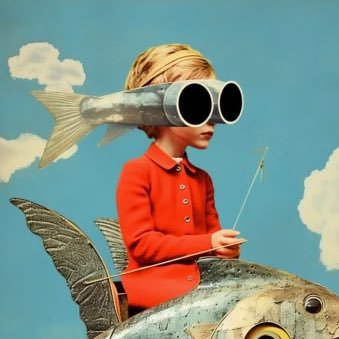
I used the work generated with GPT-6 Astra to build out a set, a story.
Now I'm bringing it to life with @Hailuo_AI Minimax H3.
Here's a tip that's worked well for me 👇

H3 is pretty handy with pencil too. ✏️

うきょさんのプロンプトでMinimaxH3Designで作成しました。
これマジでヤバいですね。
@Hailuo_AI
#MiniMaxH3#

Final call 📢💥
Unleash your monster and take home the prize👹💰

Final call. Bestiary closes tonight, Sep 14 at 23:59 (PT). ⏳
$8,000 cash, 200,000 Credits, and ten Audience Choice awards are still on the table — and they go to the people who actually hit submit.
One strange, beautiful short film, 30 seconds or longer, generated with MiniMax H3. Any myth, any era, any world you can dream up.
The bestiary doesn't close itself. Finish your film before the clock runs out.
Show more


AI content creation should make things easier, not more complicated, and MiniMax Design really gets that
It saves me so much time and effort, and somehow it’s still finding ways to surprise me
I already thought it worked really well with MiniMax H3
But then MiniMax H3 Max Turbo showed up…
And I was like, wait, what?!
The speed is actually kind of crazy
A 15s video can be generated in around 20s
And then I saw the price
Starting at just $0.018/s
Like… seriously?!
But what makes this even more useful is that MiniMax Design also has GPT Image 2.5
I can generate the visuals with GPT Image 2.5, keep the quality and consistency I want, then take those images straight into H3 Max Turbo and turn them into video
Image → H3 Max Turbo → Video
Fast images, fast video, and I don’t have to keep rebuilding the idea across different tools
And apparently MiniMax Design wasn’t done — GPT-6 Astra is also available now at 92% off
Honestly, MiniMax Design + GPT Image 2.5 + H3 Max Turbo is definitely going on my list of workflows I’ll be using a lot
Every time I think MiniMax Design is done surprising me, there’s something else to try
Show more

Bringing AI magic into your professional 3D workflow. 🪄✨

GPT-6 Astra × MiniMax Design × Blender。
MiniMax DesignからGPT-6 Astraを使い、
MCPでBlenderまで直接つないで3D制作お試し中です。面白い組み合わせで楽しい。
MiniMax Designだけで映像を作るのではなく、Blenderの3D表現までAIの制作フローに組み込める。
#minimaxdesign#
Show more

💥 MiniMax Design Major Upgrade!
🤖 GPT-6 Astra is Now Live!
🔌 New MCP integrations for Blender, PS, AE and more
👥 Collaborative Projects for seamless teamwork
Create 3D models with a single prompt; turn AI clips directly into editable AE projects...
💡Bring AI Creativity into your Professional Workflow.
#MiniMax# #MiniMaxDesign#
Show more

Glad the mosquito is unharmed.
🦟 seems to be the main character lately. 🤔

蚊1匹に、必殺技を使う…
「そこまでする?」
なお、蚊は無傷です。
プロンプトはリプにあります。
ご自由にお使いください。
MiniMax H3 MAXで生成しました🔥
Show more

Films, creator talks, fresh ideas - and pizza.🍕
📍 Sep. 24, see you in Lisbon! 🇵🇹
Lisbon, we’re going outdoors ⚡️
A night of AI films, new tools, music, pizza & good people.
🎬 MiniMax H3 film screening
⚡ Mirelo AI tool demo
🎤 Arlo artist talk
🪩 DJ + drinks + networking
24 September · Lisbon
🎟️ €5 early bird
Link in the comments ⚡️
Show more


Creating music videos with @Hailuo_AI MiniMax Design H3 is an absolute blast.
And all you need is a prompt. If you need any reference images, you can generate them right inside the platform with its AI agent, which guides you through the process step by step.
This 2D Japanese electro-pop/rap anime is seriously next-level, and the prompt you can see below was generated by the agent itself based on my instructions 👇
Show more

💡 Astra map the route 🗺️ ➕ H3 take you for a drive 🚗

ストリートビューからの V2V
GPT Astra に google map の道沿いに
ストリートビューの画像を取得させて
パラパラ漫画の動画にして(右動画)、
「MiniMax H3 ref2va を使って
車載カメラ風の映像にして」
とお願いしてできたものが左の動画です
この方法で、世界中ドライブができる・・・?
Show more

MiniMax H3
Use a first-frame image with a 1:2 aspect ratio to generate 1:2 videos.
Prompt: Time is slowed. Only subtle, minimal movements are visible. Everything feels suspended in time. Static camera. No camera movement. No BGM.
Show more


It looks like a real game trailer. 🎮
Game devs, we should talk. 👀

[PR]MiniMax Desgin H3 & Blenderで室内動画シーンを作成🎞️
従来、屋外から屋内へのシームレスなシーンの作成は難しかったのですが、blenderを参照してシーンを作ることで実現できます。
H3の場合、ある程度blenderで作り込んでから参照させると上手くいきました。
動画制作のワークフローがどんどん更新されますね🙂
@Hailuo_AI #MiniMaxDesign#
Show more

5 days. That's all that stands between you and $8,000. 🫵
The Bestiary contest by Miora × MiniMax H3 closes in 5 days — $8,000 cash, 200,000 Credits. All it takes is one strange, beautiful short film, 30 seconds or longer. Myth, folklore, urban legend, a world straight from your head — all fair game. @Hailuo_AI
The only thing missing? Your entry.
Show more












