Search results for 37「Antway」
37「Antway」 community
One keyword maps to one global community path.
People
Not Found
Tweets including 37「Antway」


🇩🇪 The AfD just won 43.9% in Saxony-Anhalt, more than double its last result, while the CDU collapsed from 37.1% to 17.2%.
Ulrich Siegmund, the party's 35-year-old lead candidate:
"High-ranking politicians from other countries congratulated us.
President Trump himself shared the election results on his platform.
There was a congratulatory message from @elonmusk
We are talking about a federal state of two million inhabitants.
When was the last time something like this happened in German politics?"
Fair question. A party the establishment spent a decade trying to quarantine just took 39 of 83 seats and finished more than twenty points clear of the chancellor's own party.
Voters in Saxony-Anhalt were told for years that this option was off the table. Nearly half of them reached for it anyway.
Writer: Daniel
Show more


Snowflake just blew out the quarter -- and reaccelerated at a $6 billion run rate
The reason, of course is AI. But not mainly from AI native customers.
Third straight quarter of acceleration: 30% → 34% → 37%.
Sequential product revenue added:
Q4 FY26: +$68M
Q1 FY27: +$108M
Q2 FY27: +$158M
They raised the full-year guide from $5.84B to $6.07B in one quarter, moving implied growth from 31% to 36%.
#1#. About half the acceleration came from AI products
The other half came from those products pulling more core consumption behind them. AI went on the same consumption meter customers already had, not into a separate SKU with its own quota.
#2#. CoCo, their coding agent, is on 9,100 accounts out of 14,554 customers, and added 2,000 in the quarter
Its cost-management skill is a top-10 skill. Snowflake shipped an agent that helps customers spend less on Snowflake and consumption accelerated anyway.
#3#. They gave up gross margin on purpose
Product gross margin went 76% to 75%, and they guided the year down to 74% on AI workload mix. Then they raised the operating margin guide from 13.5% to 14.5%. Revenue grew 35%, opex grew 17%. The AI bill came out of headcount.
#4#. NRR 126%
49 customers crossed $1M this quarter against a $158M sequential add. At this scale the base is the engine.
#5#. Total RPO grew 30% while current RPO grew 42%
In consumption, RPO tells you when a customer signed. Revenue tells you when they burned it.
-> Still a $263M GAAP operating loss, with stock comp at 29% of revenue. GAAP breakeven is targeted for Q4 FY28.
Two points of gross margin for seven points of growth. Stock went from $306 to roughly $370. Almost double its low, and almost back to its peak.
Show more


Databricks' @alighodsi on AI risk and adoption:
Ali isn't losing sleep over the existential risk debate.
He says a number of conditions would all have to be true simultaneously to enable an actual runaway takeoff scenario, and currently several opposite conditions exist.
Each frontier training run requires significantly more resources. Power, GPUs, engineers - and some attempts fail, burning up huge piles of money with them. Until that reverses, he doesn't see the self-improving loop happening.
Cyber is what he's watching most closely and where he anticipates real impact. Most orgs are not equipped for the coming change in agentic capabilities. The time between a vulnerability being published and being weaponized has collapsed from years to hours.
On adoption, he believes most companies don't need a smarter model. The models are already smart enough. The gap is context they don't absorb - the things an employee who's worked at a company for five years learned by osmosis.
If the frontier stopped advancing today, he thinks it wouldn't meaningfully change the value most are extracting from AI anyway.
In conversation with a16z's Martin Casado and Sarah Wang:
00:00 Intro
00:48 Why Ali places the AI risk near zero
05:05 The word "pacing" was a mistake
10:50 What 10k agents and $100m can do
12:20 What would change his mind on AI risk
14:20 More GPUs, more ways to fail
18:05 US export controls on PlayStations
20:10 The damage everyone expected by now
24:30 Public vulnerabilities weaponized in hours
30:15 Why labs can't grade each other
37:15 Why most of RSI isn't actually RSI
40:05 Why nobody really needs a smarter model
41:50 The AI use cases nobody argues about
47:30 Google Search solved this 25 years ago
50:55 Nobody has privileged knowledge now
55:10 Same model, new harness, 2x cost
58:15 Open source: 5% of spend, 60% of tokens
1:05:30 90% of new databases are created by agents
YouTube:
@databricks @martin_casado @sarahdingwang
Show more

Vals AI co-founder and CEO Rayan Krishnan with a16z's Ben Horowitz and Jennifer Li on grading AI, what it costs, and who gets to make the rules:
Every big industry eventually grows an independent testing layer. AI has credit ratings to learn from and Enron to avoid. Model capability today is still mostly self-reported.
As public benchmarks saturate and models get better at optimizing for the tests themselves, Rayan makes the case for independent, continuously evolving evaluations.
The harder problem is geopolitical. Reagan's "trust but verify" worked during the Cold War because you could fly over and count the missiles. No simple equivalent for AI models exists.
In this conversation with Erik Torenberg, they get into how you measure a model's ability to improve itself, why every good benchmark eventually has to be retired, and what happens when token spend begins to rival employee salaries.
00:00 Intro
02:20 Llama 4 on public vs private benchmarks
05:24 Nobody agreed how to test humans either
06:55 What movie ratings teach us about AI
08:55 The Enron problem in benchmarking
11:36 Why a good benchmark has to be retired
13:22 Evals that run for weeks, not seconds
16:20 Where the real workday starts at 4pm
18:08 A firm really is just its evals
20:35 Why Sonnet can cost more than Opus
22:42 One engineer, 6 billion tokens in a day
25:05 Who should set the rules for models
28:55 Public sector enforces, private verifies
33:32 Why sovereign AI is inefficient and happening anyway
35:00 The AI version of trust-but-verify
37:15 Where cyber evals have to go next
YouTube:
@RayanKrishnan @ValsAI @bhorowitz @JenniferHli @eriktorenberg
Show more


Here's the #1# thing most people don't know about Warren Buffett: There is nothing special about Buffett’s stock picking.
That doesn’t mean that Buffett wasn’t a great investor. He was! Buffett was, by far, the greatest investor in history, by a huge margin.
Over 486 months between October 1976 and March 2017 –— 41 years –— Berkshire Hathaway’s Class A stock earned an average excess return of 18.6% per year above U.S. Tbills. Annualized volatility was 23.5%. Sharpe ratio: 0.79. Berkshire’s Sharpe ratio of (0.79) is roughly 1.6x times the broad U.S. stock market’s Sharpe ratio of 0.49 over the same period. Among all large-cap U.S. stocks and mutual funds with 30-plus-year continuous track records, those are unmatched numbers. A dollar invested in Berkshire on October 31, 1976, was worth more than $3,685 by March 31, 2017. A dollar invested in the S&P 500 with dividends reinvested over the same period was worth approximately $76. Buffett beat a passive index by a multiple of 48.
But he didn’t do it with stock picking!
Three researchers at AQR Capital Management –— Andrea Frazzini, David Kabiller, and Lasse Heje Pedersen –— dissected Berkshire’s 50 years of investments through 2013. They expanded and republished their findings in 2018 in the Financial Analysts Journal, which is the most highly respected industry financial journal. Their work won the Graham and Dodd Award for the best published paper of the year. The paper is called Buffett’s Alpha. They found, after accounting for cheap leverage (from the insurance float) and exposure to a handful of publicly documented factor premiums, Buffett’s investment skill –— the portion of his returns that cannot be explained by any mechanical strategy –— is 0.3% per year.
That's statistically indistinguishable from zero.
In other words, the alpha that Berkshire enjoyed for 50 years (as it compounded capital at 24% a year!) wasn’t due to Buffett’s stock picking.
So, how did he do it?
He did it by gaining access to a huge amount of investment capital that he did not own, for free. Buffett’s track record was built on leverage. That’s a dirty word for most investors, but it's the secret behind Berkshire.
The AQR researchers had access to something most Buffett commentators do not: 40 years of Berkshire’s audited financial statements and the full quarterly history of the public 13F stock portfolio. The researchers asked a specific question:
If I take Berkshire’s monthly stock returns from October 1976 through March 2017, and I run a linear regression against a set of well-documented risk factors –— market beta, size, value, momentum, and two newer factors called Betting-Against-Beta and Quality-Minus-Junk (detailed below) –— how much of Buffett’s performance can the factors explain? And after the factors have been stripped out, how much excess return remains?
The data show clearly there are a few qualities that drove Berkshire’s results.
First, Buffett has always preferred large-cap stocks, contrary to the popular image of him as a small-cap value investor. He buys elephants. Second, no surprise, Buffett buys cheap. Berkshire is almost six standard deviations away from neutral on the value axis. So far the picture is ordinary. Every large- cap value manager in America loads positively on size and on value. Buffett’s genius lies in the last two factors.
These last two factors are a little complicated, but please stick with me.
There’s a new factor, that, like value and size, characterizes Buffett’s strategy. It’s called Betting-Against-Beta (“BAB”). What it means is intentionally investing in stocks with very low volatility. The BAB factor captures the excess return that accrues to investors who own low-beta stocks. Low-beta stocks have historically earned higher risk-adjusted returns than high-beta stocks. Financial theory teaches that higher beta (higher risk) should mean higher return. But it doesn’t. The opposite occurs, in fact. And Buffett was one of the very first people to figure this out.
Why does this factor persist? In an efficient market, once that factor is known to investors, then they should bid the price up on low- beta stocks until it no longer provides an edge. The explanation, per the theory of AQR’s Frazzini and Pedersen’s theory, is that because ordinary investors do not use leverage and seek high returns, they create persistent excess demand for more volatile stocks. (Having worked with retail investors for 30 years, I can assure you that is true.)
But, an investor with access to cheap leverage –— Warren Buffett, for instance –— can exploit the mispricing by owning the low-beta names and levering them up to produce market-beating returns.
And the last factor that matters to Buffett is quality. Buffett buys companies with high returns on invested capital. Quality-Minus-Junk (“QMJ”) is a factor described by Cliff Asness, also at AQR with Frazzini, and Pedersen, in a 2019 paper in Review of Accounting Studies. The QMJ factor captures the return to owning stocks of high-quality companies –— profitable, growing, safe, with high payout ratios –— against stocks lacking those characteristics.
QMJ has been positive and statistically significant in every major developed equity market for which it has been measured. Berkshire’s loading is 0.37, with a t-statistic of 4.6. –– meaning it is highly significant to Berkshire’s results.
In plain English: Buffett only buys large, high- quality, low-volatility stocks of the highest quality.
But, Berkshire’s results were not, in any way, unusual. Any investor buying these same kinds of stocks would have earned those same returns –– about 16% a year over time.
So how did Berkshire compound at 23% a year?
To figure that out, AQR’s researchers built a Berkshire replica. They constructed a simple, rules-based, publicly investable portfolio that mechanically tilts toward large-cap, cheap, low-beta, high-quality stocks, and levers it 1.6- to- 1 to match Berkshire’s insurance float leverage. The correlation between their replica’s returns and Berkshire’s were virtually identical.
The authors’ conclusion is unambiguous.
“In summary, we find that Buffett has developed a unique access to leverage that he has invested in safe, high-quality, cheap stocks and that these key characteristics can largely explain his impressive performance.”
Berkshire’s cost of insurance float has averaged almost three percentage points below the Treasury bill rate across 50fifty years of data. In roughly two-thirds of all years, Berkshire has been paid to hold other people’s money. That is not an investment strategy. That is a financing miracle.
It is also the living, breathing heart of Berkshire Hathaway. It’s what Buffett built, starting in 1967 when he paid $8.6 million for National Indemnity’s $19.4 million of float. And it is the factor every retail investor admiring Berkshire’s returns has never paid any attention to.
The 1.6-to-1 leverage that AQR measured over the full period, financed at this negative cost, explains the dollar magnitude of Berkshire’s returns.
How do we know? An unleveraged version of the same stock portfolio –— which you can approximate by looking at the 13F holdings alone –— has earned an average excess return of 12% percent per year. It’s Berkshire’s leverage that magnifies this excess return to 18.6 %percent.
How does this square with Berkshire’s reported gains? Berkshire’s 18.6% excess return, plus the T-bill rate that averaged roughly 4.7% over 1976–2017, gives you a total nominal return of roughly 23% per year, which is the figure you usually see quoted for Berkshire’s historical performance.
The 23% tells you what Berkshire returned. The 18.6% tells you how much of that return was compensation for taking investment risk, as opposed to the baseline yield every lender to the U.S. government was earning anyway.
With both of Berkshire’s “edges” –— systematic factor exposures to cheap, high-quality, low-volatility stocks and roughly 1.6-to-1 leverage delivered with insurance float –— you get Berkshire Hathaway’s 23% annual gains over 60 years.
It’s the structure that’s genius, not the stock picking.
And that's very important because it means the original Berkshire formula can work for any investor.
I show you exactly how, in my new book.
Show more


DAILY AI BRIEF 🗞️ — Sept 2
OPENAI 🔥:
> Official “Path to Astra” post is out. Astra is the first model OpenAI has designated as Critical for cybersecurity under the Preparedness Framework. It scored 100% on ExploitBench, found 2 zero-days in evals, and is “coming soon” — advanced cyber tools stay limited to testers / Daybreak Blue at first.
> @M1Astra reported on a fresh Astra test prep the same day. Models in testing: vega-alpha (new) and ultima-alpha.
GOOGLE 🔥:
> Gemini 3.8 Flash is already answering on Gemini and in the Gemini app. Some people still have 3.7 selected and get 3.8 anyway.
> WSJ: Google engineers preferred it to Opus for coding in Jetski tests. Official drop looks like today.
> Agentic video understanding is on Gemini 3.7 Flash, 3.6 Flash, and 3.5 Flash-Lite. The model hunts transcript/audio/frames instead of eating the whole file. Up to 88% fewer tokens, 66% lower cost, ~7% better accuracy on long video. API + AI Studio now, Gemini app later.
ANTHROPIC 🔥:
> Claude Fable 5.1 (and Mythos 5.1) is live. 52.6% on Terminal-Bench-Science 0.1 (more than 2x Fable 5) and 55.8% vs 42.0% on Terminal-Bench 4.0. Same list price as Fable 5, 75% cheaper cache reads — about 25% cheaper typically, up to 45% on heavy agent runs.
META 🔥:
> Muse Voice Transcribe is live — MSL’s first real-time audio perception model. SOTA streaming speech-to-text, native diarization (20+ speakers) and endpointing in one model, multilingual with code-switching. Rolling out on the Meta Model API, Meta AI for Mac, and Muse Code. Zero-data-retention tier available.
XAI 🔥:
> Elon: “Grok 4.7 comes out in 10 days.” That’s ~Sept 12. Reply to Tobi on Grok 4.6.
ALIBABA 🔥:
> Qwen3.8-Max-0902 is live on QwenCloud. Same 2.4T / 1M-context Max line, with extra post-training on coding and cowork. $2 in / $6 out per 1M tokens. Arena has it #1# on Code Arena: WebDev at 1691 — 3 pts above Claude Opus 5 (Max) and 22 pts above the previous 3.8-Max.
WORLD LABS 🔥:
> Fei-Fei Li’s lab shipped Atlas, an omni world model. Few photos > pixel-perfect camera control, up to 1 min of 1440p video, plus 3D reconstruction (point clouds / Gaussian splats). Early access only; it will power future Marble. No paper, no public API yet.
* Too much is happening, and I have some scoops planned for today, so I don't want to spam the algo.
** I used Grok to compose this brief, cherry-picking the news and doing some post-editing.
Show more

37' | Nduka nearly gets through again but it's sent over the line, earning us a corner.
Phoenix 1 - 1 Victory | #WELvMVC#

37% of parents are counting on financial help from the Bank of Baby Boomers and can’t wait for the Great Wealth Transfer, per FORTUNE
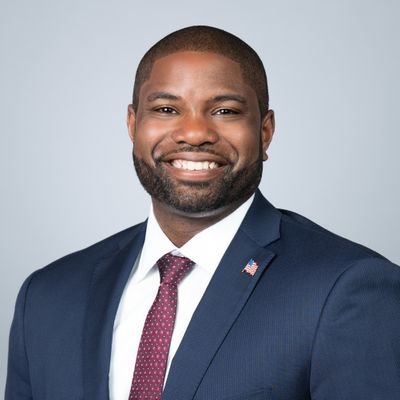
37 days, Florida.
On November 3, we decide whether the next generation can afford to call our great
state home.
I’m running for governor to protect the Florida Dream, lower costs, and ensure our best days are still ahead. I will never take your vote for granted. I intend to earn it—and keep every promise I’ve made.
Show more