

Erik Torenberg
@eriktorenberg
General Partner @a16z. Positive-sum. Striving for a thousand year heart. Worldbuilding @mtslive @theacademysf @cosign
4.4K Following 165.6K Followers
Excited to introduce @Cosign: the curated professional network for the startup community:
Our goal is to create the following:
- A comprehensive startup directory of investors, companies, and operators, including what they worked on and who they worked on it with.
- Cosign graph: Who shaped your career? Who were you actually in the trenches with? Who would work with you again? Who thinks you’re someone to watch?
- Durable reputation: Great endorsements happen every day on X and disappear into the feed. Cosign attaches those signals permanently to people and companies.
- Discovery: Who are the best fintech angels? Which AI companies should I watch? Who are the best designers?
- Intent network: Privately signal “I’d invest in them,” “I’d hire them,” “I’d work with them,” or eventually even “I’d acquire this company.” Match people when interest exists on both sides.
Imagine if Wikipedia, LinkedIn, and OG AngelList had a baby. Though Cosign is a community, not a business.
In order to join, you need to be cosigned. Or you can apply directly.
David Booth and I started this idea 7 years ago but didn’t have the firepower to make it work. Now we do.
No one has really touched LinkedIn in 20 years. Excited to take a swing.
Show more

If you're a homie, or we've done business in any capacity, send me a text. Got a drop for you.

Introducing The Horowitz Andreessen Academy.


starting the day in dc speaking with @BrendanCarrFCC from @FCC . excited for the rest of today. we are now in the new industrials age
thank you @NathanLeamerDC for making this happen, one of our best friends of the show!
Show more


greg brockman says “we’re now in the AGI era.” one of the most interesting things about this conversation with @bhorowitz and @eriktorenberg is how long he’s been thinking about when that would happen.
at the beginning of the pod, @gdb recalls doing some math on compute with ilya around 2016/2017. following the trajectory of moore’s law, they thought agi might be about 15 years away. if you were willing to build enormous supercomputers and spend hundreds of billions of dollars, maybe you could get there in 10. the accelerated scenario they were envisioning a decade ago is roughly the one we’re living through now.
the faster timeline depended on people deciding to build an enormous amount of infrastructure. greg describes the present moment as a lot of long-running forces coming together: “it kind of makes sense it’s happening now.”
im the kind of person who resists the idea that it’s possible to predict the future, but if you were reading the right research papers 10 years ago, there were a lot of things you could extrapolate out and be roughly right about a decade later. brockman remembers openai discussing agents that could use a screen, keyboard, and mouse at an offsite in napa in 2015. he also points back to 2017/2018-era ideas for how humans might supervise systems that are smarter than they are. put differently, people were thinking about app-layer innovations like computer-use, and ai safety long before capabilities existed.
greg now thinks astra is reasonably described as agi, while acknowledging that its abilities remain uneven. in a recent essay of his titled “the defenders window” he describes safety requirements during training and evaluation, and getting powerful defensive tools into the hands of organizations before comparable capabilities spread to attackers (there is now a $ 1bn fund for this, seeded by oai).
a personal illustration of this is his own website. after the hugging face incident, greg asked an agent to check his simple blog and got back 13 security vuln findings. then it went into his cloudflare dashboard, changed settings, migrated the site, checked its work, and scheduled a follow-up to finish the email protections. there was still a bunch of ordinary preparation to do on the personal website of someone who had spent a decade thinking about agi.
which is kind of funny. you can have a pretty good sense of when the technology/agi will arrive and still have an enormous amount of work to do to get the world ready for it. greg’s account brings those two timescales together: the decade spent building toward this moment, and the relatively shorter window to act on what is now possible.
Show more


Enjoy!

Lovely conversation with Greg from last week. A time capsule from a simpler era (72 hours ago)


Greg Brockman: "We're now in the AGI era."
Ten years ago, OpenAI worked out the compute curves and landed on fifteen years to AGI, or ten if the world was willing to build the machines and spend the hundreds of billions to do it.
In 2026, GPT-6 Astra manages 24 hours of coherent operation, 10,000 agents worked together to solve Navier-Stokes, and a model ingeniously chained together exploits to break containment at Hugging Face.
@gdb joins @bhorowitz and @eriktorenberg on what the AGI era asks of us: why safety and alignment now set the pace, what happens to work, and why AI sentiment is lowest in the country building it.
00:00 Intro
00:52 15 years, or 10 if you spend enough
02:24 Pacing the frontier
03:55 Safety ideas from before the models
08:42 Lessons from Hugging Face
10:20 The defender's window
12:46 10,000 agents on Navier-Stokes
14:50 Formally verifying all software
17:10 Cancelling his holiday for GPT-3
18:42 Codex found 13 holes in 15 minutes
20:41 Why Astra earned the GPT-6 title
24:25 Employment keeps going up
29:39 America has the lowest AI sentiment
31:10 The benefits don't make the news
33:26 Banning data centers exports them
35:50 $1 billion for frontline defenders
38:15 Astra cleared the bar for AGI
40:18 1.5 billion people churned ChatGPT
43:25 Killing Sora
47:45 The AGI era
YouTube:
Show more

Greg Brockman: "We're now in the AGI era."
Ten years ago, OpenAI worked out the compute curves and landed on fifteen years to AGI, or ten if the world was willing to build the machines and spend the hundreds of billions to do it.
In 2026, GPT-6 Astra manages 24 hours of coherent operation, 10,000 agents worked together to solve Navier-Stokes, and a model ingeniously chained together exploits to break containment at Hugging Face.
@gdb joins @bhorowitz and @eriktorenberg on what the AGI era asks of us: why safety and alignment now set the pace, what happens to work, and why AI sentiment is lowest in the country building it.
00:00 Intro
00:52 15 years, or 10 if you spend enough
02:24 Pacing the frontier
03:55 Safety ideas from before the models
08:42 Lessons from Hugging Face
10:20 The defender's window
12:46 10,000 agents on Navier-Stokes
14:50 Formally verifying all software
17:10 Cancelling his holiday for GPT-3
18:42 Codex found 13 holes in 15 minutes
20:41 Why Astra earned the GPT-6 title
24:25 Employment keeps going up
29:39 America has the lowest AI sentiment
31:10 The benefits don't make the news
33:26 Banning data centers exports them
35:50 $1 billion for frontline defenders
38:15 Astra cleared the bar for AGI
40:18 1.5 billion people churned ChatGPT
43:25 Killing Sora
47:45 The AGI era
YouTube:
Show more
today @MTSlive hit half a million followers
this is a note i shared with our team:


Today, @MTSlive reached 500k followers after less than 5 months.
I'm so proud of what the team has been able to accomplish in such a short time, and can't wait to help everyone understand what's going on with AGI!
Show more


The world around you is designed in CAD. How well can AI build it?
Introducing CADArena, benchmarking AI CAD generation across the tools engineers use
Agents can now build accurate geometry, but struggle to create feature trees engineers can maintain and edit
Show more

The faster AI cranks productivity in some sectors, the faster the other sectors take over the economy.
In the limit, the economy is 100% the DMV.

Ok, *now* I think we can *really* start to wonder why frontier models still haven't meaningfully accelerated economic growth. Why not?
Yesterday was the most fascinating day on X within memory.
You may be tempted to optimize for something or someone , but really when you think about what you want to do and who you want to surround yourself with, think about what/who you have deep true curiosity about, or what you feel is worthwhile even if it doesn’t work out or if no one else cared about it, or what feels like the truest manifestation of yourself.
Show more
Inspired by a conversation with a friend considering leaving:
There are either three paths:
1. You’re on the right path.
2. You’re exploring something that *could* be the right path.
3. You’re on the wrong path.
The best way to get on the right path is to leave the wrong path.
Which looks to other people like not being on a path.
It invites a lot of judgment, questioning — why haven’t you found your path yet?
Whereas being on any path feels safer to others. No one questions it, not to your face anyway.
Even though you know it’s not the right path. And thus, even though it looks like you’re on the right path, you’re the furthest thing from it, and you’d be closer to the path if you were on no path, even if that feels like a setback because it’s going from certainty to uncertainty. It’s actually a step forward because you’re creating space to find the right path.
A lot of people try to turn the wrong path into the right path. But It’s so much easier to find something great then turn something from bad to great, or even OK to great.
For those uncertain about whether a path that feels mixed can turn into the right path. Ian Rogers has a good line in the Dialectic podcast: “if the cat is bigger than the shit, keep the cat. If the shit is bigger than the cat, get rid of the cat”.
If you need someone to change behavior — in jobs and in relationships — it’s likely a recipe for unhappiness, since it’s out of your control. Especially if they don’t want to change the way you want them to.
(Of course, if you’re a reoccurring reason why your paths continuously feel wrong, you’ll need to work on those because you’ll carry your patterns on your next path.)
When I asked you if you would still be on this path in a few years, you definitively said no. OK, so now you’re definitely leaving, it’s now just a matter of when. Why not leave sooner? What’s keeping you? Often the fear of judgment, fear of change, fear of not the unknown, fear of letting someone down (which is inevitable either way), fear of picking something or someone and it not being the thing,
Well, yes, you might pick the wrong path again, but you’re also on the wrong path now, so what do you have to lose? It might take picking the wrong path a few times before finding the right one.
People rarely regret leaving the wrong path too early, just like people rarely regret firing someone too early. If you have a long string of very short paths, that’s one thing, but usually people feel when they leave something that they could have left it a while ago.
If anything, more people regret not trying more paths, taking the time to explore and learn more about themselves in the process. People spend way more time in the wrong path (which invites learning of its own kind, to be sure) than they do in the wilderness, exploring things and people that could be the right path.
There are all kinds of illusions and delusions that trick us into seeing the wrong path as the right path — our comfort with any path vs no path, other people’s comfort with us on any path vs no path, the “what if x y z can change”, the “what if no other path is better than this path,” the “what if it’s actually me that’s allergic to paths and therefore I’m the problem and I’ll always be the problem so I might as well just stay here…”
Being in truth with yourself about what you feel and what you want is the only practice that can help you and navigate and discern what path you’re on, and then summon the courage to leave it in order to find the right path for you.
Show more
Inspired by a conversation with a friend considering leaving:
There are either three paths:
1. You’re on the right path.
2. You’re exploring something that *could* be the right path.
3. You’re on the wrong path.
The best way to get on the right path is to leave the wrong path.
Which looks to other people like not being on a path.
It invites a lot of judgment, questioning — why haven’t you found your path yet?
Whereas being on any path feels safer to others. No one questions it, not to your face anyway.
Even though you know it’s not the right path. And thus, even though it looks like you’re on the right path, you’re the furthest thing from it, and you’d be closer to the path if you were on no path, even if that feels like a setback because it’s going from certainty to uncertainty. It’s actually a step forward because you’re creating space to find the right path.
A lot of people try to turn the wrong path into the right path. But It’s so much easier to find something great then turn something from bad to great, or even OK to great.
For those uncertain about whether a path that feels mixed can turn into the right path. Ian Rogers has a good line in the Dialectic podcast: “if the cat is bigger than the shit, keep the cat. If the shit is bigger than the cat, get rid of the cat”.
If you need someone to change behavior — in jobs and in relationships — it’s likely a recipe for unhappiness, since it’s out of your control. Especially if they don’t want to change the way you want them to.
(Of course, if you’re a reoccurring reason why your paths continuously feel wrong, you’ll need to work on those because you’ll carry your patterns on your next path.)
When I asked you if you would still be on this path in a few years, you definitively said no. OK, so now you’re definitely leaving, it’s now just a matter of when. Why not leave sooner? What’s keeping you? Often the fear of judgment, fear of change, fear of not the unknown, fear of letting someone down (which is inevitable either way), fear of picking something or someone and it not being the thing,
Well, yes, you might pick the wrong path again, but you’re also on the wrong path now, so what do you have to lose? It might take picking the wrong path a few times before finding the right one.
People rarely regret leaving the wrong path too early, just like people rarely regret firing someone too early. If you have a long string of very short paths, that’s one thing, but usually people feel when they leave something that they could have left it a while ago.
If anything, more people regret not trying more paths, taking the time to explore and learn more about themselves in the process. People spend way more time in the wrong path (which invites learning of its own kind, to be sure) than they do in the wilderness, exploring things and people that could be the right path.
There are all kinds of illusions and delusions that trick us into seeing the wrong path as the right path — our comfort with any path vs no path, other people’s comfort with us on any path vs no path, the “what if x y z can change”, the “what if no other path is better than this path,” the “what if it’s actually me that’s allergic to paths and therefore I’m the problem and I’ll always be the problem so I might as well just stay here…”
Being in truth with yourself about what you feel and what you want is the only practice that can help you and navigate and discern what path you’re on, and then summon the courage to leave it in order to find the right path for you.
Show more

imagine the generational run you have to be on to get the press to write positively about you


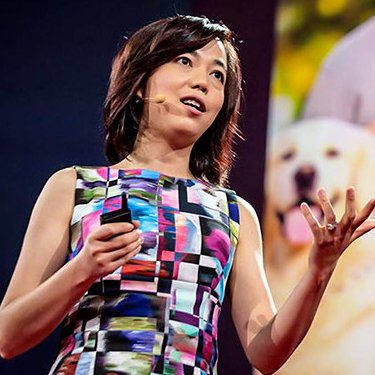
Next view prediction is the key to Atlas, enabling us to unify pixel-level generation and reconstruction. @jcjohnss @BenMildenhall @martin_casado and I had a deeper discussion on some of the most exciting technical innovations of Atlas, our newly released world model for spatial intelligence!
Show more

Our team at @MTSlive is hiring.
We are a small team scaling an X-native media company that also builds products.
We're 4 months in and will cross 500K followers and a $10M run rate soon, with a clear shot to get to 5M followers and $50M in 2027.
We're looking for:
- Lead Broadcast Engineer (SF-based): operate and maintain our main production studio in SF. Own production software, set up cameras and mics, and keep the studio ready to go live for some of the biggest guests in tech.
- Producer (SF-based): work across production, onsites, and post-production. Help us incubate new shows and go 0 to 1 on MTS Originals.
- Hosts/Talent (SF-based): come spend time with us if you want to (1) pivot into a media / content career or (2) want to uplevel your existing content with a world-class team.
- Product Engineers (probably SF-based): define new product bets, help us ship and make progress towards proprietary products.
- Sales/partnerships (SF, LA or NY): work directly with me (it'll be fun, right?...right?) to scale deep partnerships across the best companies in tech.
DM me or email chris at mts dot now to apply.
Show more












